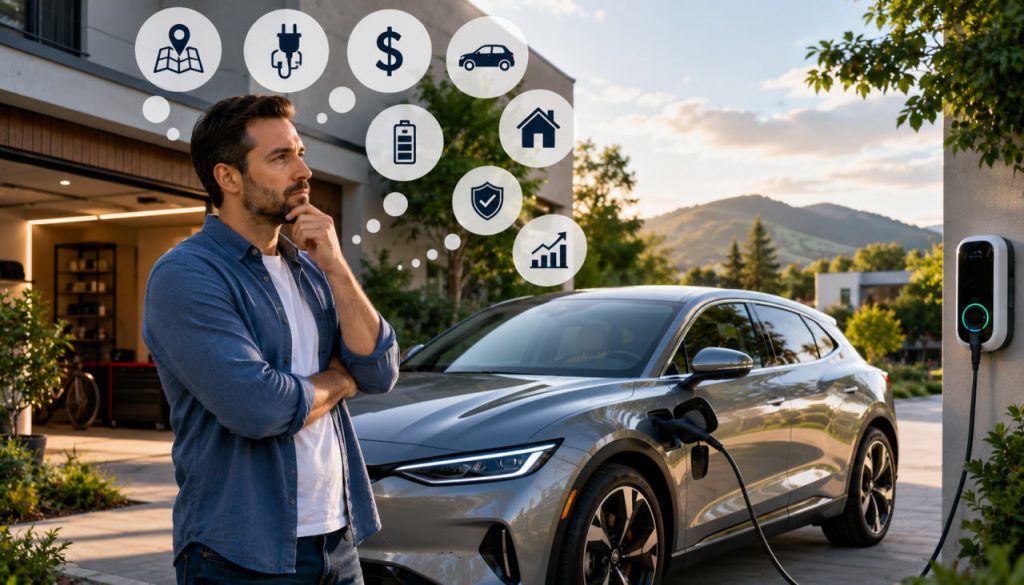
Electric vehicles are often associated with lower running costs, but when it comes to insurance, the picture becomes more nuanced. Many drivers expect EV insurance to be cheaper due to…
Choosing between leasing and buying an electric vehicle is a strategic financial decision that directly impacts long-term expenses and flexibility. While EVs are known for lower operating costs due to…
Electric vehicles are often promoted as a cheaper and more sustainable alternative to traditional gasoline cars. However, many buyers focus primarily on the purchase price without fully considering the broader…
The transition to electric vehicles is a key part of global strategies to reduce greenhouse gas emissions and improve air quality in cities. However, electric cars often have higher upfront…
As electric vehicles become more widespread, public charging infrastructure is experiencing increased demand. While the number of charging stations continues to grow, availability during peak hours can still be limited.…
The global transition away from internal combustion engines has brought two main alternatives into focus: hydrogen fuel cell vehicles (FCEVs) and battery electric vehicles (BEVs). Both technologies promise lower emissions,…
Weight is one of the most critical factors in the design of electric vehicles. Every extra kilogram affects energy consumption, driving range, handling, and even charging efficiency. Unlike combustion cars,…
The global EV market has entered its most ruthless phase yet: a price war where scale, supply chains, and software decide who eats and who gets eaten. Tesla’s broad price…
The Tesla Model Y didn’t just arrive in Europe—it colonized the leaderboard. What looks like a familiar midsize crossover hides a ruthless focus on efficiency, manufacturing, software, and charging that…
Tesla’s driver-assistance stack is often discussed as if it were the same everywhere, but Europe is a very different proving ground from North America. Between UNECE rules, national traffic laws,…