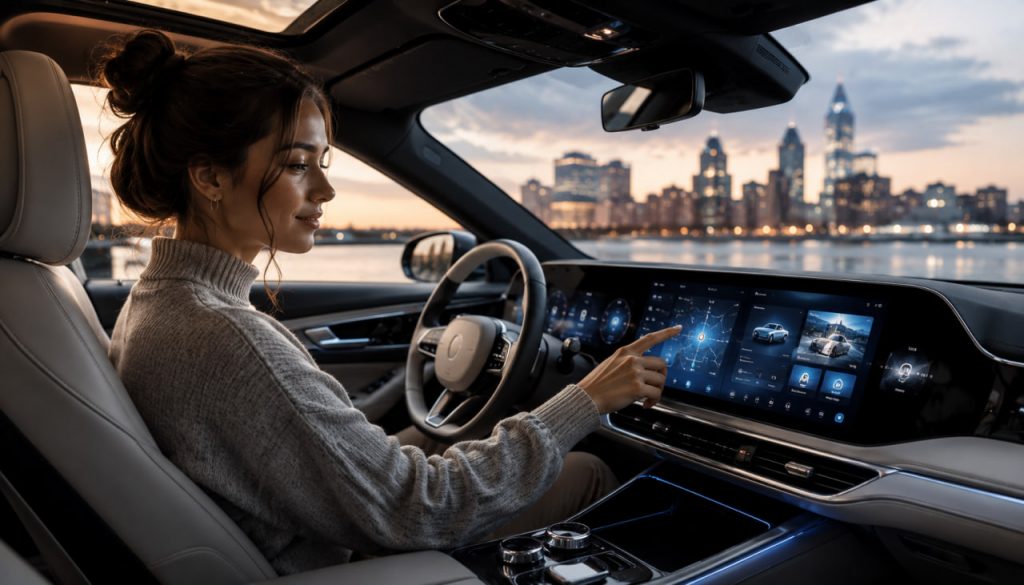
The modern electric vehicle is no longer defined solely by its battery capacity or driving range. As software becomes a central component of automotive innovation, the interior and infotainment system have become major factors influencing purchasing decisions. Large touchscreens, intelligent voice assistants, over-the-air updates, and AI-powered personalization are transforming vehicles into connected digital environments.
Leading manufacturers are competing to deliver the most intuitive, immersive, and technologically advanced user experience. While performance and efficiency remain important, today’s buyers increasingly expect their vehicle to function as seamlessly as a premium smartphone or tablet.
This article compares the digital ecosystems offered by today’s leading EV manufacturers and examines which brands provide the best overall user experience.
Why Digital Experience Matters More Than Ever
Modern drivers spend significant time interacting with their vehicle’s software.
A well-designed digital ecosystem improves:
- Navigation
- Entertainment
- Vehicle controls
- Driver assistance
- Smartphone integration
- Personalization
- Safety
The best infotainment systems simplify complex tasks rather than distracting the driver with unnecessary features.
As electric vehicles become increasingly software-defined, digital quality is becoming a key competitive advantage.
What Defines an Excellent Infotainment System?
A premium digital experience combines both hardware and software excellence.
Important factors include:
- Fast system performance
- High-resolution displays
- Responsive touch controls
- Voice recognition accuracy
- Software stability
- Regular over-the-air updates
- Wireless smartphone connectivity
- Intuitive interface design
Manufacturers that continuously improve their software through updates often deliver a better long-term ownership experience.
Tesla Model Y: The Software Benchmark
Tesla remains one of the industry’s software leaders.
Strengths include:
- Large responsive central display
- Frequent over-the-air updates
- Powerful route planning
- Integrated entertainment platform
- Excellent charging navigation
- Highly optimized user interface
Tesla minimizes physical buttons, placing nearly all vehicle functions within its touchscreen interface.
While many drivers appreciate the clean design, others prefer more traditional physical controls for frequently used functions.
Mercedes-Benz EQS: Luxury Meets Artificial Intelligence
Mercedes-Benz focuses on delivering one of the most luxurious digital experiences available.
Its MBUX Hyperscreen offers:
- Multiple high-resolution displays
- AI-powered personalization
- Natural voice interaction
- Augmented reality navigation
- Premium graphics and animations
The system learns driver preferences over time, making frequently used functions easier to access.
BMW i5: Driver-Focused Technology
BMW combines digital innovation with traditional driving ergonomics.
Highlights include:
- Curved panoramic display
- Physical shortcut controls
- Head-up display
- Voice assistant
- Gesture control
- Excellent driving information layout
BMW successfully balances touchscreen functionality with tactile controls, reducing driver distraction.
Hyundai Ioniq 5: Simplicity and Everyday Practicality
Hyundai has developed one of the easiest infotainment systems to learn.
Advantages include:
- Clean interface design
- Physical climate controls
- Fast response times
- Wireless smartphone connectivity
- Clear navigation menus
Rather than overwhelming users with excessive visual effects, Hyundai prioritizes usability and reliability.
Volvo EX90: Scandinavian Minimalism
The EX90 emphasizes safety, simplicity, and intelligent integration.
Key features include:
- Google Built-in services
- Google Maps navigation
- Google Assistant voice control
- Clean minimalist interface
- Excellent readability
The software experience feels familiar to Android users while maintaining Volvo’s focus on reducing driver distraction.
Artificial Intelligence Is Transforming Vehicle Interiors
AI is becoming an integral part of next-generation infotainment systems.
Modern AI features include:
- Personalized driver profiles
- Predictive navigation
- Intelligent climate control
- Natural language voice assistants
- Adaptive media recommendations
- Smart charging suggestions
Instead of requiring drivers to navigate complex menus, AI increasingly allows vehicles to anticipate user needs.
The future cockpit will rely less on manual inputs and more on conversational interaction with intelligent digital assistants.
Software Updates Have Become Essential
Unlike traditional vehicles, modern EVs continue improving after purchase.
Over-the-air updates can introduce:
- New vehicle functions
- Improved battery management
- Enhanced safety systems
- User interface refinements
- Performance improvements
- Bug fixes
Manufacturers with mature software ecosystems can significantly extend the value of their vehicles throughout ownership.
Challenges That Still Remain
Despite rapid progress, several issues continue to affect digital vehicle experiences.
Touchscreen Overload
Many manufacturers have removed physical buttons almost entirely.
While visually appealing, this approach can make simple tasks more difficult while driving.
Software Stability
As vehicles become increasingly software-dependent, system crashes and bugs have a greater impact on everyday usability.
Reliable software engineering is now as important as mechanical engineering.
Privacy and Data Security
Connected vehicles collect large amounts of data.
Manufacturers must balance personalization with transparency and strong cybersecurity protections.
Expert Perspective: The Software-Defined Vehicle
According to Patrick Brady, the future vehicle will increasingly function as a software platform, where intelligent services, cloud connectivity, and AI continuously enhance the driving experience throughout the vehicle’s lifetime.
Researchers at J.D. Power have also found that infotainment quality remains one of the strongest influences on customer satisfaction, with intuitive interfaces and reliable software playing an increasingly important role in purchase decisions.
Their conclusions reinforce a growing industry trend: software quality has become just as important as traditional automotive engineering.
Which Brand Offers the Best Digital Experience?
Each manufacturer excels in different areas.
- Tesla leads in software integration, updates, and ecosystem simplicity.
- Mercedes-Benz delivers the most luxurious and visually impressive digital cockpit.
- BMW provides one of the best balances between digital technology and traditional usability.
- Hyundai offers outstanding ease of use and value.
- Volvo excels in clean design, Google integration, and safety-focused functionality.
There is no universal winner because the ideal experience depends on individual priorities. Some drivers value maximum innovation, while others prioritize simplicity, ergonomics, or luxury.
Conclusion
The competition among electric vehicle manufacturers has expanded far beyond batteries and driving range. Interiors and infotainment systems have become defining characteristics of the ownership experience, with software now shaping how drivers interact with their vehicles every day.
Artificial intelligence, cloud connectivity, and continuous software updates are transforming EVs into intelligent digital platforms capable of evolving long after they leave the factory.
As the automotive industry moves toward fully software-defined vehicles, the best digital experience will increasingly become one of the most important factors separating market leaders from the competition.