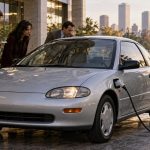
Electric vehicles are no longer experimental alternatives to gasoline-powered cars. They are becoming an established part of the global automotive industry, offering quieter driving, greater energy efficiency, lower local exhaust emissions, and potentially significant savings in everyday operation.
Yet there is a major contradiction in the electric mobility revolution. While some consumers can purchase advanced electric SUVs with enormous batteries and ultra-fast charging capabilities, millions of people cannot afford even a basic electric car or access reliable charging infrastructure.
Making electric vehicles accessible worldwide requires more than producing cheaper batteries. It demands a coordinated transformation of vehicle design, manufacturing, financing, electricity infrastructure, government policy, and transportation systems.
The objective should not be to give every person the same expensive electric vehicle. It should be to make clean, reliable, practical transportation available to people regardless of income, geography, or living conditions.
Achieving that goal is technically possible, but the economic and infrastructure challenges are substantial.
The Global Electric Vehicle Market Is Growing, but Access Remains Unequal
Electric vehicle adoption has accelerated dramatically.
According to the International Energy Agency’s Global EV Outlook 2026, worldwide sales of electric cars exceeded 20 million in 2025, accounting for approximately one-quarter of all new passenger cars sold.
That figure includes battery electric vehicles and plug-in hybrids.
China remains the largest market, with electric cars representing nearly 55 percent of new car sales in 2025. Europe reached approximately 28 percent, while many developing economies experienced rapid growth from smaller starting points.
The agency expects global electric car sales to reach around 23 million in 2026, representing approximately 28 percent of the market.
However, these figures conceal enormous differences.
In some Chinese cities, affordable electric cars are already commonplace. In other regions, especially parts of Africa, South Asia, and Latin America, high purchase prices, limited financing, import duties, and inadequate charging networks remain major obstacles.
The next phase of the EV revolution must focus on affordability and geographical accessibility, not simply increasing global sales figures.
Make the Purchase Price Competitive with Gasoline Cars
The first requirement is straightforward: electric vehicles must become affordable at the point of purchase.
Lower operating costs mean little to a household that cannot afford the initial price.
Battery electric vehicles often cost more to manufacture than comparable gasoline models, largely because batteries remain expensive components.
However, the situation varies dramatically between markets.
The International Energy Agency reported that in China, approximately 70 percent of battery electric cars sold in 2025 were priced below the average conventional car.
In Europe and the United States, the availability of inexpensive electric models remains significantly more limited.
To close this gap, manufacturers need to prioritize practical entry-level vehicles rather than concentrating overwhelmingly on premium models.
Affordable EVs should emphasize:
- Efficient electric drivetrains
- Compact and lightweight construction
- Reasonably sized batteries
- Durable interior materials
- Simple manufacturing processes
- Standardized components
- Low maintenance requirements
- Essential safety equipment
- Reliable battery management
A vehicle does not need extreme acceleration, oversized displays, or luxury features to provide comfortable daily transportation.
The most important electric car for global adoption may be the affordable family vehicle that performs ordinary journeys reliably for many years.
Produce Smaller and More Efficient Electric Vehicles
One of the simplest methods of reducing EV costs is building smaller, lighter vehicles.
Large electric SUVs require substantial battery capacity to compensate for their weight, frontal area, and energy consumption.
A compact city car can achieve practical daily range with a much smaller battery.
For example, a vehicle consuming 12 kilowatt-hours per 100 kilometers would theoretically travel approximately 250 kilometers using 30 kilowatt-hours of usable battery energy under those conditions.
Real-world range depends on speed, temperature, terrain, climate control, and driving habits.
Nevertheless, the principle is important.
A smaller battery can reduce manufacturing costs, vehicle weight, charging requirements, and demand for critical minerals.
Not every driver needs a vehicle capable of traveling 600 kilometers between charging stops.
Manufacturers should develop distinct products for different mobility requirements rather than treating maximum range as the primary measure of quality.
Expand Affordable Battery Technologies
Battery technology will play a central role in making electric mobility more accessible.
Lithium iron phosphate batteries have become particularly important because they avoid nickel and cobalt in their cathode chemistry and can offer attractive manufacturing costs, durability, and thermal stability.
According to the International Energy Agency, lithium iron phosphate accounted for more than 55 percent of electric vehicle battery deployment worldwide in 2025.
The agency also reported that average battery prices declined by approximately 8 percent in 2025, although reductions varied between regions and technologies.
Further progress could come from:
- Improved lithium iron phosphate batteries
- More efficient cell manufacturing
- Better battery pack integration
- Sodium-ion technology
- Reduced material waste
- Improved battery recycling
- Longer battery service life
Sodium-ion batteries are especially interesting for selected lower-cost applications because they can reduce dependence on lithium.
However, they currently face limitations, particularly in energy density, and are not automatically the best solution for every vehicle.
The objective should be the lowest practical battery cost over the vehicle’s useful life, not simply the greatest possible energy capacity.
Build Charging Infrastructure Where Ordinary People Live
Affordable vehicles alone cannot deliver universal EV adoption.
Drivers also need dependable access to electricity.
Home charging is convenient for people with private garages or driveways, but millions of urban residents live in apartments without dedicated parking.
Charging infrastructure must therefore expand into everyday environments.
Priority locations include:
- Apartment buildings
- Residential parking facilities
- Public parking areas
- Workplaces
- Shopping centers
- Municipal parking spaces
- Rural communities
- Highway service areas
- Public transportation hubs
The International Energy Agency estimates that the global stock of public charging points exceeded seven million at the end of 2025.
Despite that expansion, availability remains highly uneven.
Cities should introduce building regulations that make new residential developments ready for charging installations.
Existing apartment buildings will require practical retrofit programs, affordable electrical connections, and transparent cost-sharing arrangements.
Charging should become a normal residential utility rather than a premium service.
Make Public Charging Affordable and Reliable
A widespread charging network is useful only when drivers can afford to use it.
Public fast charging can cost substantially more than residential electricity.
In some markets, drivers who depend exclusively on expensive fast chargers may lose much of the operating-cost advantage of an electric vehicle.
Governments and charging operators should therefore support a balanced network.
Slower, lower-cost charging is well suited to locations where vehicles remain parked for several hours.
Fast charging should primarily serve long-distance travel, time-sensitive journeys, and commercial operations.
Other priorities include reliable equipment, transparent pricing, straightforward payments, and clear information about charger availability.
A cheap electric car becomes much less attractive when its owner must depend on expensive or frequently unavailable charging stations.
Modernize Electricity Grids Without Making EV Ownership Expensive
Large-scale electrification increases electricity demand and creates new challenges for distribution networks.
However, the transition does not require every vehicle to charge at maximum power simultaneously.
Smart charging can help distribute electricity demand throughout the day.
Vehicles can charge during periods of lower grid demand or when renewable electricity generation is abundant.
Other measures include improving local transformers, upgrading distribution lines, installing energy storage, and encouraging efficient charging equipment.
Utilities should also coordinate infrastructure investments with expected vehicle adoption.
In developing economies, reliable electricity access may be a more fundamental challenge than charger installation itself.
Where appropriate, solar generation combined with storage can support charging facilities, although system costs and local operating conditions must be considered.
Electric mobility policy and electricity infrastructure planning should develop together.
Offer Affordable Financing Instead of Depending Only on Subsidies
Even when an electric vehicle has lower lifetime operating costs, the initial investment can remain impossible for many households.
Affordable financing can be more effective than a large but narrowly available purchase subsidy.
Potential solutions include:
- Low-interest vehicle loans
- Income-based purchase incentives
- Affordable leasing
- Battery leasing where commercially viable
- Government-backed credit guarantees
- Financing for used electric vehicles
- Programs for low-income workers
- Small-business fleet financing
Financial institutions should consider total ownership costs, including energy and maintenance, rather than focusing entirely on the purchase price.
However, financing arrangements must remain transparent.
Long repayment periods, hidden fees, expensive insurance, or uncertain battery guarantees can eliminate expected savings.
Public support should prioritize households and businesses facing genuine financial barriers.
Create a Strong Global Market for Used Electric Cars
Most people worldwide do not purchase brand-new vehicles.
Consequently, universal EV affordability cannot depend exclusively on new-car sales.
A healthy used electric vehicle market is essential.
Buyers need reliable information about battery condition, remaining warranty coverage, repair history, and expected maintenance costs.
Standardized battery health reports could make secondhand electric vehicles easier to evaluate.
Manufacturers should support long-term access to replacement parts, diagnostic software, repair documentation, and qualified service centers.
Independent repair businesses also need appropriate technical training and safe access to vehicle systems.
Used electric cars can substantially reduce the entry cost of electric ownership, but only when buyers trust their condition and future repairability.
Reduce Import Barriers and Expand Regional Manufacturing
Many developing economies depend heavily on imported vehicles.
Import duties, transportation expenses, local taxes, and unfavorable financing conditions can make even inexpensive electric models unaffordable.
Governments should examine whether their trade policies unintentionally discourage access to efficient transportation.
At the same time, simply removing every import restriction may not create a sustainable domestic automotive industry.
A balanced strategy could combine reasonable tariffs, regional production partnerships, local component assembly, workforce development, and technology investment.
Regional manufacturing may help reduce transportation costs and create employment where sufficient scale can be achieved.
Affordable electric mobility requires competition and efficient production, but long-term accessibility also depends on reliable supply chains and local technical capabilities.
Adapt Electric Mobility to Developing Countries
A successful solution in Northern Europe may not work equally well in rural Africa or densely populated South Asian cities.
Vehicle requirements vary according to income, climate, road conditions, electricity reliability, and transportation habits.
In some regions, compact cars are appropriate.
Elsewhere, electric motorcycles, scooters, three-wheelers, minibuses, and buses may offer greater immediate benefits.
Electric two- and three-wheelers can provide relatively inexpensive transportation while requiring much smaller batteries than passenger cars.
Commercial applications are especially promising because predictable routes and high daily mileage can improve the economics of electrification.
Electric taxis, delivery vehicles, and urban buses can also benefit from centralized charging facilities.
Governments should avoid treating private passenger cars as the only meaningful form of electric mobility.
Make Electric Vehicles Practical in Every Climate
Electric vehicles must work reliably in extreme heat, severe cold, mountainous regions, and areas with poor roads.
Cold temperatures can reduce driving range and charging performance.
Extreme heat creates additional demands on battery thermal management.
Affordable vehicles therefore need suitable engineering rather than simply the lowest possible manufacturing price.
Important features include efficient climate control, durable suspension, reliable battery protection, corrosion resistance, and robust electrical systems.
Regional vehicle designs can also reduce unnecessary equipment costs.
A vehicle optimized for tropical urban transportation may have different requirements from one intended for cold rural environments.
Improve Accessibility for People with Disabilities
Universal electric mobility must also account for physical accessibility.
Charging stations are frequently designed around drivers who can easily reach connectors, handle heavy cables, and move around parked vehicles.
Accessible charging should include adequate space, reachable equipment, manageable connector forces, and payment systems that accommodate different needs.
Manufacturers should also consider adapted vehicle controls, wheelchair accessibility, and affordable conversion options.
A vehicle is not genuinely accessible if its owner cannot comfortably enter it, operate it, or charge it.
Make Recycling and Battery Repair Part of the Business Model
Mass electrification requires responsible management of batteries throughout their life cycles.
Improving collection, repair, reuse, and recycling can reduce waste and recover valuable materials.
However, recycling alone cannot eliminate the need for new mineral extraction, especially while the global EV fleet continues growing.
Manufacturers should design battery systems with repairability, safe dismantling, and material recovery in mind.
Independent battery diagnostics can also help determine whether a pack should be repaired, reused, or recycled.
Longer-lasting batteries may be particularly beneficial for affordability because they reduce the probability of expensive premature replacement.
Governments Must Coordinate the Transition
No single company can make electric mobility universally affordable.
Governments influence vehicle prices, electricity infrastructure, construction regulations, taxes, consumer protection, and market competition.
An effective policy framework should coordinate these areas rather than addressing them independently.
Priority measures include targeted assistance for lower-income buyers, investment in shared charging, support for used vehicles, workforce training, and stable long-term industrial policies.
Support programs should also be evaluated regularly.
Subsidies that primarily benefit wealthy households may do little to improve universal access.
Successful programs should measure actual affordability, charger reliability, transportation costs, and the number of previously underserved households gaining access.
Universal Access Does Not Require Universal Car Ownership
There is an important distinction between giving everyone access to electric mobility and expecting every individual to own a private electric car.
In many densely populated cities, universal private car ownership would create significant problems involving congestion, parking demand, road space, and material consumption.
Affordable electric public transportation may provide greater benefits.
Electric buses, shared vehicles, neighborhood car-sharing programs, and other mobility services can reduce the cost of accessing transportation.
For rural households or people with limited public transport, personal vehicle ownership may remain essential.
The best global strategy must therefore combine affordable private electric cars with reliable shared transportation.
A Practical Global Roadmap
Making electric mobility accessible worldwide requires coordinated action over several stages.
In the near term, governments and manufacturers should prioritize inexpensive vehicle models, affordable financing, used-EV warranties, public charging, and transparent operating costs.
Over the medium term, investment should expand into apartment charging, regional battery production, electric public transportation, grid modernization, and local repair networks.
Over the longer term, improved battery technologies, large-scale recycling, mature secondhand markets, and widespread charging infrastructure can make electric mobility increasingly independent of purchase subsidies.
Progress should be measured by the affordability and usefulness of transportation, not merely the number of premium electric vehicles sold.
Conclusion
Making electric cars affordable and accessible worldwide is one of the most important challenges facing the automotive industry.
The technology is advancing rapidly. Battery prices have generally declined, electric drivetrains have become more efficient, and global sales continue to grow.
However, genuine mass adoption requires solutions to problems that extend far beyond vehicle engineering.
Purchase prices must fall, financing must improve, public charging must become affordable, electricity infrastructure must expand, and used electric vehicles must become trustworthy long-term purchases.
Developing countries require solutions adapted to local incomes and transportation needs, while cities must expand accessible charging and efficient public mobility.
The electric vehicle revolution will become truly global when ordinary workers, families, small businesses, and rural communities can choose electric transportation because it is practical, dependable, and affordable—not because they are wealthy enough to participate in a technological trend.
The ultimate goal is not an electric car in every driveway. It is a world where clean, reliable mobility is available to everyone who needs it.