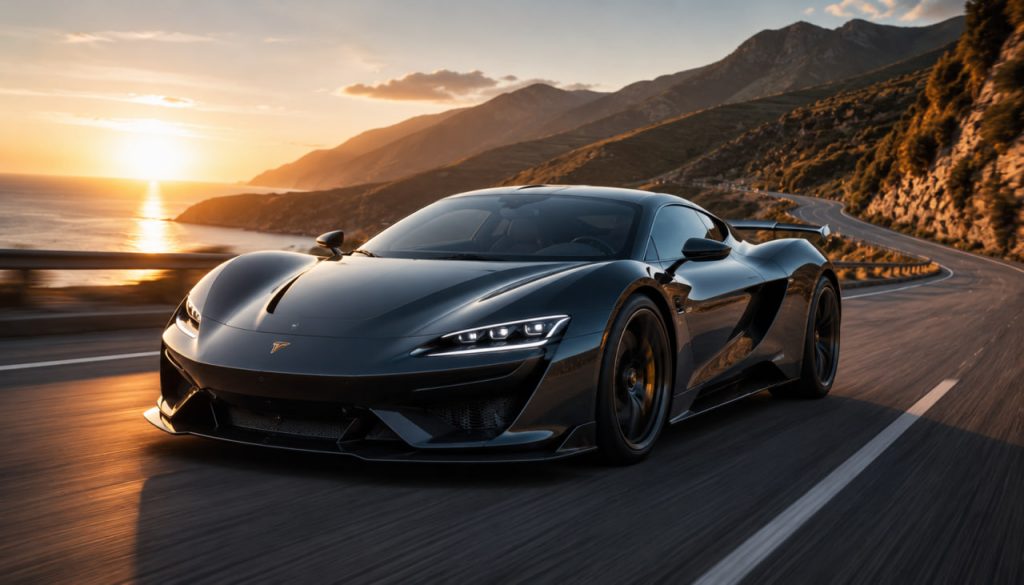
Electric sports cars have transformed the automotive industry, proving that exceptional performance and environmental responsibility can coexist. Once dismissed as slower alternatives to traditional gasoline-powered sports cars, modern electric models now dominate acceleration tests, break lap records, and challenge the world’s most prestigious supercars.
Thanks to instant torque, advanced battery technology, and sophisticated software, electric sports cars deliver an entirely new driving experience. Manufacturers ranging from established luxury brands to innovative startups are investing heavily in this segment, making it one of the fastest-growing areas of the automotive market.
As battery technology continues to evolve, electric sports cars are redefining what drivers can expect from performance vehicles.
What Is an Electric Sports Car?
An electric sports car is a high-performance vehicle powered entirely by electric motors and rechargeable battery packs. Unlike conventional sports cars that rely on internal combustion engines, electric sports cars generate power instantly, delivering rapid acceleration with remarkable efficiency.
Modern electric sports cars typically feature:
- High-output electric motors
- Large lithium-ion battery packs
- Advanced battery cooling systems
- Intelligent torque vectoring
- Regenerative braking
- Lightweight aerodynamic construction
The combination of electric propulsion and advanced software enables performance levels that were almost unimaginable a decade ago.
Why Electric Sports Cars Are So Fast
One of the greatest advantages of electric powertrains is their ability to deliver maximum torque immediately.
Unlike gasoline engines, which require increasing engine speed to reach peak performance, electric motors provide full torque from the moment the accelerator is pressed.
This results in:
- Instant acceleration
- Smooth power delivery
- Exceptional traction
- Faster corner exits
- More precise throttle control
Several electric sports cars now accelerate from 0 to 100 km/h (62 mph) in under two seconds, placing them among the fastest production vehicles ever built.
The World’s Leading Electric Sports Cars
Several manufacturers are pushing the boundaries of electric performance.
Rimac Nevera
The Rimac Nevera has become one of the most impressive electric hypercars ever produced.
Highlights include:
- Nearly 2,000 horsepower
- Four independent electric motors
- Exceptional acceleration
- Advanced torque vectoring
- Record-breaking performance
The Nevera has established multiple production vehicle acceleration records and demonstrates the incredible potential of electric propulsion.
Porsche Taycan Turbo GT
Porsche has successfully combined everyday usability with outstanding performance.
Key strengths include:
- Precise handling
- Rapid charging capability
- Advanced suspension technology
- Consistent track performance
Its engineering reflects Porsche’s decades of motorsport experience.
Lotus Evija
Designed with a focus on lightweight construction and aerodynamics, the Lotus Evija delivers extraordinary performance while maintaining the brand’s tradition of driver engagement.
Its aggressive design and advanced electric drivetrain position it among the world’s most exclusive hypercars.
Pininfarina Battista
The Battista combines Italian craftsmanship with cutting-edge electric technology.
Notable features include:
- Luxury interior
- Carbon-fiber construction
- Nearly 2,000 horsepower
- Exceptional acceleration
- Limited production exclusivity
It demonstrates that electric vehicles can offer both breathtaking performance and premium craftsmanship.
Battery Technology Makes the Difference
Performance depends heavily on battery technology.
Modern battery systems provide:
- High energy density
- Rapid charging
- Efficient thermal management
- Consistent power delivery
- Improved durability
Advanced liquid cooling systems maintain optimal battery temperatures during demanding driving conditions, allowing repeated high-performance acceleration without significant power loss.
Battery technology has become just as important as engine development once was for traditional sports cars.
Aerodynamics and Lightweight Engineering
Electric sports cars rely heavily on aerodynamic efficiency.
Manufacturers employ:
- Active rear wings
- Flat underbody panels
- Air curtains
- Carbon-fiber components
- Lightweight aluminum structures
These features reduce drag while increasing stability at high speeds.
Because battery packs add weight, engineers work extensively to optimize chassis balance and vehicle dynamics.
Artificial Intelligence and Software
Software has become a defining characteristic of modern performance cars.
AI-powered systems help optimize:
- Power distribution
- Battery temperature
- Traction control
- Suspension settings
- Regenerative braking
- Driver assistance systems
Over-the-air software updates also allow manufacturers to improve vehicle performance throughout ownership without requiring mechanical modifications.
Challenges Facing Electric Sports Cars
Despite their impressive capabilities, electric sports cars continue to face several challenges.
Weight
Large battery packs remain significantly heavier than conventional engines.
Manufacturers continue investing in lighter battery technologies to improve agility.
Charging Time
Although ultra-fast charging has improved dramatically, refueling a gasoline sports car remains faster than recharging most EVs.
Continued expansion of high-power charging infrastructure is helping reduce this gap.
Purchase Price
Many electric sports cars remain expensive due to advanced battery technology and limited production volumes.
As manufacturing scales increase, prices are expected to become more competitive.
Expert Perspective: Electric Performance Is Redefining the Industry
According to Mate Rimac, electric powertrains allow engineers to achieve levels of acceleration, control, and efficiency that are extremely difficult to replicate with traditional combustion engines.
Engineers from Porsche AG have similarly emphasized that electrification offers new possibilities for precision handling, software optimization, and overall vehicle dynamics while maintaining the emotional driving experience expected from a high-performance sports car.
Their perspective reflects a growing industry consensus: the future of performance will increasingly be defined by intelligent software and electric propulsion rather than engine displacement alone.
The Future of Electric Sports Cars
The next generation of electric sports cars is expected to introduce:
- Solid-state batteries
- Even faster charging speeds
- Lower vehicle weight
- Greater driving range
- More advanced AI-assisted driving systems
- Improved aerodynamic efficiency
These innovations will enable manufacturers to build sports cars that are faster, lighter, and more efficient than ever before.
Conclusion
Electric sports cars have evolved from experimental concepts into some of the most technologically advanced and capable performance vehicles in the world. Their instant torque, intelligent software, sophisticated battery systems, and cutting-edge engineering have redefined the standards of speed, handling, and efficiency.
As battery technology and charging infrastructure continue to improve, electric sports cars will play an increasingly important role in the future of the automotive industry.
The era of electric performance has already begun, and the next generation of sports cars is proving that sustainability and exhilarating driving dynamics can exist in perfect harmony.