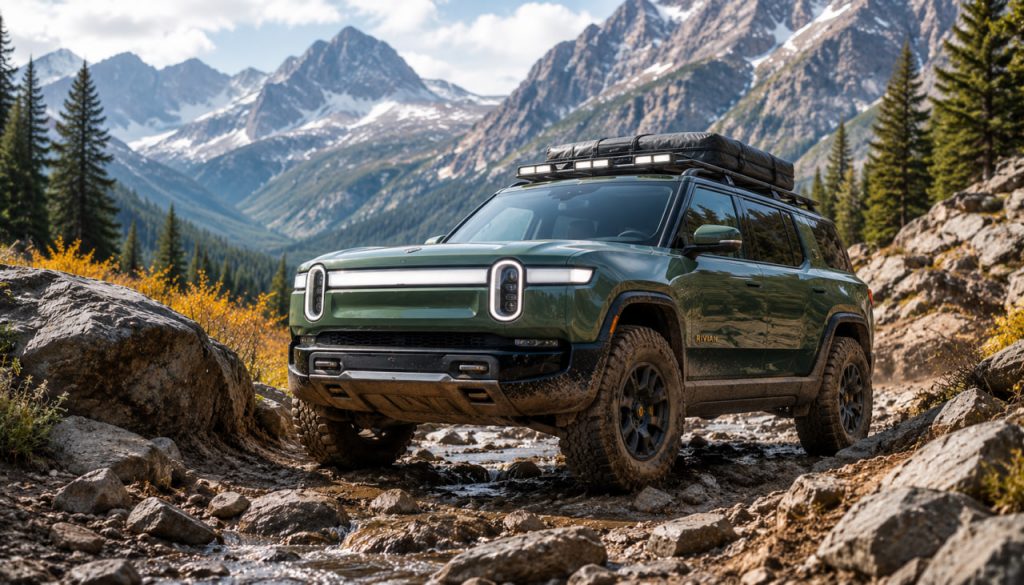
Electric vehicles are no longer confined to city streets and highways. Thanks to rapid advances in battery technology, electric motors, and intelligent all-wheel-drive systems, modern electric SUVs and pickups are proving they can handle demanding off-road environments. From rocky mountain trails to deep mud and snowy forests, today’s off-road EVs combine impressive capability with zero tailpipe emissions.
Manufacturers are investing heavily in rugged electric platforms, introducing vehicles specifically engineered for outdoor enthusiasts, overlanding, and professional use in remote locations.
Electric off-road vehicles are redefining adventure by combining exceptional traction, advanced software, and instant torque with sustainable mobility.
What Makes an Electric Vehicle Suitable for Off-Road Driving?
Unlike traditional combustion-powered off-road vehicles, electric models rely on one or more electric motors that can deliver power with exceptional precision.
Key characteristics include:
- Instant maximum torque
- Intelligent all-wheel drive
- High ground clearance
- Reinforced battery protection
- Off-road driving modes
- Advanced suspension systems
- Water-resistant electrical components
These technologies allow EVs to maintain traction on challenging terrain while delivering smooth and precise control.
Why Electric Motors Excel Off Road
Electric motors offer several unique advantages over internal combustion engines.
These include:
- Immediate torque delivery
- Precise wheel-by-wheel power distribution
- Quiet operation
- Reduced mechanical complexity
- Smooth low-speed control
The ability to deliver full torque instantly gives electric vehicles remarkable climbing ability on steep or uneven terrain.
In addition, sophisticated software continuously adjusts power distribution to maximize grip under changing conditions.
The Best Off-Road Electric Vehicles in 2026
Rivian R1S
The Rivian R1S is widely regarded as one of the most capable electric off-road SUVs available.
Its strengths include:
- Quad-motor all-wheel drive
- Adjustable air suspension
- Exceptional ground clearance
- Multiple terrain modes
- Excellent water-fording capability
The R1S is designed for both luxury travel and serious off-road adventures.
Rivian R1T
The R1T combines pickup practicality with impressive off-road engineering.
Key features include:
- Independent control of each wheel
- High approach and departure angles
- Adaptive suspension
- Adventure-focused storage solutions
Its versatility has made it popular among outdoor enthusiasts.
Mercedes-Benz G 580 with EQ Technology
The electric G-Class retains the legendary off-road capability of its predecessor while introducing an advanced electric drivetrain.
Highlights include:
- Four individually controlled electric motors
- Intelligent torque vectoring
- Extreme climbing capability
- Advanced terrain management
- Iconic body-on-frame-inspired design
The vehicle demonstrates that electrification can preserve traditional off-road performance.
GMC Hummer EV
The Hummer EV was developed specifically for extreme off-road environments.
Notable capabilities include:
- CrabWalk four-wheel steering
- Extract Mode adjustable suspension
- Massive battery capacity
- Powerful multi-motor drivetrain
- Advanced camera systems for trail navigation
Its combination of technology and ruggedness makes it one of the most distinctive electric off-road vehicles.
Tesla Cybertruck
Tesla’s Cybertruck introduces a unique approach to off-road driving.
Its advantages include:
- Adaptive air suspension
- High torque output
- Durable stainless-steel body
- Advanced traction software
- Over-the-air feature updates
The vehicle combines unconventional design with substantial off-road capability.
Battery Protection Is Critical
Driving off-road exposes the battery pack to rocks, impacts, mud, and water.
Manufacturers address these challenges through:
- Reinforced skid plates
- Structural battery enclosures
- Water-sealed electrical systems
- Intelligent thermal management
- Continuous battery monitoring
These features help maintain durability even in demanding environments.
Off-Road Software Is Becoming Smarter
Modern electric off-road vehicles rely heavily on software.
Advanced systems manage:
- Wheel traction
- Torque distribution
- Hill descent control
- Regenerative braking
- Suspension adjustment
- Terrain-specific driving modes
Artificial intelligence and predictive algorithms continue improving vehicle stability and driver confidence across different surfaces.
Challenges of Off-Road EVs
Despite their impressive capabilities, electric off-road vehicles face several limitations.
Reduced Range
Driving through sand, mud, snow, or steep terrain significantly increases energy consumption.
Drivers should plan routes carefully, especially in remote areas where charging infrastructure may be limited.
Vehicle Weight
Large battery packs increase vehicle weight.
Although this often improves stability, it can also affect maneuverability on certain trails.
Charging in Remote Locations
Adventure travelers may need portable charging solutions or carefully planned charging stops before entering isolated regions.
Expert Perspective: Electric Off-Road Technology Is Advancing Rapidly
According to RJ Scaringe, electric drivetrains provide exceptional control, precision, and torque that make them particularly well suited for challenging off-road environments.
Engineers at SAE International have also noted that advances in electric propulsion, battery protection, and intelligent traction management are enabling EVs to perform reliably across increasingly demanding terrain while meeting high safety and durability standards.
Their assessment reflects a growing industry trend: off-road capability is becoming as much a software challenge as a mechanical one.
The Future of Electric Off-Road Vehicles
The next generation of electric adventure vehicles is expected to feature:
- Solid-state batteries
- Longer driving range
- Faster charging
- Lighter battery packs
- AI-assisted terrain prediction
- Enhanced autonomous trail navigation
- More efficient energy management
These innovations will expand the practicality of electric vehicles for exploration, overlanding, and professional field operations.
Conclusion
Electric off-road vehicles have evolved into highly capable machines that combine powerful electric drivetrains, intelligent software, and advanced suspension systems to tackle challenging terrain. Models such as the Rivian R1S, Rivian R1T, Mercedes-Benz G 580 with EQ Technology, GMC Hummer EV, and Tesla Cybertruck demonstrate that electric propulsion can deliver outstanding off-road performance without compromising comfort or innovation.
As battery technology and charging infrastructure continue to improve, electric off-road vehicles are expected to play an increasingly important role in the future of adventure travel and outdoor mobility.
The next generation of off-road exploration will be quieter, cleaner, and more technologically advanced than ever before.