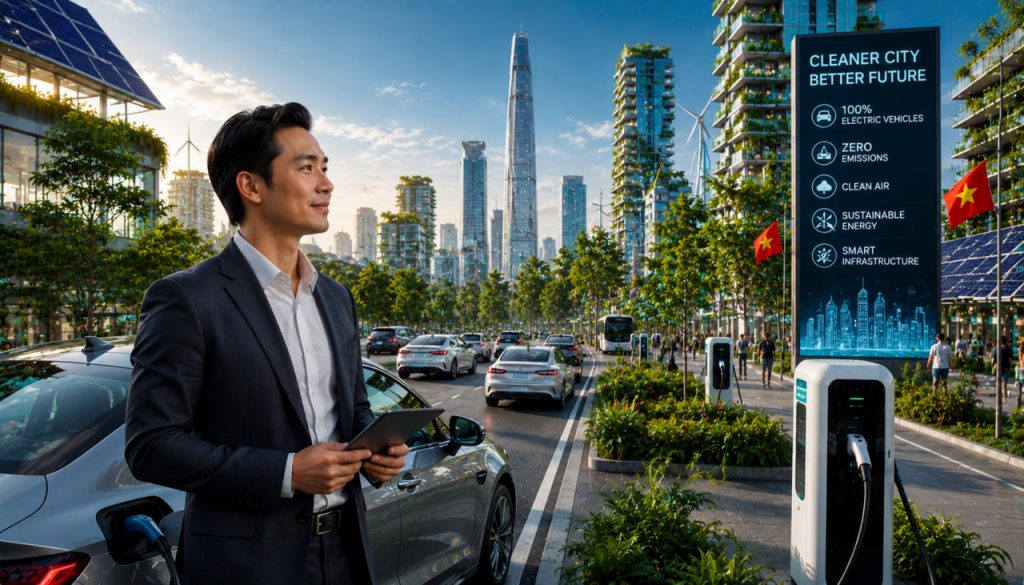
The global transition to electric vehicles is accelerating rapidly. Governments, automakers, and technology companies are investing billions into electrification, charging infrastructure, battery production, and renewable energy systems. But one fascinating question remains: what would actually happen if an entire megacity fully switched from gasoline and diesel vehicles to electric cars?
The impact would go far beyond transportation.
A large-scale transition to electric mobility would transform:
- air quality
- city noise levels
- energy infrastructure
- traffic systems
- public health
- real estate
- urban design
- electricity demand
- economic systems
In many ways, electric vehicles could fundamentally reshape the structure and atmosphere of modern cities.
However, the transition would also create major technical and infrastructure challenges.
Air Pollution Could Drop Dramatically
One of the most immediate effects would involve air quality.
Traditional internal combustion vehicles release pollutants such as:
- nitrogen oxides
- carbon monoxide
- particulate matter
- hydrocarbons
- carbon dioxide
In large cities with millions of vehicles, traffic emissions often become one of the largest pollution sources.
If an entire megacity transitioned to EVs, tailpipe emissions could fall dramatically.
This may improve:
- respiratory health
- asthma rates
- cardiovascular conditions
- overall urban air quality
Smog-heavy cities could experience visibly cleaner air over time.
According to World Health Organization, air pollution remains one of the largest environmental health risks globally.
Electrification could become one of the biggest urban public health improvements of the century.
Cities Would Become Much Quieter
Noise pollution would also decline significantly.
Gasoline and diesel engines constantly produce:
- combustion noise
- exhaust sounds
- engine vibration
- acceleration noise
Electric vehicles operate far more quietly, especially at lower speeds.
If millions of combustion vehicles disappeared, cities would likely experience:
- quieter streets
- reduced nighttime noise
- calmer residential areas
- lower stress levels
The overall urban soundscape could change dramatically.
Some researchers believe future electric cities may feel psychologically different because constant traffic noise shapes urban stress more than many people realize.
Electricity Demand Would Increase Massively
One of the biggest challenges would involve electricity infrastructure.
A megacity with millions of EVs would require enormous charging capacity.
This would dramatically increase electricity demand for:
- residential charging
- fast-charging networks
- public transportation
- commercial fleets
- delivery systems
Power grids would need major upgrades involving:
- substations
- transmission systems
- transformers
- smart grid technologies
- renewable integration
Without proper planning, large-scale EV adoption could strain aging infrastructure.
The future of electric transportation depends heavily on modernizing electrical grids.
Renewable Energy Would Become More Important
If EVs are powered mainly by fossil-fuel electricity, environmental benefits become smaller.
This is why renewable energy becomes critical in a fully electrified megacity.
Cities may increasingly rely on:
- solar energy
- wind farms
- battery storage
- hydroelectric power
- smart energy systems
Vehicle-to-Grid technology could also become important.
Future EVs may function as mobile energy storage systems capable of stabilizing power grids during peak demand.
This creates a more interconnected energy ecosystem where transportation and electricity infrastructure merge together.
Charging Infrastructure Would Expand Everywhere
A fully electrified city would require charging stations almost everywhere.
Infrastructure may include:
- underground charging systems
- curbside chargers
- wireless charging roads
- parking-integrated charging
- ultra-fast charging hubs
- autonomous charging robots
Residential charging access would become a major urban planning issue, especially in dense apartment-heavy cities.
Future buildings may include integrated EV charging as a standard feature similar to internet or water access today.
Traffic Patterns Could Change
Electric mobility may also affect traffic systems.
Modern EVs increasingly integrate:
- AI navigation
- real-time traffic optimization
- autonomous driving systems
- connected vehicle communication
Future smart cities may use AI-powered traffic management to reduce congestion and improve efficiency.
If autonomous EV fleets become widespread, cities could potentially reduce:
- parking demand
- traffic accidents
- vehicle ownership rates
- congestion levels
Shared autonomous EV systems may eventually replace large portions of private car ownership in dense urban environments.
Public Transportation Would Improve
Electric buses, taxis, and delivery systems could significantly improve urban transportation quality.
Benefits include:
- quieter operation
- lower maintenance costs
- reduced emissions
- smoother driving experience
- lower operational pollution
Many megacities are already transitioning public transportation fleets toward electrification.
This trend may accelerate rapidly over the next decade.
Real Estate and Urban Design Could Evolve
A fully electrified city might physically look different.
Reduced pollution and quieter streets could increase the desirability of certain neighborhoods.
Urban design may increasingly prioritize:
- pedestrian zones
- green spaces
- mixed-use developments
- low-noise districts
- smart mobility hubs
Parking infrastructure may also change dramatically if autonomous shared EV systems reduce private vehicle ownership.
Some experts believe future cities may dedicate far less space to parking lots and gas stations.
Gas Stations Could Disappear Gradually
One of the most visible transformations would involve fuel infrastructure.
Traditional gas stations may gradually decline as EV charging networks expand.
Some former gas stations may evolve into:
- fast-charging hubs
- battery swap stations
- logistics centers
- smart mobility hubs
Oil demand inside cities could decrease substantially over time.
This may reshape urban economies connected to fuel distribution and maintenance industries.
Maintenance Industries Would Change
Electric vehicles require fewer moving parts than combustion vehicles.
This means reduced demand for:
- oil changes
- exhaust repairs
- transmission servicing
- engine maintenance
However, new industries would grow around:
- battery servicing
- software diagnostics
- charging infrastructure
- AI vehicle systems
- energy management
The workforce transition could become a major economic issue for cities dependent on traditional automotive industries.
Autonomous EV Ecosystems Could Emerge
If electric mobility combines with autonomous driving, megacities may experience even larger transformations.
Future autonomous EV networks could operate as:
- robotaxi fleets
- AI-managed logistics systems
- autonomous delivery services
- self-driving public transit
This may reduce:
- traffic accidents
- insurance costs
- parking demand
- transportation inefficiencies
According to Elon Musk, autonomous electric transportation could eventually become safer and more efficient than traditional human-driven systems.
However, large-scale autonomy still faces major technical and regulatory challenges.
Battery Recycling Would Become Essential
A megacity with millions of EVs would eventually generate enormous quantities of used batteries.
This makes battery recycling critically important.
Future cities may require:
- large-scale recycling infrastructure
- second-life battery systems
- circular material supply chains
- advanced recovery technologies
Without efficient recycling systems, battery waste could become a major environmental challenge.
Challenges and Risks
Despite major advantages, full electrification also creates risks.
Potential problems include:
- grid overload
- charging shortages
- raw material demand
- battery supply constraints
- cyber vulnerabilities
- infrastructure inequality
- electricity pricing pressure
Poorly planned transitions could create new urban challenges even while solving old ones.
This is why experts increasingly emphasize that EV adoption must happen alongside infrastructure modernization.
The Psychological Impact of Cleaner Cities
One overlooked effect is psychological change.
Cleaner air and quieter streets may improve:
- mental well-being
- public comfort
- outdoor activity
- social interaction
- urban livability
Cities dominated by combustion engines often create constant sensory stress.
Electric mobility could help make dense urban environments feel calmer and healthier.
Conclusion
If every vehicle in a megacity became electric, the transformation would extend far beyond transportation. Air quality could improve dramatically, urban noise would decrease, and cities might become cleaner, quieter, and more energy-efficient.
At the same time, massive investments would be required in electrical infrastructure, charging systems, renewable energy, smart grids, and battery recycling.
The transition to fully electric urban mobility may ultimately reshape city design, economics, public health, and daily life itself.
The future electric megacity is not simply a city with different cars. It is an entirely new kind of urban ecosystem built around intelligent energy systems, digital infrastructure, and sustainable transportation.