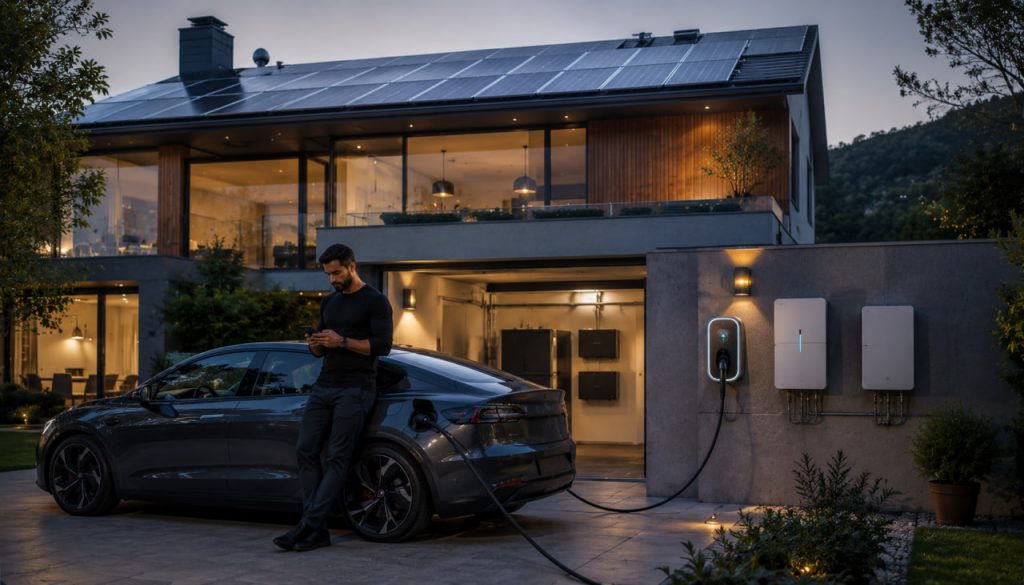
The idea of a fully connected eco-home powered by renewable energy is no longer futuristic. Around the world, homeowners are increasingly combining solar panels, battery storage systems, smart energy management, and electric vehicles into one integrated ecosystem.
At the center of this transformation is the electric vehicle. Modern EVs are evolving from simple transportation devices into mobile energy storage units capable of interacting directly with homes and electrical grids.
This concept is creating what many experts call a closed energy system — a self-sustaining ecosystem where energy is generated, stored, consumed, and redistributed locally with minimal dependence on traditional power infrastructure.
As energy prices rise and renewable technologies improve, the combination of EVs and eco-homes may become one of the most important trends in sustainable living.
What Is a Closed Energy System?
A closed energy system is an integrated setup where a household produces and manages much of its own energy independently.
In a modern eco-home, the system often includes:
- rooftop solar panels
- home battery storage
- smart energy software
- heat pumps
- EV charging systems
- electric vehicle battery integration
- energy-efficient appliances
The goal is to reduce dependence on centralized electricity grids while maximizing renewable energy usage.
Instead of consuming electricity passively, the home becomes an active energy hub capable of:
- generating electricity
- storing excess power
- optimizing consumption
- redistributing energy when needed
The electric vehicle plays a critical role because its battery can store enormous amounts of energy compared to traditional home storage systems.
Why Electric Vehicles Are Changing Home Energy
Modern electric vehicles contain powerful lithium-ion battery packs.
Many EV batteries now exceed:
- 60 kWh
- 80 kWh
- 100+ kWh
For comparison, some residential battery systems store far less energy.
This means an electric vehicle can potentially power major parts of a home during:
- peak electricity pricing
- grid outages
- nighttime usage
- renewable energy shortages
New technologies such as:
- Vehicle-to-Home (V2H)
- Vehicle-to-Grid (V2G)
- bidirectional charging
allow electricity to flow both into and out of the vehicle battery.
This transforms the car into a mobile energy reserve.
How Solar Panels and EVs Work Together
The most common eco-home setup combines solar panels with EV charging.
During the daytime:
- solar panels generate electricity
- the home consumes part of the power
- excess energy charges the EV battery
- remaining electricity may enter home storage or return to the grid
At night or during high electricity demand:
- the EV battery can supply power back to the house
- stored solar energy reduces grid dependence
- homeowners avoid expensive peak electricity rates
This creates a highly efficient energy loop.
In ideal conditions, homeowners can drive daily using electricity generated directly from their own rooftops.
This significantly reduces both carbon emissions and long-term energy costs.
Vehicle-to-Home Technology Explained
Vehicle-to-Home technology is one of the most important developments in modern energy systems.
V2H allows an EV battery to power household systems during outages or periods of high electricity prices.
For example:
- the vehicle charges during sunny daytime hours
- stored energy powers the home overnight
- emergency backup power becomes available during blackouts
This effectively turns the EV into a giant residential battery.
Several automakers are now developing V2H-compatible vehicles and bidirectional chargers.
The technology is especially valuable in regions with:
- unstable electrical grids
- expensive electricity
- extreme weather risks
- growing renewable energy adoption
Smart Energy Management Systems
A closed energy ecosystem requires intelligent software.
Modern eco-homes increasingly rely on AI-powered energy management systems that optimize:
- charging schedules
- energy consumption
- solar production
- battery storage
- electricity pricing
- appliance efficiency
These systems can automatically decide:
- when to charge the EV
- when to store electricity
- when to use battery power
- when to draw from the grid
Artificial intelligence plays an important role because energy demand changes constantly throughout the day.
AI helps maximize efficiency while reducing waste and operating costs.
Economic Benefits of Integrated Energy Systems
One of the main reasons homeowners adopt eco-home systems is financial savings.
Over time, integrated energy systems can reduce:
- gasoline expenses
- utility bills
- peak electricity charges
- backup generator costs
Homeowners may also benefit from:
- government incentives
- renewable energy subsidies
- tax credits
- lower maintenance costs
Although installation costs remain high, long-term savings can become substantial.
In regions with expensive electricity, some homeowners already achieve significant reductions in monthly energy expenses using solar and EV integration.
Environmental Advantages
The environmental benefits are equally important.
A fully integrated eco-home system can dramatically reduce:
- fossil fuel dependence
- carbon emissions
- air pollution
- grid stress
- energy waste
Electric vehicles powered by renewable electricity produce far lower lifecycle emissions than traditional gasoline vehicles.
Meanwhile, local energy generation reduces transmission losses associated with centralized power grids.
The combination of renewable energy and electrified transportation represents one of the clearest paths toward low-carbon living.
The Role of Home Battery Storage
While EV batteries are powerful, dedicated home battery systems remain important.
Systems like residential battery packs help:
- stabilize energy supply
- store excess solar power
- manage nighttime consumption
- protect against outages
Home batteries and EV batteries can work together within the same ecosystem.
This layered approach improves reliability because energy is distributed across multiple storage sources.
Some future smart homes may dynamically balance energy between:
- the house
- stationary batteries
- electric vehicles
- the power grid
Challenges and Limitations
Despite rapid progress, closed energy systems still face several obstacles.
Major challenges include:
- high upfront installation costs
- charging infrastructure limitations
- bidirectional charger availability
- battery degradation concerns
- local regulation differences
- grid compatibility issues
Not all electric vehicles currently support V2H or V2G technologies.
Infrastructure modernization is also necessary because older electrical systems were not designed for decentralized energy generation.
In some countries, regulations around grid-connected energy redistribution remain unclear.
Expert Perspective on the Future
Many industry leaders believe integrated energy ecosystems will become increasingly common.
Elon Musk has repeatedly described the future of energy as a combination of solar generation, battery storage, and electric transportation working together as one connected system.
That vision is already becoming reality in many modern eco-homes.
Energy companies, automakers, and governments increasingly recognize that transportation and residential energy systems are converging into a single infrastructure network.
Smart Cities and Future Infrastructure
The long-term impact may extend beyond individual homes.
Future smart cities could include:
- decentralized renewable microgrids
- connected EV charging networks
- AI-managed energy systems
- community battery storage
- local energy trading
Homes and vehicles may eventually become active participants in national energy systems instead of passive consumers.
This could improve grid stability while accelerating renewable energy adoption worldwide.
Conclusion
The combination of electric vehicles and eco-homes is transforming how energy is generated, stored, and consumed. What once seemed like separate technologies — solar panels, battery storage, smart homes, and EVs — are now evolving into fully integrated ecosystems.
Closed energy systems offer major advantages including lower emissions, reduced energy costs, improved resilience, and greater energy independence.
Although challenges remain, technological progress is accelerating rapidly. Bidirectional charging, AI-driven energy management, and advanced battery systems are making self-sustaining homes increasingly realistic.
In the coming decade, the relationship between homes, vehicles, and energy infrastructure may change fundamentally. Electric cars will not only transport people — they may also become essential components of the future energy economy.