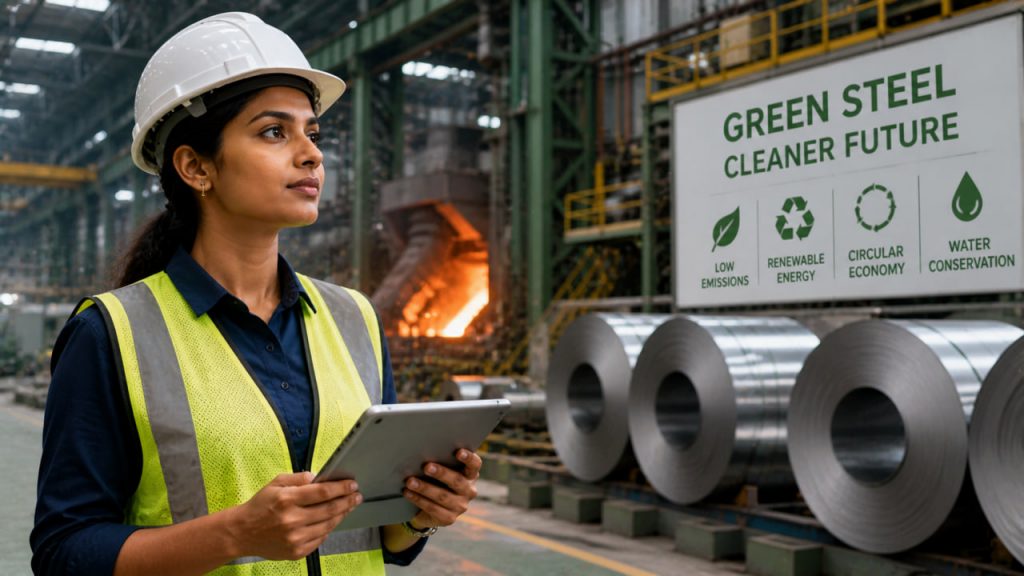
Heavy industry is responsible for a significant share of global carbon emissions, and among the largest contributors are steel and aluminum production. These materials are essential for construction, transportation, and manufacturing—including electric vehicles—but their traditional production methods are highly energy-intensive and carbon-heavy.
Today, the industry is undergoing a transformation toward “green steel” and “green aluminum”, aiming to dramatically reduce emissions through new technologies, cleaner energy, and circular processes.
Why Steel and Aluminum Are Carbon-Intensive
Traditional steel production relies on blast furnaces that use coal (coke) to extract iron from ore. This process releases large amounts of CO₂.
Aluminum production is also energy-intensive:
- requires high electricity consumption
- often depends on fossil-fuel-based power
As a result:
- steel accounts for roughly 7–9% of global CO₂ emissions
- aluminum contributes around 2–3%
Reducing emissions in these sectors is critical for achieving climate goals.
What Is Green Steel
Green steel refers to steel produced with significantly lower carbon emissions compared to traditional methods.
Key approaches include:
- replacing coal with hydrogen
- using electric arc furnaces (EAF) powered by renewable energy
- increasing use of recycled scrap metal
The most promising method is hydrogen-based steelmaking, where hydrogen replaces carbon in the reduction process, producing water instead of CO₂.
What Is Green Aluminum
Green aluminum focuses on reducing emissions primarily through clean electricity and improved processes.
Key strategies:
- using renewable energy (hydropower, solar, wind)
- improving energy efficiency in smelting
- reducing process emissions
Because aluminum production depends heavily on electricity, switching to clean energy can significantly lower its carbon footprint.
Hydrogen: A Game-Changer for Steel
Hydrogen is one of the most important innovations in green steel production.
Instead of using coke, hydrogen is used to reduce iron ore:
- traditional method → CO₂ emissions
- hydrogen method → water vapor
This has the potential to nearly eliminate emissions from the core steelmaking process.
However, challenges include:
- high cost of green hydrogen
- need for large-scale infrastructure
- energy requirements for hydrogen production
Electrification and Renewable Energy
Both steel and aluminum industries are moving toward electrification.
This includes:
- electric arc furnaces for steel recycling
- renewable-powered smelting for aluminum
The impact depends on the energy source:
- fossil electricity → limited benefit
- renewable electricity → major emission reduction
Recycling and Circular Economy
Recycling plays a major role in reducing emissions.
Benefits:
- requires far less energy than primary production
- reduces need for raw material extraction
- lowers overall carbon footprint
Steel and aluminum are highly recyclable materials, making them ideal for circular production models.
Industry Leaders and Initiatives
Major companies and projects are investing in green production methods.
Examples include:
- hydrogen-based steel pilot projects in Europe
- low-carbon aluminum production using hydropower
- partnerships between automakers and material producers
According to International Energy Agency, decarbonizing heavy industry is essential for reaching global climate targets.
Challenges to Adoption
Despite progress, several barriers remain:
- high initial investment costs
- limited availability of green hydrogen
- need for infrastructure upgrades
- higher cost of low-carbon materials
Currently, green steel and aluminum are often more expensive than traditional alternatives.
Demand from Key Industries
Demand for low-carbon materials is growing, especially from:
- automotive industry (EV manufacturers)
- construction sector
- consumer goods companies
Many companies are setting sustainability targets and are willing to pay a premium for greener materials.
The Role of Policy and Regulation
Governments are supporting the transition through:
- carbon pricing
- subsidies for clean technologies
- emissions regulations
Policies are essential to make green production economically viable at scale.
The Future of Green Metals
In the coming years, we are likely to see:
- rapid scaling of hydrogen-based steel production
- wider adoption of renewable-powered aluminum
- cost reductions as technologies mature
- stronger global supply chains for green materials
Over time, green steel and aluminum could become the industry standard.
Key Insight
Decarbonizing steel and aluminum is not optional—it is a critical step toward a low-carbon global economy.
Conclusion
Green steel and aluminum represent a major shift in how essential materials are produced. By adopting hydrogen, renewable energy, and recycling, manufacturers are significantly reducing emissions in some of the most carbon-intensive industries.
While challenges remain, the momentum is clear. As technology improves and demand grows, low-carbon materials will play a central role in building a more sustainable future.