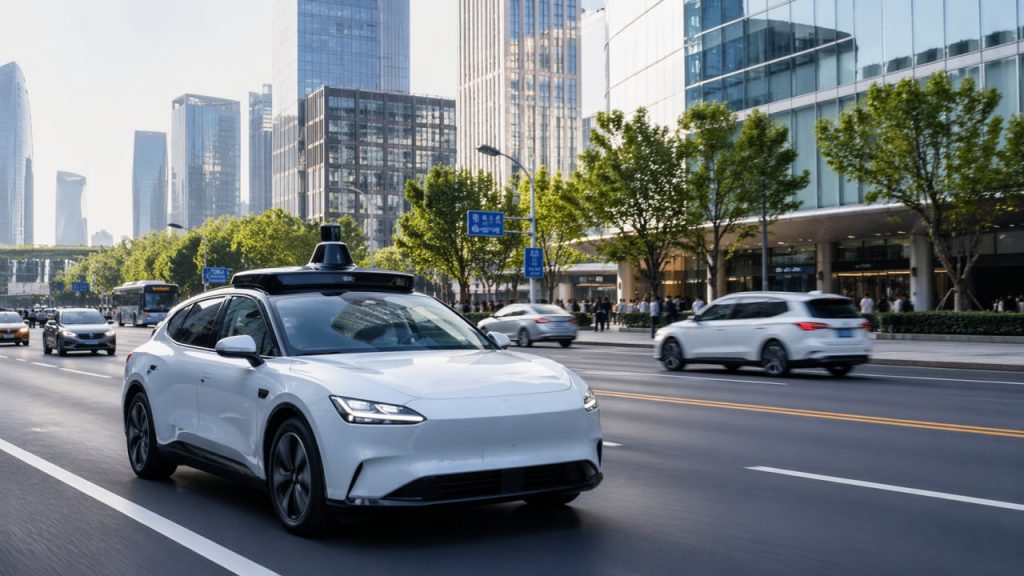
The convergence of two powerful technologies—electric vehicles (EVs) and artificial intelligence—is giving rise to a new paradigm in transportation: the autonomous electric vehicle. These cars are not only powered by electricity but are also capable of navigating roads, making decisions, and operating without human intervention.
While fully driverless cars are not yet widespread, rapid advancements suggest that autonomous EVs will play a major role in the near future of mobility.
What Is an Autonomous Electric Vehicle
An autonomous electric vehicle combines:
- an electric powertrain
- AI-driven driving systems
- advanced sensors and software
Unlike traditional vehicles, these cars rely on algorithms rather than human drivers to:
- interpret the environment
- plan routes
- control speed and direction
Autonomy levels range from driver assistance to full self-driving, where no human input is required.
How Autonomous EVs Work
Self-driving EVs use a combination of technologies:
- Cameras — detect lanes, traffic signs, pedestrians
- LiDAR and radar — measure distance and map surroundings
- AI algorithms — process data and make decisions
- GPS and mapping systems — provide navigation
These systems work together in real time, allowing the vehicle to understand and respond to complex road situations.
Why EVs and Autonomy Go Together
Electric vehicles are particularly well-suited for autonomous technology.
Reasons include:
- simpler mechanical systems
- easier integration with software platforms
- centralized electronic architecture
- better energy efficiency for automated systems
Modern EVs are essentially computers on wheels, making them ideal for AI integration.
Benefits of Driverless Electric Vehicles
Autonomous EVs offer several major advantages:
Safety Improvements
Human error is responsible for most road accidents. AI systems can:
- react faster than humans
- remain constantly alert
- reduce accidents caused by fatigue or distraction
Increased Efficiency
Autonomous driving can optimize:
- speed and traffic flow
- route planning
- energy consumption
Accessibility
Driverless vehicles can provide mobility for:
- elderly people
- disabled individuals
- those unable to drive
Reduced Costs
In commercial use, removing the driver can significantly lower operational costs.
Real-World Applications
Autonomous EVs are already being tested and deployed in controlled environments:
- robotaxis in selected cities
- autonomous delivery vehicles
- self-driving shuttles
- logistics and warehouse transport
These applications demonstrate the potential of the technology, even if full deployment is still evolving.
Challenges and Limitations
Despite progress, several challenges remain:
- complex urban environments
- unpredictable human behavior
- regulatory and legal issues
- high development costs
Achieving full autonomy (Level 5) is still a significant technical challenge.
Regulation and Safety Standards
Governments are working to create frameworks for autonomous vehicles.
Key considerations:
- liability in case of accidents
- safety certification
- data privacy
Clear regulations are essential for widespread adoption.
Public Trust and Adoption
For autonomous EVs to succeed, public trust is critical.
Challenges include:
- fear of losing control
- concerns about system failures
- skepticism about AI decision-making
Building trust will require:
- proven safety records
- transparency
- gradual introduction
The Role of AI and Data
Autonomous systems rely heavily on data.
Vehicles continuously learn from:
- real-world driving scenarios
- simulation environments
- fleet data
This allows systems to improve over time, becoming safer and more reliable.
The Future of Autonomous EVs
In the near future, we are likely to see:
- wider adoption of advanced driver assistance systems
- expansion of robotaxi services
- increased integration with smart cities
- gradual move toward full autonomy
Autonomous EVs will not replace all vehicles overnight, but their presence will steadily grow.
Key Insight
The combination of electrification and autonomy is not just an evolution—it is a complete transformation of transportation.
Conclusion
Autonomous electric vehicles represent one of the most important technological shifts in modern mobility. By combining clean energy with intelligent systems, they offer safer, more efficient, and more accessible transportation.
While challenges remain, the direction is clear: the future of driving is not just electric—it is increasingly driverless.