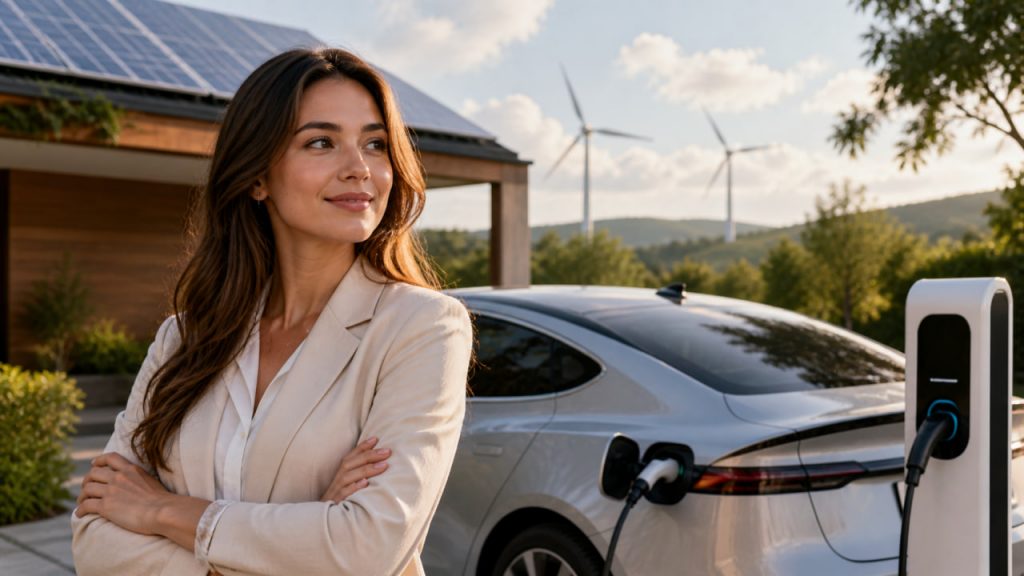
Electric vehicles (EVs) are often promoted as a key solution to climate change. However, their environmental impact is frequently debated. Critics argue that EVs are not as “green” as they seem, pointing to battery production and electricity sources. Supporters highlight their zero tailpipe emissions and long-term sustainability benefits.
The truth lies between these extremes. To understand the real carbon footprint of EVs, it is essential to look at the entire lifecycle of the vehicle—from production to operation and end-of-life.
What Is Carbon Footprint in Transportation
The carbon footprint of a vehicle refers to the total greenhouse gas emissions generated throughout its lifecycle.
This includes:
- manufacturing (vehicle and battery)
- fuel or electricity production
- daily operation
- maintenance
- disposal and recycling
For EVs, the key difference is that emissions are shifted from use phase to production phase, especially due to battery manufacturing.
Myth 1: EVs Are Worse Because of Battery Production
One of the most common arguments against EVs is that battery production generates significant emissions.
This is partially true:
- battery manufacturing is energy-intensive
- mining lithium, cobalt, and nickel has environmental impact
However, this is only the starting point of the lifecycle.
Studies from International Energy Agency show that although EVs may start with a higher production footprint, they quickly compensate for it during operation due to lower emissions.
Reality: EVs Become Cleaner Over Time
Unlike gasoline cars, EVs produce no tailpipe emissions.
During use:
- no CO₂ from combustion
- lower overall emissions, especially with clean electricity
Over time, the total emissions of EVs become significantly lower than internal combustion engine (ICE) vehicles.
The “break-even point” (when EV becomes cleaner) typically occurs after:
- 1–3 years of driving, depending on energy sources
Myth 2: Electricity Is Dirty, So EVs Are Not Clean
Another common claim is that EVs simply shift emissions from the car to the power plant.
This depends on the energy mix.
Reality:
- in regions with coal-heavy grids, EV benefits are smaller
- in regions with renewable energy, EVs are dramatically cleaner
Importantly:
- electricity grids are becoming cleaner over time
- EVs automatically benefit as energy systems improve
Gasoline cars, in contrast, never get cleaner after purchase.
Battery Recycling Changes the Equation
Battery recycling is a rapidly developing field.
Modern processes can recover:
- lithium
- cobalt
- nickel
Benefits:
- reduces need for new mining
- lowers lifecycle emissions
- creates circular supply chains
As recycling scales, the environmental footprint of EV batteries will decrease significantly.
Manufacturing Emissions Are Decreasing
Battery production is becoming more efficient and sustainable.
Improvements include:
- use of renewable energy in gigafactories
- more efficient manufacturing processes
- new battery chemistries requiring fewer rare materials
These changes are reducing the initial carbon footprint of EVs year by year.
Real-World Comparison
When comparing EVs and gasoline vehicles over their full lifecycle:
- EVs typically produce 30–70% fewer emissions
- the advantage increases with cleaner electricity
- long-term ownership strongly favors EVs
This makes EVs one of the most effective tools for reducing transportation emissions.
Additional Environmental Benefits
Beyond carbon emissions, EVs also provide:
- reduced air pollution in cities
- lower noise pollution
- improved public health outcomes
These factors are often overlooked but are critical for urban environments.
Challenges That Remain
EVs are not perfect and still face environmental challenges:
- mining impacts
- battery disposal concerns
- dependence on critical materials
However, these issues are being actively addressed through:
- regulation
- innovation
- recycling technologies
Key Insight
The environmental impact of EVs improves over time, while traditional vehicles remain constant or worsen.
Conclusion
The idea that electric vehicles are not environmentally friendly is largely a myth when viewed over the full lifecycle. While EVs have a higher initial carbon footprint due to battery production, they quickly offset these emissions during operation and become significantly cleaner over time.
As energy systems transition toward renewables and battery technology continues to improve, the carbon footprint of EVs will decrease even further. In the long term, EVs represent a crucial step toward reducing global emissions and building a more sustainable transportation system.