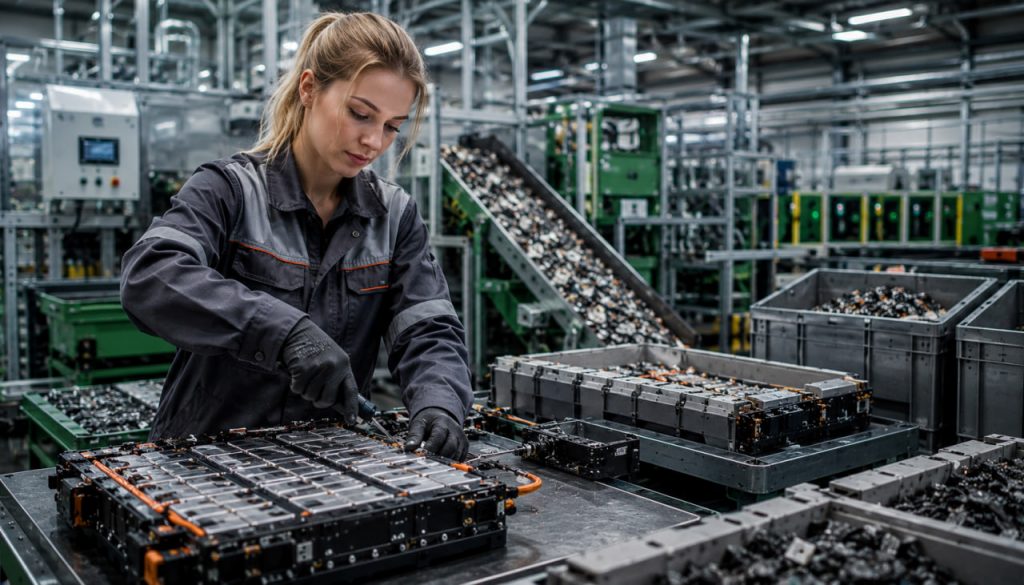
As electric vehicles, smartphones, laptops, and renewable energy systems continue spreading worldwide, battery recycling has become one of the most important environmental and industrial challenges of the decade.
Modern batteries contain valuable raw materials such as lithium, cobalt, nickel, copper, manganese, graphite, and aluminum. These materials are expensive to mine and process, while global demand continues rising rapidly due to the growth of electric transportation and clean energy infrastructure.
Without effective recycling systems, millions of batteries could eventually become hazardous waste. At the same time, recycling offers a major opportunity: recovering valuable materials and reducing dependence on new mining operations.
Today, governments, automakers, and energy companies are investing heavily in advanced battery recycling technologies. The goal is clear: create a circular battery economy where old batteries become raw materials for new ones.
Why Battery Recycling Matters
Lithium-ion batteries power much of modern technology.
They are used in:
- electric vehicles
- smartphones
- laptops
- energy storage systems
- industrial equipment
- renewable energy infrastructure
The problem is scale.
As EV adoption accelerates, the world will soon face enormous volumes of used batteries. According to industry forecasts, millions of EV battery packs are expected to reach end-of-life status over the next decade.
Improper disposal creates several risks:
- toxic chemical leakage
- fire hazards
- environmental contamination
- resource waste
- increased mining pressure
At the same time, battery materials are extremely valuable.
Cobalt, lithium, and nickel are considered strategic materials because they are essential for modern battery production and global electrification.
Battery recycling helps solve both environmental and supply-chain problems simultaneously.
How Modern Battery Recycling Works
Battery recycling is far more complex than traditional metal recycling.
Modern lithium-ion batteries contain:
- multiple chemical compounds
- layered structures
- electronic systems
- cooling components
- adhesives
- flammable materials
The recycling process usually includes several stages.
Collection and Transportation
Used batteries must first be safely collected and transported.
This is challenging because damaged lithium-ion batteries can overheat or ignite if improperly handled.
Specialized containers and safety regulations are required during transportation.
Battery Disassembly
After arriving at recycling facilities, batteries are disassembled.
Technicians or automated systems remove:
- outer casings
- electronics
- wiring
- cooling systems
- battery modules
Some modern recycling plants now use robotic systems to improve safety and efficiency.
Automation is becoming increasingly important because EV battery packs are large, heavy, and difficult to process manually.
Mechanical Processing
The next stage involves shredding and separating battery materials.
This process can recover:
- aluminum
- steel
- copper
- plastics
Battery cells are often crushed into a powder-like material known as “black mass.”
Black mass contains valuable battery minerals including:
- lithium
- cobalt
- nickel
- manganese
- graphite
This material becomes the foundation for further chemical extraction.
Hydrometallurgical Recycling
One of the most advanced recycling methods today is hydrometallurgy.
This process uses liquid chemical solutions to separate and recover valuable metals from battery waste.
Hydrometallurgical recycling offers several advantages:
- higher recovery rates
- lower temperatures
- reduced emissions
- improved material purity
Many modern recycling companies prefer this method because it can recover large amounts of lithium, nickel, and cobalt efficiently.
In some advanced facilities, recovery rates for critical metals can exceed 90%.
Pyrometallurgical Recycling
Another common approach is pyrometallurgy.
This process uses extremely high temperatures to melt battery materials and extract metals.
Pyrometallurgical recycling is effective for recovering:
- cobalt
- nickel
- copper
However, it has several disadvantages:
- high energy consumption
- lower lithium recovery
- increased emissions
- material losses
Because of these limitations, many companies are shifting toward hydrometallurgical and hybrid recycling systems.
Direct Recycling: The Next Generation Technology
One of the most promising new technologies is direct recycling.
Instead of breaking battery materials down completely, direct recycling attempts to preserve battery cathode structures for reuse.
Potential advantages include:
- lower processing costs
- reduced energy use
- fewer chemical reactions
- improved sustainability
This technology is still developing but may become one of the most important breakthroughs in future battery recycling.
Many researchers believe direct recycling could dramatically improve economic efficiency in the industry.
Real Battery Recycling Rates Today
One of the most misunderstood topics is recycling percentages.
People often assume all battery materials are fully recyclable, but reality is more complicated.
Current recycling rates vary depending on:
- battery chemistry
- recycling technology
- country regulations
- facility capabilities
- economic conditions
For lithium-ion batteries, recovery rates can differ significantly by material.
Approximate recovery levels in advanced facilities today include:
- cobalt: 90–95%
- nickel: 90–95%
- copper: 90%+
- aluminum: high recovery potential
- lithium: often 50–90% depending on technology
- graphite: lower recovery rates in many facilities
Overall battery pack recycling efficiency may range from around 50% to over 90% depending on the process used.
The European Union now pushes for stricter recycling targets under new battery regulations.
Why Lithium Recovery Is Difficult
Lithium recycling remains one of the industry’s biggest challenges.
Unlike cobalt and nickel, lithium is harder to recover economically because:
- concentrations are lower
- extraction is chemically complex
- market prices fluctuate
- purification requires advanced processing
However, rising lithium demand is rapidly increasing investment into lithium recovery technologies.
As EV production expands, lithium recycling is becoming increasingly important for long-term supply stability.
Major Companies Leading Battery Recycling
Several major companies are now building large-scale battery recycling infrastructure.
Important industry players include:
- Redwood Materials
- Li-Cycle
- CATL
- Umicore
- Northvolt
- Ascend Elements
These companies aim to create closed-loop battery ecosystems where recycled materials return directly into new battery manufacturing.
Redwood Materials, founded by former Tesla CTO JB Straubel, became one of the most recognized battery recycling startups globally.
Straubel has repeatedly emphasized that battery recycling will become essential for scaling sustainable electrification worldwide.
The Role of AI and Robotics
Artificial intelligence is increasingly transforming recycling facilities.
AI systems can help:
- identify battery chemistries
- optimize sorting
- predict battery conditions
- improve safety
- automate disassembly
Meanwhile, robotics improves efficiency and reduces worker exposure to dangerous materials.
Future recycling plants may become highly automated industrial systems powered by AI-driven monitoring and material recovery optimization.
Environmental Benefits of Battery Recycling
Battery recycling provides major environmental advantages.
Key benefits include:
- reduced mining demand
- lower carbon emissions
- decreased landfill waste
- conservation of rare materials
- reduced ecosystem damage
Mining operations for battery materials can consume enormous amounts of water and energy.
By recovering existing materials, recycling helps reduce the environmental footprint of battery production.
A strong recycling industry is critical for making electric transportation truly sustainable long term.
Challenges Still Facing the Industry
Despite rapid progress, several obstacles remain.
The industry still struggles with:
- high processing costs
- transportation regulations
- battery fire risks
- inconsistent battery designs
- scaling infrastructure
- economic profitability
Standardization remains a major issue because manufacturers use different battery formats and chemistries.
This makes automated recycling more difficult.
Governments may eventually require battery manufacturers to design products that are easier to recycle from the beginning.
Conclusion
Battery recycling is becoming one of the most important industries in the clean energy transition. As electric vehicles and renewable energy systems expand globally, the world will need efficient ways to recover valuable battery materials and reduce environmental impact.
Modern recycling technologies such as hydrometallurgy, robotics, AI-assisted sorting, and direct recycling are rapidly improving recovery rates and economic efficiency.
While challenges remain, the industry is evolving quickly. Companies and governments increasingly recognize that recycling is not optional — it is essential for building a sustainable battery economy.
In the future, recycled materials may supply a significant portion of the raw materials needed for new batteries, reducing dependence on mining while supporting the global shift toward electrification and renewable energy.