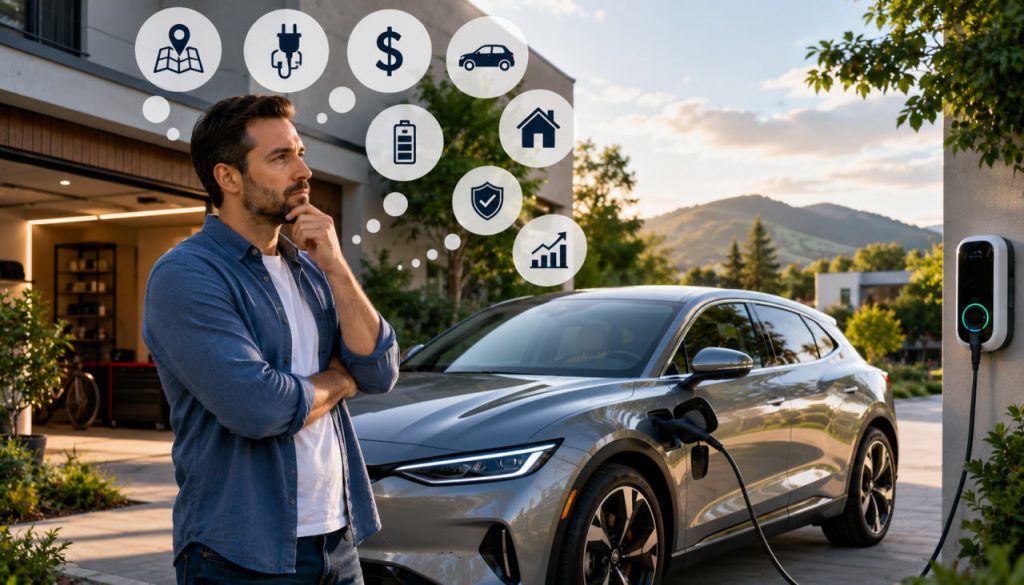
Electric vehicles (EVs) have rapidly evolved from niche products into mainstream transportation. Improvements in battery technology, charging infrastructure, driving range, and affordability have made EVs a realistic option for millions of drivers worldwide. However, purchasing an electric vehicle is a significant financial decision that depends on far more than environmental considerations.
While an EV can reduce fuel costs and maintenance expenses, it may not be the right choice for every lifestyle or driving pattern. Asking the right questions before buying will help you determine whether an electric vehicle truly fits your needs.
The best electric vehicle is not simply the newest or most expensive model—it is the one that matches your daily routine, budget, and long-term expectations.
1. How Far Do You Drive Each Day?
Your daily driving distance is one of the most important factors.
Most modern electric vehicles offer between 300 and 600 kilometers (190–375 miles) of driving range on a full charge, which is more than enough for the average commuter.
Ask yourself:
- How many kilometers do I drive daily?
- Do I regularly take long road trips?
- How often do I exceed my vehicle’s expected range?
For many drivers, daily charging is unnecessary because average commuting distances are relatively short.
2. Can You Charge at Home?
Home charging is one of the greatest advantages of EV ownership.
Consider:
- Do you have a private driveway or garage?
- Can you install a home charger?
- Does your apartment building allow EV charging?
Home charging offers maximum convenience and is often the most economical way to operate an electric vehicle.
3. Is Public Charging Available Where You Live?
If home charging is unavailable, reliable public charging becomes essential.
Research:
- Fast charging stations nearby
- Workplace charging
- Shopping center chargers
- Highway charging networks
- Charging reliability
Expanding charging infrastructure has made EV ownership easier, but availability still varies by region.
4. How Often Do You Travel Long Distances?
Road trips require more planning than local driving.
Ask yourself:
- How many long journeys do I make each year?
- Are fast chargers available along my usual routes?
- Am I comfortable taking charging breaks?
Many modern EVs support ultra-fast charging, significantly reducing travel downtime.
5. What Is Your Total Budget?
The purchase price is only part of vehicle ownership.
Consider:
- Purchase cost
- Insurance
- Electricity
- Maintenance
- Tires
- Registration
- Financing
- Government incentives
Calculating the total cost of ownership often provides a more accurate comparison than purchase price alone.
6. Do You Live in a Cold or Hot Climate?
Weather affects every vehicle, including EVs.
Cold temperatures may temporarily reduce driving range because batteries operate less efficiently and cabin heating requires additional energy.
Hot climates may increase cooling demands, although modern battery thermal management systems significantly reduce these effects.
Choose a model with an efficient heat pump and advanced battery temperature management if your region experiences extreme weather.
7. What Type of Driving Do You Do Most?
Different driving patterns influence EV efficiency.
Electric vehicles perform exceptionally well in:
- City traffic
- Daily commuting
- Stop-and-go driving
- Short family trips
Drivers who spend most of their time in urban environments often achieve excellent energy efficiency thanks to regenerative braking.
8. How Important Is Performance?
Electric motors deliver instant torque.
Benefits include:
- Smooth acceleration
- Quiet driving
- Quick overtaking
- Responsive handling
Even family-oriented electric vehicles often outperform similarly priced gasoline vehicles in acceleration.
9. How Long Do You Plan to Keep the Vehicle?
Ownership duration affects overall value.
Drivers keeping a vehicle for many years may benefit from:
- Lower maintenance costs
- Reduced fuel expenses
- Software updates
- Improving charging infrastructure
Battery warranties offered by most manufacturers provide additional confidence for long-term ownership.
10. Are You Comfortable with New Technology?
Modern electric vehicles function much like computers on wheels.
Features often include:
- Over-the-air software updates
- Smartphone integration
- Advanced driver assistance
- Digital dashboards
- Connected mobile applications
If you enjoy technology, an EV may provide a more engaging ownership experience.
11. What Safety Features Matter Most?
Today’s electric vehicles frequently achieve excellent crash-test ratings.
Look for features such as:
- Automatic emergency braking
- Adaptive cruise control
- Blind-spot monitoring
- Lane-keeping assistance
- Driver attention monitoring
- Surround-view cameras
Safety should remain one of the highest priorities regardless of powertrain choice.
12. Are You Buying for Environmental Reasons?
Reducing tailpipe emissions is a major motivation for many EV buyers.
However, environmental benefits depend on factors such as:
- Electricity generation sources
- Driving habits
- Vehicle lifespan
- Battery manufacturing
- Recycling infrastructure
Even so, many studies conclude that electric vehicles generally produce lower lifetime greenhouse gas emissions than comparable gasoline vehicles, particularly when powered by cleaner electricity.
Common Mistakes Buyers Make
Avoid these common pitfalls:
- Buying more driving range than you actually need
- Ignoring charging availability
- Focusing only on purchase price
- Forgetting total ownership costs
- Not test-driving multiple models
- Overlooking battery warranty details
Careful planning can prevent expensive surprises later.
Expert Perspective: Choose the Vehicle That Fits Your Lifestyle
According to International Energy Agency, electric vehicles are becoming increasingly practical as battery technology improves, charging infrastructure expands, and operating costs decline. However, the agency emphasizes that buyers should evaluate charging access, driving habits, and local infrastructure before making a purchase.
Automotive analyst John McElroy has similarly noted that the most satisfied EV owners are typically those whose daily driving patterns align well with the capabilities of modern electric vehicles rather than those who purchase solely because of new technology or market trends.
Their perspectives reinforce a simple conclusion: the right electric vehicle depends on how you actually drive—not on marketing claims or popularity.
The Future of Electric Vehicle Ownership
Over the coming years, EV ownership is expected to become even more convenient thanks to:
- Longer driving ranges
- Faster charging speeds
- More affordable battery technology
- Expanded charging infrastructure
- Bidirectional charging
- Smarter route planning
- Improved battery durability
These advances will continue making electric vehicles practical for an even wider range of drivers.
Conclusion
Buying an electric vehicle is no longer simply a technological choice—it is a lifestyle decision. By honestly evaluating your driving habits, charging options, budget, climate, travel needs, and long-term expectations, you can determine whether an EV is the right investment.
For many drivers, the answer is already yes. For others, waiting another few years may provide even more choices and better value.
The smartest EV purchase begins with asking the right questions before visiting the dealership.