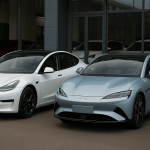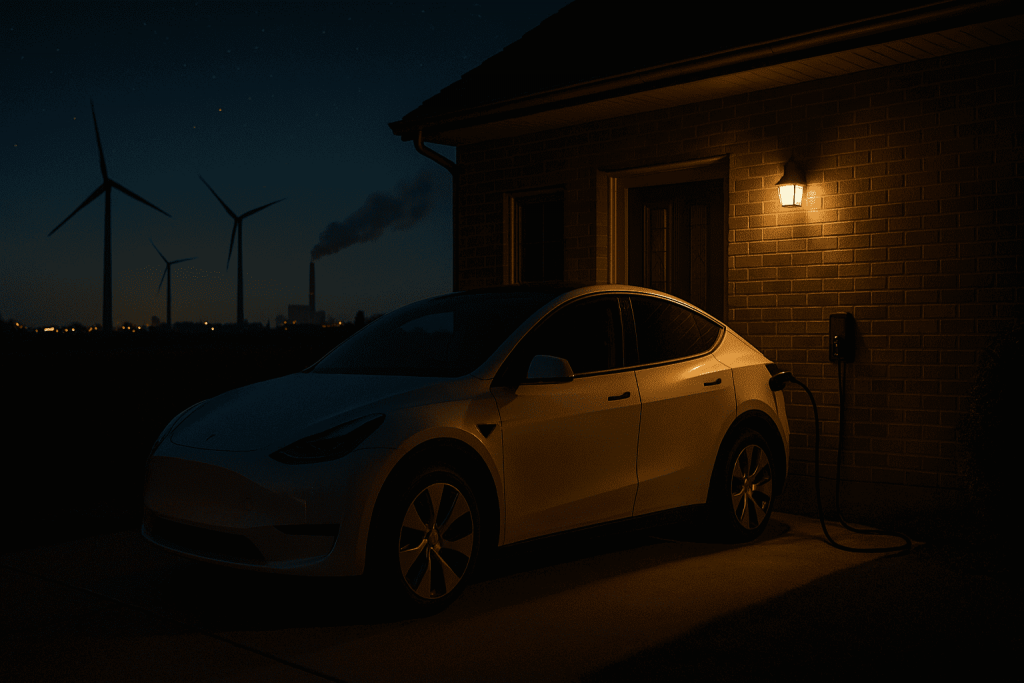
The question behind every plug-in: When your EV sips a kilowatt-hour, how clean is it really? The answer isn’t a single number—it’s a moving target defined by location, hour, season, and grid behavior. A “green kWh” can be nearly carbon-free at 03:00 in a windy region, while a “coal kWh” can sneak in during a still, hot evening peak. Understanding this swing lets drivers and fleets cut real emissions without waiting for perfect infrastructure. 🌍⚡
Average vs. marginal emissions—why timing beats slogans: A country’s annual grid mix gives an average carbon intensity (grams CO₂e per kWh), but the marginal plant—what ramps up or down because you charged—sets the true footprint of your next kWh. Late-night demand may tap flexible gas or excess wind; early evening peaks may pull in coal or oil peakers. Plan charges when low-carbon generators are already online and curtailment risk is high, and your “marginal” impact collapses.
Granular reality—carbon can swing 5–10× in a day: Many interconnected grids show carbon intensity plunging during windy nights or sunny middays and spiking during wind lulls or dinner peaks. The same 40 kWh top-up might embody ~1–2 kg CO₂ on a clean night but 8–12 kg during a dirty peak. Smart scheduling converts this volatility into free emissions cuts.
“Green” vs. “grey” electrons—contracts matter, but physics rules first: Certificates (RECs/GoOs) and green tariffs fund renewables and let you claim market-based zero-carbon electricity over a year. That’s good—but it doesn’t change the instant dispatch that defines marginal impact. Best practice pairs guarantees of origin with time-aware charging so accounting and physics both point green.
The rooftop solar paradox: Midday sunshine is clean, but your car is often away: If you can plug in at work or school, midday AC charging is superb. At home, consider a small battery, dynamic feed-in, or scheduling appliances so your PV covers household loads and your EV absorbs the afternoon surplus when you are home. Exporting at noon and importing at night on a coal-heavy grid may still be a win if nights are wind-rich—check your region’s patterns.
Heat pumps, thermal limits, and why preconditioning is climate action: Preheating or precooling the cabin while the car is plugged into clean, off-peak power shifts HVAC energy off the road. Warming the battery before fast charging also reduces losses and shortens sessions, indirectly trimming grid stress during higher-carbon hours. Small efficiencies, big fleet impact.
Fast charging isn’t inherently “dirty”: The footprint depends on the site’s supply and your timing. Highway hubs fed by on-site solar or PPAs plus battery buffering can be low-carbon even at high power. Conversely, a depot pulling from an evening-peaking, coal-leaning feeder can be “grey” at just 7 kW. Power level is not morality; when and from where is.
Curtailment is your friend—take the surplus: In high-renewable regions, wind and solar are sometimes dumped because demand is too low or transmission is constrained. Apps that chase the cheapest hours often align with the greenest hours, because wholesale prices crash when renewables would otherwise be curtailed. Charging into those troughs converts wasted green energy into clean kilometers. 🌀
Home vs. workplace vs. public—pick your battles: Home charging offers control and cheap TOU rates; workplace charging captures clean midday PV; public DC fills road-trip gaps. Blend them. Use home TOU for night wind, grab workplace solar when available, and reserve DC for necessity—ideally during off-peak windows or at sites with verified green supply.
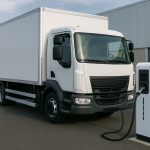
Fleet lens—carbon KPIs you can actually manage: Track grams CO₂e per kilometer using time-resolved grid intensity, not annual averages. Set depot schedules to target low-carbon windows; cap charging rates when intensity spikes; use battery buffers to “soak” cheap-clean energy and release it for departures. Publish weekly dashboards—drivers respond to feedback loops they can see.
V2H/V2G—turn your car into a carbon shaper: Vehicle-to-home/grid can store low-carbon power when it’s abundant and feed your home or grid during dirty peaks. Even modest cycling (within battery warranty limits) can shave the dirtiest hours. The climate math works best where the spread between clean and dirty hours is large and tariffs reflect that spread.
Mythbusting—“EVs just move emissions to the power plant”: Tailpipes disappear, but the upstream arithmetic improves because centralized generators + renewables + grid-scale filtering beat millions of cold-start engines. As grids decarbonize, EVs automatically get cleaner each year—without swapping vehicles—while ICE cars are locked to their fuel’s chemistry forever.
Embodied carbon and the long game: Battery and vehicle manufacturing carry a one-time footprint. In most regions, the operational savings from clean charging repay that “carbon debt” within 1–3 years of typical driving. Smarter charging shrinks that payback window further, after which the EV delivers net climate dividends for the rest of its life.
Practical playbook for cleaner charging: Use your car or charger’s schedule tied to off-peak, low-carbon hours; finish charging near departure to reduce losses and battery stress; enable preconditioning while plugged in; prefer sites with renewables or storage; and consider a green tariff or PPA to backstop your annual claims. A few taps in an app can cut your real-world grams CO₂e per km by double digits. ✅
Equity and infrastructure—don’t leave apartments behind: Curbside and shared-garage charging must also be time-aware. Municipal networks that price or nudge sessions toward clean hours amplify benefits across thousands of drivers, not just homeowners with garages. Policy can make the green choice the default one.
Conclusion: The climate impact of EV charging is not fixed—it’s a dial you can turn. Charge when the grid is clean, where renewables are abundant, and in ways that help the system (preconditioning, buffers, V2H/V2G). Combine time-based habits with credible green contracts, and your “green kWh” becomes more than a label—it becomes a measurable, everyday emissions win. 🌱