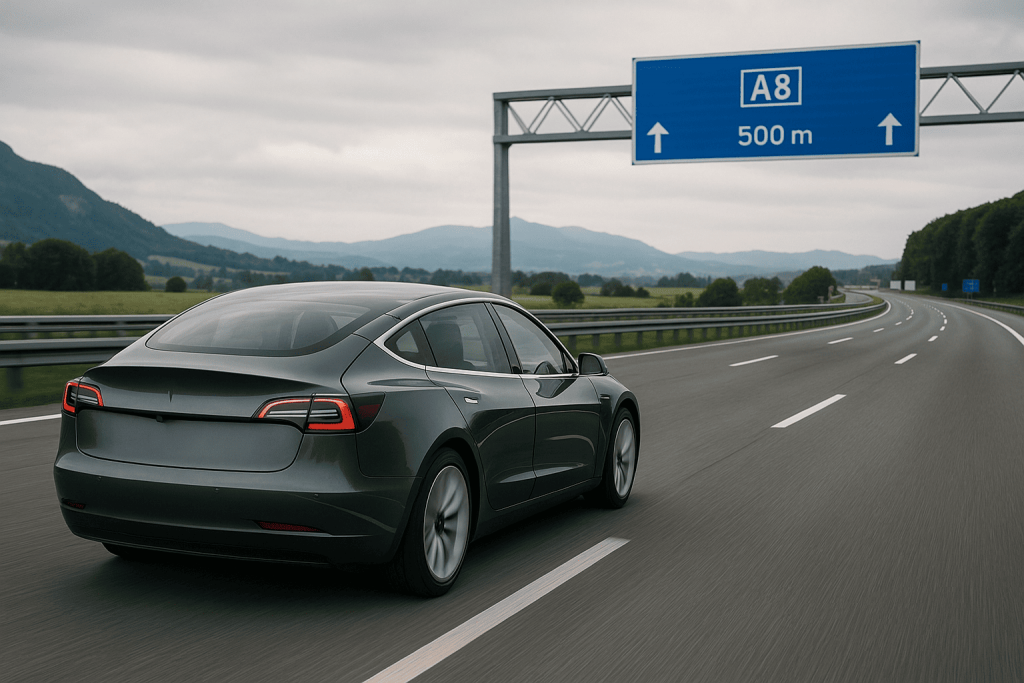
Tesla’s driver-assistance stack is often discussed as if it were the same everywhere, but Europe is a very different proving ground from North America. Between UNECE rules, national traffic laws, and stringent safety expectations, features that feel hands-off across the Atlantic are deliberately more supervised here. This deep dive clarifies what Tesla’s Autopilot and FSD features actually do in Europe today, why some capabilities are constrained, and how to get the best, safest experience on European roads.
Autopilot vs. FSD: Definitions that matter in Europe
Autopilot in Europe generally covers adaptive cruise control and lane centering on marked roads, with driver supervision. “Enhanced” packages may add Auto Lane Change, Navigate-like guidance on motorways, and Autopark/Summon variations, but all remain driver-assist, not autonomous driving. “FSD” as a brand implies expanding feature sets, yet in Europe these functions are delivered within strict regulations and always require the driver to stay engaged and responsible.
The regulatory backdrop: why Europe feels different
European type-approval is shaped by UNECE regulations that govern steering assistance, automated lane changes, speed assistance, driver monitoring, and more. In practice this yields tighter caps on lateral acceleration, stricter takeover prompts, mandatory driver monitoring, and confirmation steps for certain maneuvers. The result is a system that prioritizes cooperative, predictable assistance over bold autonomy, especially in complex urban settings.
What works well today on European motorways
Adaptive cruise control is mature, smooth, and adept at handling variable traffic speeds. Lane centering keeps the car accurately within lane markings, including through gentle curves and light banking. With appropriate packages, the system can suggest or perform lane changes when the driver confirms via indicator input, and it can guide along a pre-set motorway route with clear prompts for exits and interchanges. When conditions are favorable—good markings, dry weather, moderate traffic—the experience is confident and reduces fatigue on long journeys.
Automatic lane changes: capability with deliberate friction
Auto Lane Change is available on many European routes but typically requires the driver to confirm with the turn signal and keep hands on the wheel. Lane-change aggressiveness is tempered; the system waits for ample gaps, honors lower lateral acceleration limits, and can decline a maneuver if it deems the gap marginal. This conservatism is by design and reflects European safety expectations.
Speed limits and Intelligent Speed Assist
European vehicles incorporate Intelligent Speed Assist behavior. Tesla uses onboard cameras (and maps where applicable) to recognize posted limits and provide warnings or gentle compliance nudges. Drivers can temporarily override, but the default experience keeps speeds aligned with local signage, especially near schools, work zones, and urban streets where enforcement and safety stakes are high.
City streets: supervised assistance rather than “self-driving”
Urban driving in Europe remains a supervised-domain task. Lane centering on well-marked arterials, stop-and-go support in congestion, and speed-limit compliance work well, but the system expects the driver to handle complex unprotected turns, ambiguous priority at roundabouts, and narrow streets with parked cars. The software is increasingly competent at following traffic flow and responding to vulnerable road users, yet design intent is assistive, not autonomous, in mixed urban environments.
Roundabouts, tight lanes, and village roads
Europe’s geometric variety—compact roundabouts, stone-walled lanes, sudden pinch points—tests any driver-assist. Tesla’s system can track lanes through larger roundabouts with clear markings but may ask for driver control when markings fade, when geometry is unusual, or when cyclists and pedestrians interact unpredictably. Expect more supervision on secondary roads and be ready to steer proactively.
Driver monitoring: eyes-on enforced
Hands-on-wheel prompts and camera-based attention checks ensure the driver remains engaged. Glance duration, head pose, and steering-wheel input are monitored; ignoring alerts triggers escalating warnings and can disable assistance for the rest of the drive. Sunglasses, low light, or obstructed cameras can increase prompts—keep the driver-facing camera unobstructed and respond promptly to maintain a smooth experience.
Weather and markings: know the weak spots
Heavy rain, snow, or worn/temporary lane markings can degrade lane centering and recognition. In such cases the system will either reduce capability or request driver takeover. Euro-style temporary construction patterns and yellow detours are improving but remain edge cases; reduce reliance and drive manually if cues are unclear.
Cameras-only perception: what that means for you
Recent European Teslas rely on camera-based perception without radar or ultrasonics on newer builds. In practice, this works well in clear conditions and with clean lenses. Keep cameras free of bugs, road film, and snow, and consider that heavy spray or glare can shorten look-ahead confidence. Clean the lens areas at each stop in poor weather; it pays immediate dividends in smoother assistance.
Highway etiquette and safety with assistance on
Signal early, confirm lane changes decisively when the system requests it, and avoid “hovering” beside other vehicles. Keep your right foot and hands ready for anomalies—cut-ins, aggressive local driving, or unexpected temporary signage. Assistance shines when you remain the pilot-in-command, using the software to reduce workload rather than to replace judgment.
Calibration and maintenance: small habits, big results
Post-service or windshield changes, allow the system to recalibrate by driving on well-marked roads. Keep wheel alignment within spec; jittery tracking increases prompts. Update software on reliable Wi-Fi, as driver-assistance refinement often arrives incrementally. Tire choice and pressures influence ride and steering feel; follow OEM load ratings and seasonal recommendations for best lane-keeping stability.
Feature variability by market and build
Exact capabilities can vary by country, software channel, and hardware generation. Two otherwise similar cars may behave differently if camera sets, compute hardware, or regional approvals differ. Before a purchase or a long trip, check the in-car “Additional Vehicle Information” screen and current release notes to understand what your specific vehicle supports in your region.
Insurance and legal responsibility
Regardless of assist level, European laws hold the driver responsible. Treat the system as an advanced assistant that reduces workload but never removes accountability. Avoid complacency: eyes on the road, hands ready, and be prepared to brake or steer at any time.
Practical tips for the best European experience
Plan motorway legs where assistance is strongest. Accept confirmation prompts as safety rails, not obstacles. Keep cameras clean and respond to attention alerts immediately. In cities, use assistance for traffic flow but handle complex maneuvers yourself. After updates, re-familiarize yourself with any layout changes and verify your preferred settings.
What to expect next
Incremental improvements will continue—better lane semantics in construction zones, smoother merges, more robust sign recognition, and refined driver monitoring. But the European trajectory emphasizes supervised, cooperative driving that respects local laws and human factors. Expect evolution, not a sudden flip to unsupervised autonomy.
Conclusion
Tesla’s Autopilot and FSD features in Europe are powerful driver-assistance tools, not self-driving substitutes. On motorways with clear markings, they shine—easing fatigue and smoothing traffic flow. In cities and complex secondary roads, supervision remains central, with the system offering support rather than taking over. Understand the regulatory context, keep the hardware clean and calibrated, and stay engaged. Used this way, Tesla’s assistance elevates safety and comfort while honoring the European rulebook—and your role behind the wheel.
FSD here? More like “Fancy Slow Driver”🤣🤣