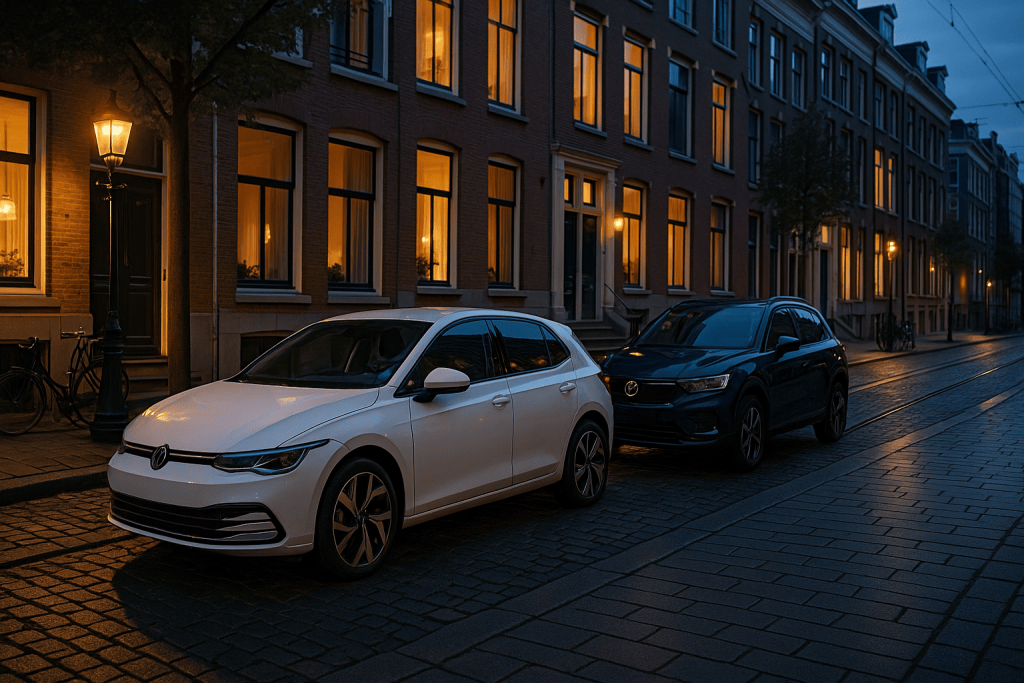
Owning an electric car without a private driveway or home wallbox used to sound impossible. Today, in many European cities, it’s increasingly normal. Dense public charging, workplace plugs, destination chargers at supermarkets and gyms, and smarter software have turned the city itself into your “garage.” This guide shows exactly how to make EV life easy—even when your parking spot is the curb outside.
The mindset shift: top up, don’t fill up
Life without a home charger works best when you charge like you charge your phone—little and often. Instead of arriving at 5% and hunting for a fast charger, you add 10–30% whenever you’re already parked for something else: a weekly shop, a workout, a coffee with friends, or during the workday. That habit keeps the battery in its happy zone and keeps you off the charging treadmill.
Know your plugs: AC vs. DC in the city
Most city charging happens on AC (typically 3.7–22 kW). It’s affordable and everywhere—on-street posts, car parks, offices, hotels. DC fast chargers (50–350 kW) are great for road trips or tight schedules, but you’ll rarely need them for daily life. A 90-minute AC session while you see a film or have dinner can easily add the next two or three days of range.
Map your personal “charging loop”
Think in loops, not in single stations. Identify two or three reliable chargers near work, your supermarket, your gym, and your favorite weekend spots. Save them in your charging apps and note typical occupancy times. With a small loop of dependable locations, you’ll stop thinking about charging entirely—it just happens in the background of your week.
Apps and roaming that actually help
Use two kinds of apps: discovery apps that show availability and connector types, and e-mobility service provider (EMSP) apps or RFID cards that unlock roaming across many networks. Keep at least two EMSP options in case a network is down or busy. Look for features like live status, pricing clarity (per kWh vs. per minute), off-peak discounts, and route planning that accounts for weather and elevation.
Costs: still cheaper than petrol without a wallbox
Public charging can cost more than home electricity, but city EV life remains competitive—often clearly cheaper—than petrol. You’ll mix low-cost overnight AC with occasional faster top-ups. Combine this with lower maintenance (no oil changes, fewer consumables) and urban incentives (reduced congestion charges, preferential parking, low-emission zone access) and total monthly costs usually undercut a comparable combustion car.
Routines that make it effortless
Build charging into things you already do. Plug in while you shop on Thursday evenings; add a quick 20-minute top-up after Saturday’s swim; leave the car on an office AC post on Tuesdays. Automate reminders in your calendar or app to nudge you when nearby chargers are cheapest or quietest. After two weeks, it’s muscle memory.
Workplace charging: the unsung hero
If your employer offers even a handful of AC sockets, that’s your primary fuel station. Ask HR or facilities about fair-use rules, RFID access, and off-peak tariffs. If your office doesn’t have chargers yet, propose a simple pilot: four AC posts in the corner of the car park with transparent booking. Employers like the ESG points; you get effortless range.
Destination charging is everywhere—use it
Grocery chains, cinemas, gyms, garden centers, and retail parks increasingly offer AC posts, sometimes free while you shop. Hotels and restaurants are adding sockets to attract guests. Save the places with predictable dwell time and choose them over similar venues without chargers. Your calendar becomes your charge plan.
Apartment blocks and HOAs: practical playbook
If you live in a block, ask the building manager about shared charging. Start small: a pair of 11–22 kW posts in visitor bays, with smart load-balancing so they don’t trip building supply. Share a simple etiquette guide (move the car when finished, leave cables tidy) and propose off-peak pricing to keep it fair. Even two posts can serve a surprising number of residents if everyone “tops up” instead of occupying all night.
On-street etiquette that keeps the peace
Be a good neighbor: never block a charger if you’re not plugged in; move your car once you’ve got enough for the next day or two; keep cables off the pavement; and avoid using fast chargers as parking spaces. A little courtesy keeps city authorities supportive and chargers available.
Winter in the city: easy when you plan
Cold weather reduces range, but simple habits offset most of the hit. Precondition the cabin while still plugged in so the battery is warm at departure. Use seat and wheel heaters rather than blasting the fan. Keep the car in “Auto” or “Eco” modes to smooth power spikes, and don’t let the state of charge sit near 0% overnight in very low temperatures. AC posts near your home or office are perfect winter friends.
Security and cable care
Use locking cables, close charge-port caps gently in freezing rain to prevent sticking, and keep a microfiber cloth in the boot to dry connectors. If your city has cable-theft issues, choose posts with tethered cables or park under cameras at retail car parks. Most modern posts log sessions to your account, so billing and dispute resolution are straightforward.
Which EVs work best without home charging?
You don’t need a huge battery; you need predictable efficiency and decent AC charging. Look for models with strong urban efficiency, reliable heat pumps, 11–22 kW onboard AC, good preconditioning, and robust app controls. A smaller battery that charges quickly and cheaply can beat a large pack that you rarely use.
Battery health: why “little and often” helps
Frequent shallow charges are kinder to lithium batteries than deep discharges. Living on public AC naturally encourages that pattern. Try to keep your daily window between roughly 20–80% SOC for routine driving—and use fast DC only when it genuinely saves you time. Your battery will thank you with long, healthy service.
Smart tariffs and timing
Many cities offer cheaper overnight or off-peak AC rates. If you can park near a curbside post overnight, schedule a timer in your app so charging starts when prices drop. If overnight parking isn’t feasible, seek lunchtime windows—some networks discount mid-day when solar is abundant.
What to do when every charger seems busy
Have a Plan B and Plan C saved in your app favorites. Expand your loop by a few streets, consider a charger at the next tram stop, or use a slower post in a quiet residential square instead of a crowded DC hub. The goal is consistent availability over peak power.
Road trips without a wallbox at home
For longer journeys, plan a single high-power stop near the half-way mark and book accommodation with destination charging. Arrive with 10–20% and leave with 80–90%. In practice, that means a relaxed coffee break rather than a refueling chore. Back in the city, you slip straight back into your AC top-up rhythm.
Accessibility and shared streets
On narrow pavements, keep cables clear of pedestrian routes and never drape across tactile paving or dropped kerbs. Favor posts placed in lay-bys or parking bays with cable management arms. If a charger blocks mobility access, report it; good infrastructure serves everyone.
Myths to ignore
You do not need a private garage to own an EV. You do not need to fast-charge every time you plug in. You do not need a 600-km battery for city life. And you do not have to plan your week around charging—if you attach it to routines you already have, it becomes invisible.
Three simple starter steps
First, create your charging loop: pick 4–6 dependable posts tied to your regular places. Second, set app alerts for off-peak pricing and low-occupancy windows. Third, schedule two habitual sessions per week (for example, Tuesday after work and Saturday shopping). That’s usually enough to keep any modern EV happily topped.
Future trends that make city EV life even easier
Expect more curbside sockets integrated into lamp posts, smarter load-balancing on residential streets, better reservation systems, and clearer pricing. Retail and hospitality will keep adding AC posts because they attract customers. And as workplace charging becomes standard, many urban drivers will meet nearly all their needs while they’re on the clock.
Conclusion
Owning an EV without a garage is not a compromise—it’s a pattern. With a small loop of reliable AC posts, a top-up habit attached to your weekly routine, and a couple of smart apps, city charging fades into the background. Your car is always ready, costs stay predictable, and your streets get cleaner and quieter. In modern European cities, the curb is your charger, the neighborhood is your energy hub, and the myth that you need a home wallbox is just that—a myth.

no garage EV life is lit 🔥top up like a phone, don’t fill up lol 😂