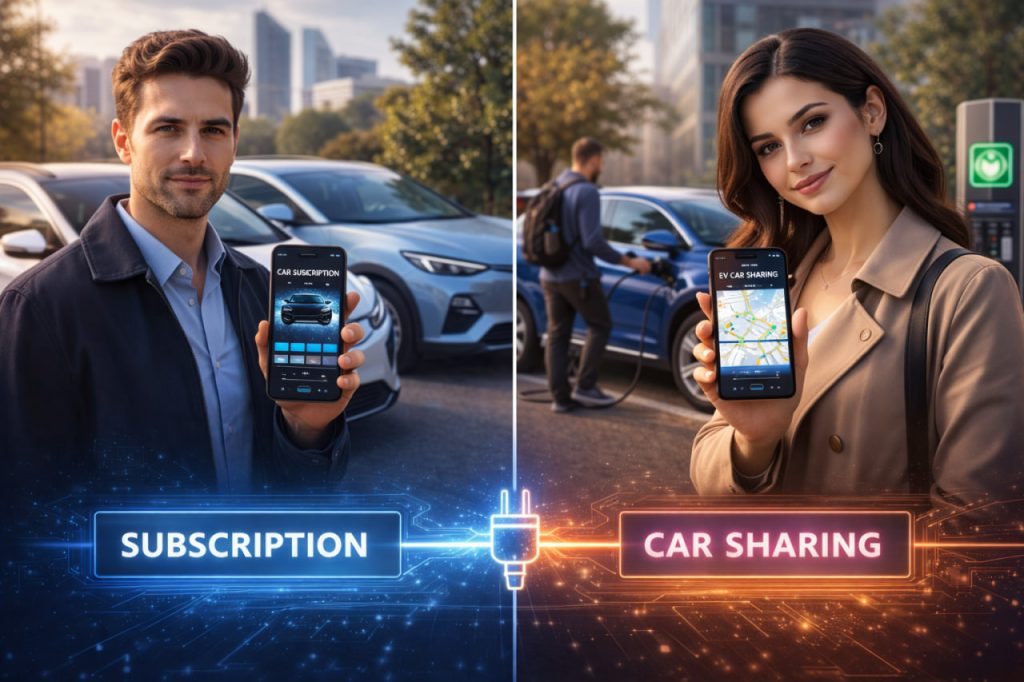
The automotive industry is undergoing a fundamental transformation—not only in technology but also in how people access and use vehicles. Traditional car ownership is gradually being complemented, and in some cases replaced, by flexible models such as vehicle subscription services and electric car sharing (EV carsharing). These models reflect broader shifts in consumer behavior, urbanization, and digitalization, offering convenience, cost flexibility, and sustainability. As electric vehicles (EVs) become more widespread, they are accelerating the adoption of these new mobility concepts.
From Ownership to Access: A Paradigm Shift
For decades, owning a car was seen as a necessity and a status symbol. Today, especially in urban environments, consumers increasingly prioritize access over ownership. This shift is driven by several factors:
- high cost of vehicle ownership
- urban congestion and limited parking
- digital platforms enabling on-demand services
- environmental awareness
Electric vehicles, with their lower operating costs and compatibility with smart infrastructure, are particularly well-suited to these new models.
According to mobility strategist Dr. Laura Mendes:
“The future of mobility is not about owning a car, but about accessing transportation when and how you need it.”
What Is a Car Subscription?
A car subscription is a service that allows users to pay a monthly fee to access a vehicle without owning it. Unlike leasing or financing, subscriptions typically include:
- maintenance
- insurance
- registration
- roadside assistance
This creates a bundled mobility service, simplifying the user experience.
Subscribers can often:
- switch between different models
- pause or cancel the service
- upgrade to newer vehicles
This flexibility makes subscriptions particularly attractive for EV users, as technology evolves rapidly.
Why EVs Fit Subscription Models Perfectly
Electric vehicles are ideal for subscription services due to their digital nature and lower maintenance requirements. EVs have fewer mechanical components, reducing servicing complexity. Additionally, software updates can improve performance over time, making vehicles feel “new” longer.
Subscription models also reduce concerns about:
- battery degradation
- resale value
- technological obsolescence
According to automotive economist Dr. Kevin Liu:
“Subscriptions remove the biggest psychological barrier to EV adoption—the fear of long-term commitment to a rapidly evolving technology.”
EV Car Sharing: Mobility on Demand
Car sharing allows users to rent vehicles for short periods—minutes or hours—through mobile apps. In EV carsharing systems, fleets of electric vehicles are distributed across a city and can be accessed on demand.
There are two main types:
- station-based — vehicles are picked up and returned to fixed locations
- free-floating — vehicles can be picked up and dropped off anywhere within a service area
Users locate, unlock, and pay for vehicles via smartphone apps, creating a seamless digital experience.
Benefits of EV Car Sharing
EV carsharing offers multiple advantages:
- reduced cost compared to ownership
- no responsibility for maintenance or charging
- lower environmental impact
- efficient use of vehicles
In dense urban areas, carsharing reduces the total number of cars needed, helping to alleviate congestion and parking issues.
According to urban mobility expert Michael Turner:
“Car sharing transforms vehicles from idle assets into active mobility resources.”
Economic and Environmental Impact
These new models have significant economic and environmental implications. By increasing vehicle utilization rates, carsharing reduces waste associated with underused private cars. EV fleets further reduce emissions, especially when powered by renewable energy.
Subscription services also create recurring revenue streams for manufacturers, shifting the industry from one-time sales to service-based business models.
Challenges and Limitations
Despite their benefits, these models face challenges:
- infrastructure requirements (charging networks)
- fleet management complexity
- user adoption in less urban areas
- regulatory frameworks
Additionally, profitability remains a challenge for some carsharing operators due to high operational costs.
The Role of Digital Platforms
Both subscription and carsharing models rely heavily on digital platforms. Mobile apps manage booking, payments, vehicle access, and user data. AI and data analytics optimize fleet distribution, predict demand, and improve efficiency.
This integration of mobility and software is transforming automakers into mobility service providers.
The Future of Mobility Services
As EV adoption increases, subscription and sharing models are expected to grow rapidly. Future developments may include:
- fully autonomous shared EV fleets
- dynamic pricing based on demand
- integration with public transportation
- personalized mobility packages
These innovations will further blur the line between private and shared transportation.
Conclusion
Electric vehicles are not only changing how cars are powered but also how they are used. Subscription services and EV carsharing represent a shift toward flexible, service-based mobility. By reducing costs, increasing convenience, and supporting sustainability, these models are reshaping the automotive landscape. As technology and infrastructure continue to evolve, access-based mobility may become the dominant model for transportation in the future.