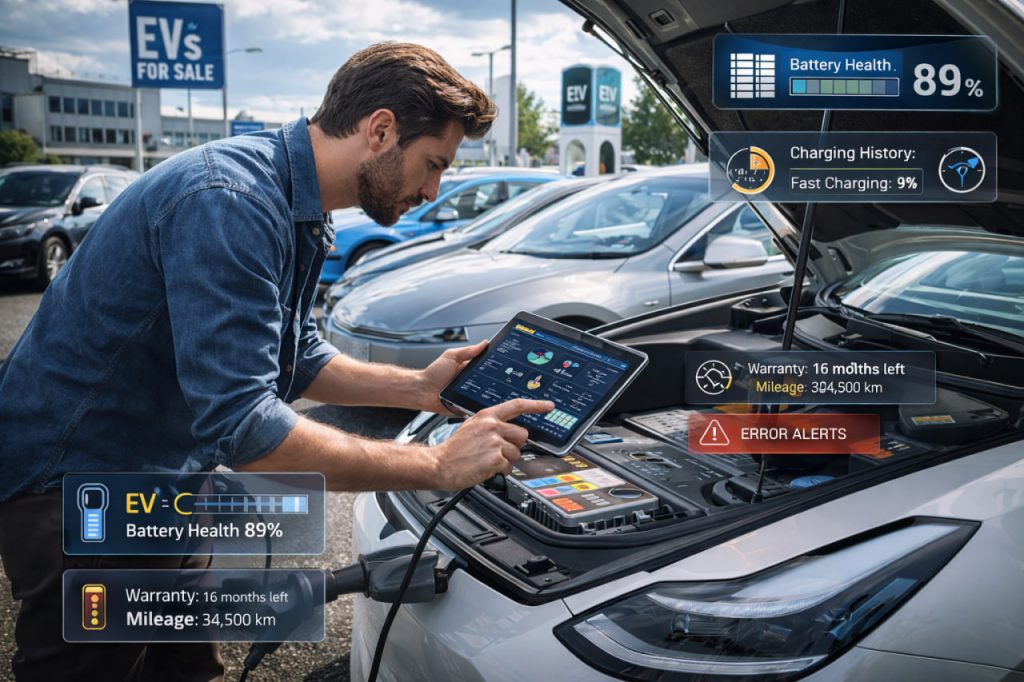
As electric vehicles become more widespread, the secondary EV market is growing rapidly. Buying a used electric car can be a smart financial decision, offering lower upfront costs while still benefiting from modern technology and lower operating expenses. However, unlike traditional vehicles, EVs have unique components—most importantly the battery system—that require careful evaluation. Understanding what to inspect before purchase is essential to avoid hidden costs and ensure long-term reliability.
Battery Health: The Most Critical Factor
The most important element in any electric vehicle is the battery pack, as it directly determines range, performance, and overall value. Over time, all lithium-ion batteries experience degradation, meaning they gradually lose capacity.
When evaluating a used EV, check the State of Health (SoH), which indicates the remaining battery capacity compared to when it was new. For example, a battery with 90% SoH has lost 10% of its original capacity.
According to EV systems engineer Dr. Laura Bennett:
“Battery condition defines the real value of a used electric vehicle far more than mileage or age.”
Also consider:
- remaining battery warranty
- charging history (frequent fast charging may increase wear)
- real-world range vs manufacturer claims
Charging History and Infrastructure Compatibility
Understanding how the vehicle has been charged is important. Regular use of DC fast charging can increase thermal stress on the battery compared to slower AC charging.
Additionally, verify compatibility with current charging standards:
- connector type (CCS, Type 2, NACS, etc.)
- onboard charger capacity
- support for fast charging
This ensures the vehicle will integrate smoothly into available infrastructure in your region.
Range and Real-World Performance
Official range figures often differ from real-world conditions. Factors such as temperature, driving style, and terrain affect energy consumption.
Test the vehicle if possible and evaluate:
- actual range at different charge levels
- energy consumption (kWh per 100 km)
- performance under load
This helps determine whether the vehicle meets your daily driving needs.
Software, Updates, and Digital Systems
Modern EVs rely heavily on software systems, including battery management, infotainment, and driver assistance features. Ensure the vehicle has received regular updates and that all systems function correctly.
Check:
- availability of over-the-air (OTA) updates
- responsiveness of the interface
- functionality of sensors and driver assistance features
According to automotive software specialist Michael Turner:
“In EVs, software condition is almost as important as mechanical condition.”
Thermal Management and Battery Cooling
EV batteries require proper thermal management systems to maintain optimal temperature. Vehicles with liquid cooling systems generally experience slower battery degradation compared to those with passive cooling.
Inspect:
- cooling system functionality
- signs of overheating or performance throttling
- consistency of charging speed
Mechanical Condition and Wear
Although EVs have fewer moving parts than internal combustion vehicles, they still require inspection. Key areas include:
- suspension and brakes (regenerative braking reduces wear, but not entirely)
- tires (EVs are heavier and may wear tires faster)
- chassis and structural integrity
Service History and Diagnostics
A complete service history is essential. Request diagnostic reports if available, especially battery diagnostics from authorized service centers.
Look for:
- past repairs or replacements
- software updates history
- error logs or warnings
Cost of Ownership Considerations
Used EVs often have lower operating costs, but potential expenses should still be evaluated:
- battery replacement cost (if out of warranty)
- insurance
- charging costs
- resale value
Understanding total cost of ownership helps avoid unexpected financial surprises.
Market Trends and Depreciation
EVs tend to depreciate differently than traditional cars. Rapid technological advancement and battery improvements can affect resale value. However, demand for affordable electric vehicles is increasing, stabilizing prices in many regions.
According to automotive analyst Dr. Kevin Liu:
“As battery technology matures, depreciation curves for EVs are becoming more predictable.”
Conclusion
Buying a used electric vehicle can be an excellent investment when approached carefully. The key is to focus on battery health, charging history, software condition, and overall system integrity. Unlike traditional cars, EV evaluation requires understanding both hardware and digital components. With proper due diligence, a pre-owned EV can deliver reliable performance, lower operating costs, and a sustainable driving experience.


ya the battery is what i worry about most🤔