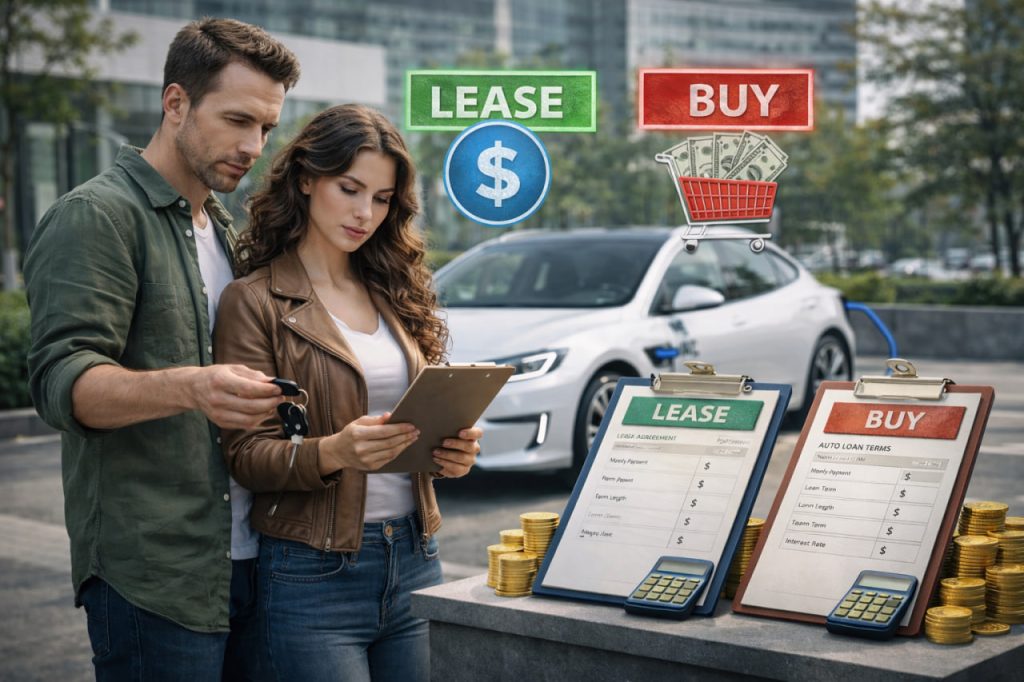
Choosing between leasing and buying an electric vehicle is a strategic financial decision that directly impacts long-term expenses and flexibility. While EVs are known for lower operating costs due to reduced fuel and maintenance needs, the way you acquire the vehicle can significantly change the total financial outcome. Leasing offers lower initial commitment and access to newer models, while buying provides ownership and long-term savings potential. Understanding how each option works in the context of electric mobility allows drivers to make a rational and cost-effective decision.
How Leasing an Electric Vehicle Works
Leasing is a financial agreement where the driver pays for the vehicle’s depreciation rather than its full value. This results in lower monthly payments compared to financing a purchase. Lease contracts typically last between two and four years and often include warranty coverage, reducing concerns about unexpected repairs. Because EV technology evolves rapidly, leasing allows drivers to upgrade to newer models with improved battery efficiency and range without long-term commitment.
According to financial strategist Daniel Brooks:
“Leasing is particularly attractive in the EV market because it minimizes exposure to fast-changing technology and resale uncertainty.”
What It Means to Buy an Electric Car
Buying an electric car involves paying the full price upfront or through a loan, leading to complete ownership once payments are finished. This option eliminates monthly payments in the long run and provides freedom from mileage limits or contract restrictions. However, buyers take on the risk of depreciation, which can be significant in a market where newer EV models quickly outperform older ones. Ownership also means responsibility for maintenance outside of warranty coverage.
According to automotive economist Dr. Kevin Marshall:
“Buying an EV becomes financially advantageous when the vehicle is used long enough to offset its initial cost.”
Short-Term vs Long-Term Financial Impact
In the short term, leasing is generally more affordable due to lower monthly payments and minimal upfront costs. However, over time, buying becomes more economical because the owner eventually eliminates recurring payments. This comparison is best understood through the concept of total cost of ownership (TCO), which includes purchase price, insurance, maintenance, and depreciation. Leasing distributes costs evenly, while buying concentrates costs early but reduces them later.
Battery Degradation and Technology Progress
Electric vehicles introduce unique factors such as battery degradation, which refers to the gradual decline in battery capacity over time. Leasing reduces the risk associated with this issue because drivers typically return the vehicle before noticeable performance loss occurs. Additionally, rapid innovation in EV technology means newer models often provide better range, faster charging, and improved software, making leasing appealing for those who want to stay up to date.
Incentives, Taxes, and Market Conditions
Government incentives and tax benefits can influence both leasing and buying decisions. In many cases, leasing companies integrate these incentives into lower monthly payments, making leasing even more attractive. Buyers may also qualify for incentives, but these benefits vary by region and eligibility requirements. Market conditions, including interest rates and resale values, also play a critical role in determining overall cost-effectiveness.
Which Option Is Better for You
Leasing is ideal for drivers who prioritize flexibility, lower upfront costs, and access to the latest EV technology. Buying is better suited for those planning long-term ownership and aiming to reduce overall expenses over time. Each option reflects a different financial strategy, and the optimal choice depends on how long the vehicle will be used and how important ownership is to the driver.
Conclusion
Leasing an electric car is typically more cost-effective in the short term and offers flexibility, while buying provides better value over the long term through ownership and reduced ongoing costs. The right decision depends on individual financial goals, driving habits, and willingness to adapt to rapidly evolving EV technology.