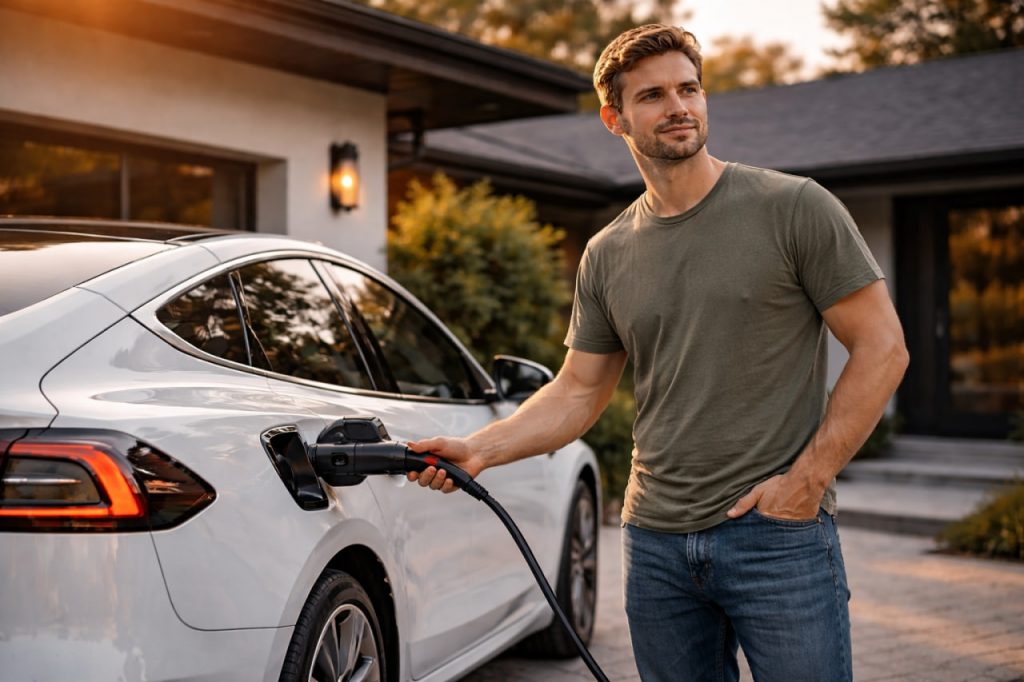
Electric vehicles are often promoted as a cheaper and more sustainable alternative to traditional gasoline cars. However, many buyers focus primarily on the purchase price without fully considering the broader financial picture. The real financial impact of owning an electric vehicle becomes clearer when analyzing the Total Cost of Ownership (TCO). This concept includes not only the vehicle’s initial price but also charging costs, maintenance expenses, depreciation, insurance, and potential government incentives. Evaluating these factors over a five-year period provides a more realistic understanding of how much an electric car truly costs.
What Total Cost of Ownership Means
Total Cost of Ownership (TCO) is a financial concept used to evaluate the complete cost of owning an asset over time. For electric vehicles, TCO includes the purchase price, electricity consumption, maintenance, insurance, taxes, and resale value. Unlike internal combustion vehicles, EVs typically have fewer mechanical components, which can significantly reduce maintenance expenses.
According to transportation economist Dr. Marcus Hill:
“The purchase price of an electric car is only part of the financial equation. The long-term operating costs often determine whether the vehicle is truly economical.”
Because EV technology differs significantly from traditional vehicles, the cost structure also changes.
Purchase Price and Government Incentives
One of the most noticeable differences between electric vehicles and gasoline cars is the initial purchase price. EVs often cost more upfront due to expensive battery technology. However, many countries provide government incentives, tax credits, or rebates designed to accelerate EV adoption.
These incentives can significantly reduce the effective purchase cost. In some regions, additional benefits such as free parking, reduced registration fees, or access to restricted traffic zones further increase the economic attractiveness of electric vehicles.
Electricity Costs Compared to Fuel
The most significant operational savings often come from energy costs. Electric vehicles use electricity instead of gasoline, and electricity prices per kilometer driven are typically much lower. EV efficiency is usually measured in kilowatt-hours per 100 kilometers (kWh/100 km). Most modern electric vehicles consume between 15 and 20 kWh per 100 kilometers.
If electricity costs are moderate, the cost of driving an EV can be several times lower than fueling a comparable gasoline vehicle. Charging at home overnight often provides the lowest rates, especially when time-of-use tariffs are available.
According to energy systems analyst Dr. Laura Mendes:
“Electric vehicles convert energy much more efficiently than combustion engines, which is why electricity costs per kilometer are typically lower.”
However, frequent use of ultra-fast public chargers can increase energy expenses.
Maintenance and Mechanical Simplicity
Electric vehicles have far fewer moving parts than internal combustion engine cars. There is no engine oil, transmission fluid, spark plugs, or exhaust system. As a result, EVs generally require less routine maintenance.
Common maintenance tasks include tire replacement, brake service, and cabin filter changes. Regenerative braking systems, which convert kinetic energy into electricity during deceleration, also reduce brake wear.
Over a five-year ownership period, these reduced maintenance requirements can lead to significant savings compared to conventional vehicles.
Battery Longevity and Replacement Concerns
One of the most common concerns among EV buyers involves battery degradation. Modern lithium-ion batteries gradually lose capacity over time, but improvements in battery chemistry and thermal management systems have significantly increased their lifespan.
Most manufacturers provide battery warranties lasting eight years or more, ensuring that the battery maintains a minimum capacity level. Under normal driving conditions, battery degradation is typically modest over the first five years.
Insurance and Depreciation
Insurance costs for electric vehicles may vary depending on region, vehicle value, and repair complexity. In some cases, EV insurance premiums are slightly higher due to the cost of battery replacement or specialized repair procedures.
Depreciation is another important component of total ownership cost. As EV technology evolves rapidly, resale values may fluctuate depending on battery performance, charging infrastructure development, and new model releases.
However, growing consumer demand for used electric vehicles may help stabilize resale values over time.
Infrastructure and Charging Costs
Charging infrastructure also plays a role in ownership cost. Home charging installation may require an initial investment in a Level 2 charging station, which allows faster overnight charging. While this installation adds to upfront costs, it improves convenience and reduces reliance on more expensive public charging stations.
Public charging networks often use different pricing structures, including per-kWh pricing or time-based tariffs.
Comparing EV and Gasoline Vehicle Costs
When all expenses are considered over a five-year period, many studies suggest that electric vehicles can achieve lower total ownership costs compared to gasoline vehicles, especially in regions with high fuel prices and supportive policies.
However, results vary depending on electricity prices, driving distance, incentives, and charging habits. Drivers who charge primarily at home and drive frequently often experience the greatest financial advantages.
Conclusion
The true cost of owning an electric vehicle over five years extends far beyond the purchase price. Electricity costs, maintenance savings, government incentives, insurance, and resale value all contribute to the total financial picture. While EVs may require a higher initial investment, their lower operating costs and mechanical simplicity can make them economically competitive or even cheaper over time. Understanding the total cost of ownership helps buyers make informed decisions about the long-term value of electric mobility.