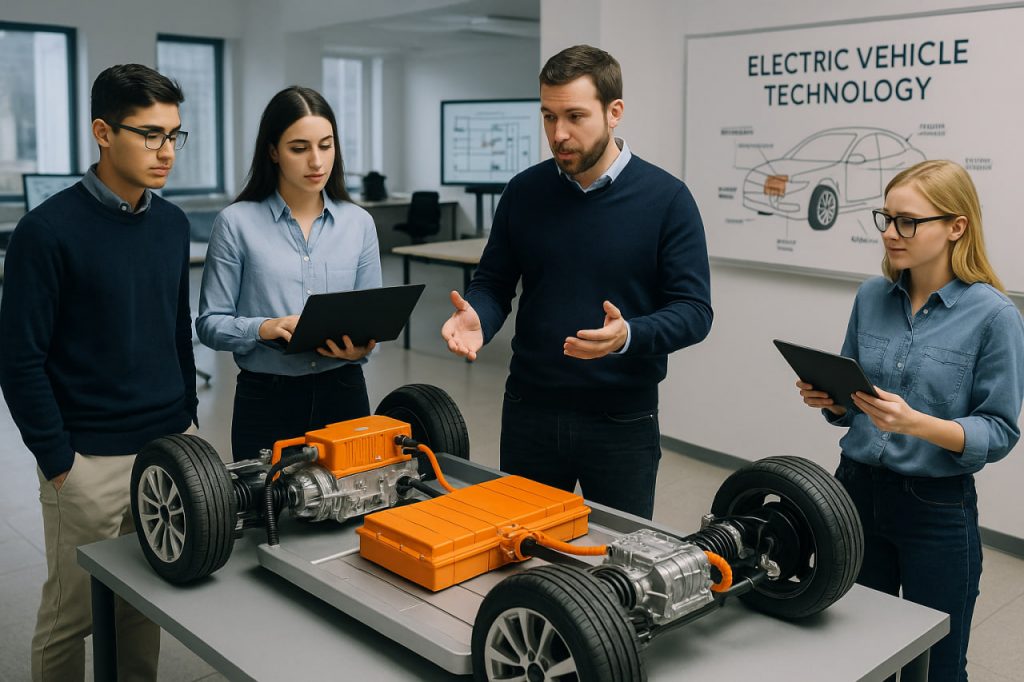
The rapid growth of the electric vehicle industry has created a strong demand for qualified specialists who understand not only automotive engineering but also energy systems, software, and sustainability. Educational programs focused on EV technologies are becoming a critical foundation for the future workforce, supporting manufacturers, infrastructure providers, and service companies worldwide. These programs aim to bridge the gap between traditional automotive education and the new competencies required for electric mobility. As a result, learning pathways for EV specialists now combine engineering, digital skills, and environmental awareness into a single professional profile.
The Growing Demand for EV-Focused Education
The global transition toward electric mobility has reshaped labor market requirements across multiple industries. Roles related to electric powertrains, battery systems, charging infrastructure, and vehicle software are expanding faster than traditional automotive positions. Educational institutions have responded by introducing specialized EV curricula designed to meet these evolving needs. These programs focus on practical problem-solving and interdisciplinary knowledge rather than purely mechanical skills.
“The EV sector requires professionals who understand energy, electronics, and software as an integrated system, not as separate disciplines,” — Dr. Alan Morris, automotive education consultant.
University Degrees and Academic Programs
Many universities now offer bachelor’s and master’s degrees dedicated to electric vehicle engineering, sustainable transportation, or electro-mechanical systems. These programs typically cover battery chemistry, power electronics, electric motors, and thermal management, alongside systems engineering and data analysis. Students are trained to understand the full lifecycle of an electric vehicle, from design and production to recycling. Academic research also plays a key role, allowing students to participate in innovation related to solid-state batteries and energy efficiency optimization.
“Universities are becoming innovation hubs for EV technology, not just training centers,” — Professor Daniel Wright, head of sustainable engineering studies.
Technical Colleges and Vocational Training
Technical and vocational institutions focus on preparing specialists for hands-on roles such as EV maintenance, high-voltage system diagnostics, and charging station installation. These programs emphasize safety training, particularly when working with high-voltage batteries and power electronics. Students gain practical experience through labs and real-world simulations, making them job-ready upon graduation. Such training is essential for supporting the growing EV fleet at the service and infrastructure level.
“Well-trained technicians are just as critical to EV adoption as engineers and designers,” — Sarah Collins, EV workforce development advisor.
Online Courses and Industry Certifications
Online education platforms and professional organizations offer flexible learning options for those seeking to upskill or transition into the EV sector. These programs often focus on battery management systems (BMS), charging standards, and energy storage technologies. Industry-recognized certifications help validate expertise and increase employability across global markets. For professionals already working in engineering or energy, online programs provide an efficient way to stay current with fast-changing technologies.
Corporate Training and Industry Partnerships
Automakers, energy companies, and charging network providers increasingly invest in internal corporate training programs. These initiatives focus on proprietary technologies, software integration, and vehicle-to-grid (V2G) systems. Partnerships between industry and educational institutions ensure that curricula align with real-world requirements. This collaboration shortens onboarding time and accelerates innovation across the EV ecosystem.
“Close cooperation between industry and education is the fastest way to build a skilled EV workforce,” — Michael Chen, mobility strategy consultant.
Skills Beyond Engineering: A Multidisciplinary Approach
Modern EV specialists require more than technical expertise. Skills related to data analysis, cybersecurity, regulatory compliance, and sustainability assessment are increasingly important. Educational programs now integrate business fundamentals and environmental policy to prepare graduates for leadership roles. This multidisciplinary approach reflects the complexity of the EV industry, where technology, regulation, and consumer behavior intersect.
Conclusion
Educational programs for EV specialists are rapidly evolving to support the electric mobility revolution. By combining engineering, digital skills, safety training, and sustainability, these programs prepare professionals for a dynamic and future-oriented industry. As demand for electric vehicles continues to grow, high-quality EV education will remain a key driver of innovation and workforce development.


EV training programs r 🔥!