As electric vehicles become more common, many owners begin asking a logical next question: can an EV be charged directly from solar panels? Combining solar energy with electric mobility creates one of the cleanest possible transportation solutions, reducing dependence on fossil fuels and lowering long-term energy costs. However, charging an electric car from solar panels requires more than simply installing rooftop modules. Understanding how solar generation, home energy systems, and EV charging interact is essential for building an efficient and reliable setup.
How Solar Panels Generate Electricity
Solar panels, also known as photovoltaic (PV) systems, convert sunlight into electricity using semiconductor materials. The electricity generated is in direct current (DC) form, while most household appliances and EV chargers operate on alternating current (AC). To make the energy usable, a device called an inverter converts DC electricity into AC electricity. The amount of electricity generated depends on sunlight intensity, panel orientation, roof angle, and seasonal conditions.
“Solar charging works best when system size and vehicle consumption are carefully matched,” — Dr. Michael Harris, renewable energy systems engineer.
Understanding Energy Balance: kW vs kWh
To determine whether solar panels can charge an EV efficiently, it is important to distinguish between kilowatts (kW) and kilowatt-hours (kWh). kW measures power output at a given moment, while kWh measures total energy produced or consumed over time. For example, a 6 kW solar system might produce around 25–35 kWh per day, depending on location and weather. If an electric vehicle consumes approximately 15–20 kWh per 100 km, that daily solar production could support substantial driving distance under optimal conditions.
Direct Charging vs Grid-Connected Charging
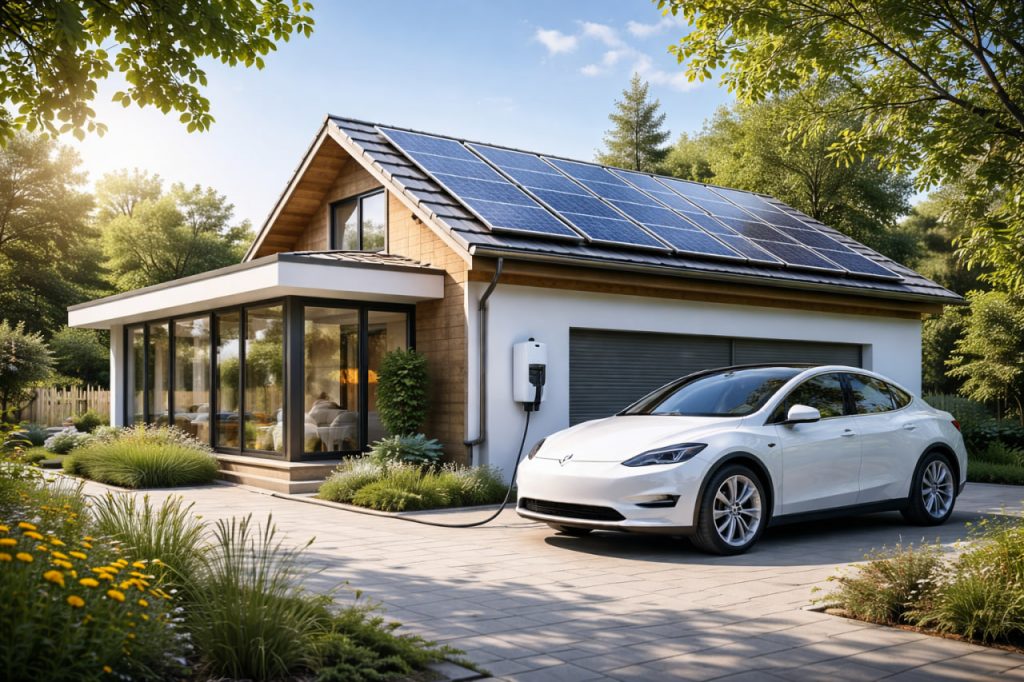
There are two primary ways to charge an EV using solar energy. In a grid-connected system, solar panels supply electricity to the home first, and excess energy is either used to charge the vehicle or exported to the grid. In an off-grid system, solar panels work together with a battery storage system to store energy for later EV charging. Grid-connected systems are more common because they offer flexibility and reliability when sunlight is insufficient.
“For most households, grid-connected solar with smart EV charging provides the best balance between cost and practicality,” — Laura Simmons, sustainable mobility consultant.
Smart Charging and Energy Optimization
Modern EV chargers often include smart charging technology, which synchronizes charging sessions with peak solar production hours. This ensures that the vehicle charges primarily when solar output is highest, maximizing self-consumption and reducing reliance on grid electricity. Some systems integrate with home energy management systems (HEMS), automatically adjusting charging speed based on available solar power. This dynamic approach improves efficiency and shortens the financial payback period of the solar installation.
Solar Battery Storage and Night Charging
Because solar panels generate electricity only during daylight hours, many homeowners install energy storage batteries. These batteries store surplus solar energy for use in the evening or early morning when EV charging is needed. While adding storage increases upfront costs, it improves energy independence and allows greater use of renewable electricity. However, careful system sizing is required to ensure that both household consumption and vehicle charging needs can be met.
Economic and Environmental Benefits
Charging an electric vehicle with solar panels reduces electricity costs over time and minimizes carbon emissions. While initial installation expenses can be significant, many regions offer incentives, tax credits, or feed-in tariffs that improve return on investment. Environmentally, solar-powered EV charging represents one of the lowest-emission transportation models available today.
“Pairing solar energy with electric vehicles amplifies the climate benefits of both technologies,” — Dr. Hannah Keller, environmental systems researcher.
Limitations and Practical Considerations
Despite its advantages, solar EV charging depends on geographic location, weather patterns, roof space, and household energy consumption. Drivers with high daily mileage may require larger solar arrays to cover full charging needs. Additionally, system design must comply with local electrical regulations and safety standards. Professional installation ensures long-term reliability and optimal performance.
Conclusion
Charging an electric car from solar panels is both technically feasible and environmentally impactful when properly designed. By understanding solar generation, energy storage, and smart charging systems, EV owners can significantly reduce operating costs and carbon footprint. While system sizing and installation require careful planning, the combination of green electricity and electric mobility represents a powerful step toward sustainable transportation.