Public charging networks are a critical pillar of electric vehicle mobility, especially for long-distance travel and drivers without access to home charging. While charging infrastructure is expanding rapidly, improper planning or lack of understanding can still lead to stressful situations where an EV driver risks running out of power mid-journey. Knowing how public charging networks work, how to plan routes intelligently, and how to avoid common mistakes allows drivers to travel confidently and efficiently. This guide explains the essentials in clear, practical terms.
How Public Charging Networks Work
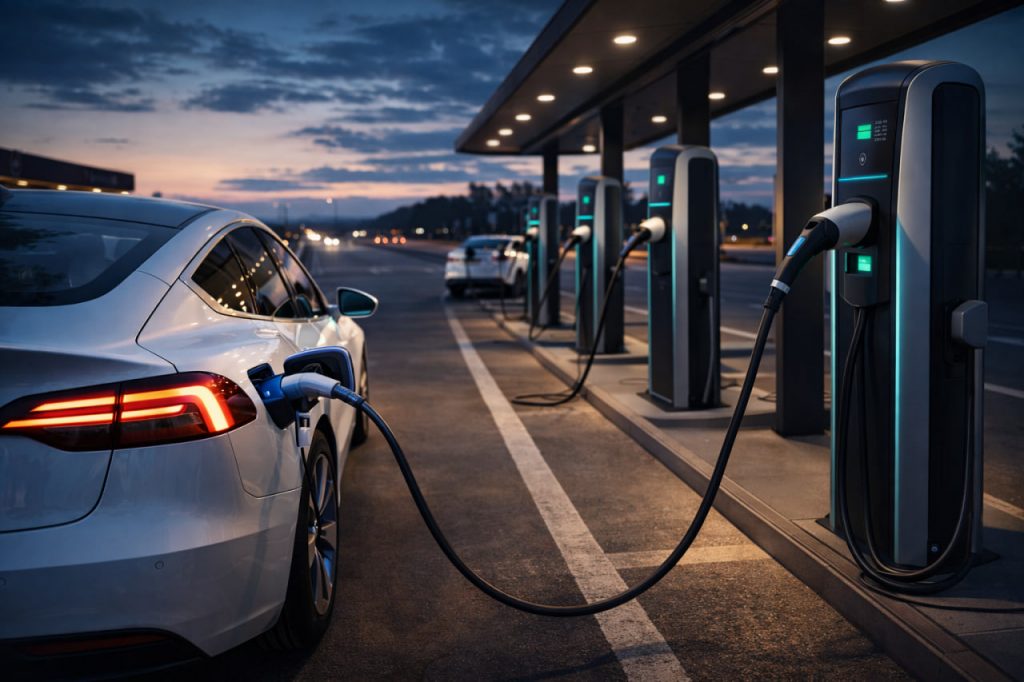
A public charging network is a system of interconnected charging stations operated by energy providers, automakers, or independent infrastructure companies. These networks vary in charging power, connector types, pricing models, and access methods. Some stations provide AC charging for longer stops, while others offer DC fast charging, capable of replenishing large portions of the battery in a short time. Understanding the differences between stations helps drivers choose the right charger for each stop rather than relying on guesswork.
“Public charging is reliable when drivers treat it as a system, not a random collection of plugs,” — Daniel Foster, EV infrastructure consultant.
Route Planning and Range Awareness
One of the most effective ways to avoid battery depletion is proper route planning. Modern EV navigation systems calculate routes based on battery state of charge, elevation changes, speed, and available charging stations. External apps can also display real-time charger availability and power levels. Drivers should plan to arrive at chargers with a safety buffer rather than aiming for near-zero battery levels. This margin protects against unexpected detours, occupied stations, or reduced charging speeds.
“Arriving with 15–20% charge dramatically reduces travel stress,” — Dr. Hannah Lewis, electric mobility researcher.
Understanding Charging Speed and Time
Not all chargers deliver the same performance. Charging power (kW) determines how quickly energy flows into the battery, while battery acceptance rate limits how much power the vehicle can actually use. Even at a high-power station, charging slows as the battery approaches full capacity due to charging taper, controlled by the Battery Management System (BMS). Knowing this helps drivers avoid wasting time waiting for the final few percentage points at fast chargers.
Payment Systems and Network Access
Public charging networks use various access methods, including mobile apps, RFID cards, credit cards, or automatic vehicle authentication. Before starting a trip, drivers should ensure they have access to multiple networks to avoid compatibility issues. Some stations require prior registration, while others allow ad-hoc payments.
“Charging access issues are one of the most preventable causes of EV travel delays,” — Laura Mitchell, EV user experience analyst.
Backup Strategies and Redundancy
Experienced EV drivers always plan backup charging options. This includes identifying alternative stations along the route and understanding which nearby locations offer slower AC charging if fast chargers are unavailable. Carrying charging cables for different station types and knowing nearby urban or commercial areas can make a significant difference. Redundancy transforms potential emergencies into minor inconveniences.
Weather, Driving Style, and Real-World Factors
External conditions significantly influence energy consumption. Cold temperatures reduce battery efficiency, while high speeds increase aerodynamic drag. Aggressive acceleration also drains energy faster than expected. Adjusting driving style and monitoring consumption in real time allows drivers to adapt quickly if range decreases unexpectedly.
“Energy awareness is just as important as charger availability,” — Mark Jensen, EV efficiency specialist.
Common Mistakes That Lead to a Dead Battery
Many EV drivers underestimate the impact of charging queues, assume all chargers are operational, or aim to reach stations with minimal charge remaining. Another common error is ignoring charger power ratings or relying on outdated station data. Avoiding these mistakes requires preparation, flexibility, and understanding how public networks function as dynamic systems.
Conclusion
Public charging networks enable electric mobility far beyond city limits, but they require informed use. By understanding charging types, planning routes with safety margins, securing access to multiple networks, and accounting for real-world conditions, EV drivers can travel confidently without fear of running out of power. With the right knowledge and preparation, public charging becomes a reliable ally rather than a source of uncertainty.