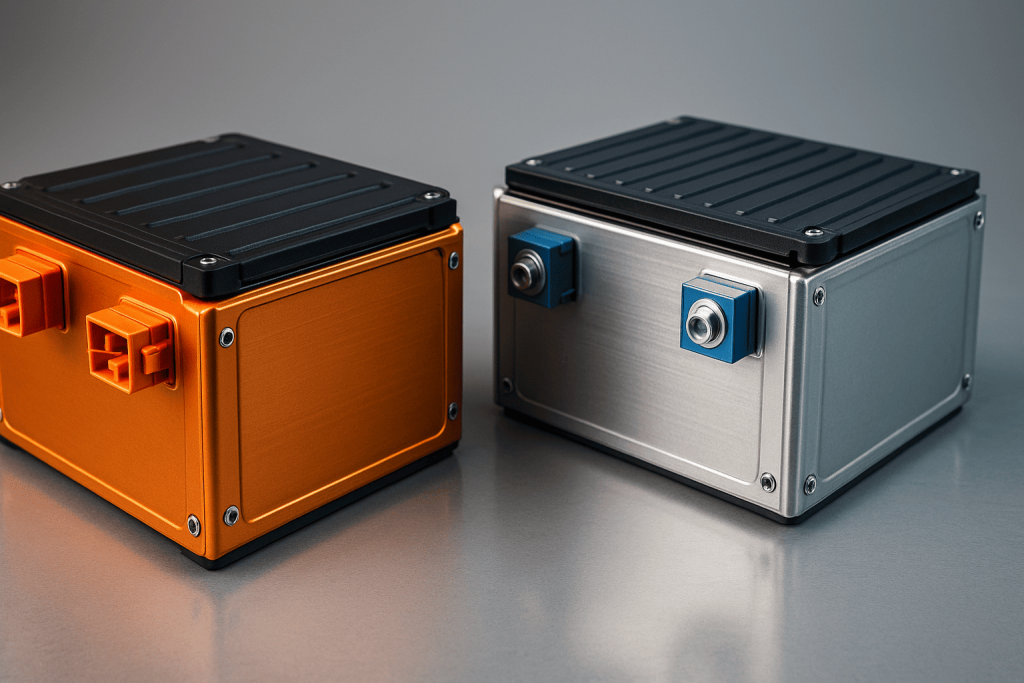
Lithium iron phosphate (LFP) has become the default chemistry for affordable, robust electric vehicles and energy storage. Its cousin, lithium manganese iron phosphate (LMFP), tweaks the olivine crystal by introducing manganese into the cathode. That small change promises higher energy density and better high-temperature behavior—at a cost. So, should you pay extra for LMFP? Let’s unpack the trade-offs with clear, real-world implications. 🔋
Chemistry in a Nutshell
LFP uses a cathode of LiFePO₄, prized for safety, cycle life, and low cost. LMFP partially substitutes iron with manganese (LiMnxFe1-xPO₄), which raises the average cathode potential and can improve specific energy. In practice, LMFP modules typically deliver a 10–20% bump in energy density versus comparable LFP, depending on particle engineering, conductive coatings, and electrolyte recipe. 🧪
Energy Density and Packaging
More energy in the same box is LMFP’s headline benefit. In vehicles constrained by floor pan height or wheelbase, LMFP can squeeze extra kilowatt-hours without changing the body-in-white. That translates to longer range or fewer modules for the same range, potentially saving mass on busbars, housing, and crash structure.
Power and Fast-Charging Behavior
Both chemistries are power-capable, but their sweet spots differ. Well-engineered LFP excels at repeated high C-rates with minimal degradation if the pack is warm enough. LMFP tends to maintain higher voltage under load, which can marginally help inverter efficiency and extend the “high-power window” during DC fast charging. However, the real-world delta depends more on thermal management and BMS limits than the cathode label on the box.
Cold-Weather Performance
LFP’s Achilles heel is low-temperature performance: higher internal resistance and lithium plating risk if fast-charged when cold. LMFP inherits much of this character, though some vendors report modest improvements with tailored electrolytes and carbon coatings. In winter climates, both chemistries still benefit heavily from preconditioning and warm-soak strategies before fast charging. ❄️
Cycle Life and Calendar Aging
LFP is the benchmark for longevity—routinely thousands of cycles with gentle fade, especially when kept in a moderate state-of-charge band. LMFP can match or approach LFP’s cycle life when manganese dissolution is controlled and electrolyte additives are tuned. If your use case is daily deep cycling (ride-hail, delivery fleets, buses), both can deliver long service life, with LMFP narrowing the gap while offering more energy per liter.
Safety and Thermal Stability
LFP’s thermal runaway temperature is higher and its oxygen release is lower than many nickel-rich chemistries, which is why it’s beloved for safety. LMFP keeps this safety-first DNA; adding manganese doesn’t turn it into a volatile cathode. Both chemistries pair well with cell-to-pack designs and structural packs because their benign failure modes simplify enclosure venting and propagation barriers. 🛡️
Cost Structure and Materials
LFP is hard to beat on raw material cost and maturity of manufacturing. LMFP adds manganese, which is abundant and inexpensive compared with nickel or cobalt, but introduces extra synthesis steps and tighter process control. Today that often means a modest price premium at the cell level. As LMFP scales, the premium should compress, especially where higher energy density reduces pack-level overhead (fewer modules, shorter harnesses, smaller cooling plates).
Supply Chain and Sustainability
Both chemistries avoid cobalt and high-nickel content, simplifying ethical sourcing and reducing embedded carbon intensity. Iron and manganese are widely distributed globally, offering geopolitical resilience. LMFP’s ability to deliver more range from the same footprint can reduce total material intensity per kilometer driven—useful for fleet emissions accounting and lifecycle assessments. 🌍
Pack Engineering Implications
Because LMFP operates at a slightly higher nominal voltage per cell, pack designers may adjust series counts, inverter and DC-link ratings, and BMS calibration. The upside is more usable energy within the same mechanical envelope. Thermal systems should be sized similarly to LFP—don’t skimp; both chemistries reward tight temperature control for charging performance and aging.
Who Should Choose LFP?
If your priority is lowest upfront cost with rock-solid safety and longevity—urban commuters, city delivery vans, robotaxi shuttles, and stationary storage—LFP remains the king of value. It shines where charging is frequent but not ultra-fast, ranges are moderate, and winter preconditioning is feasible.
Who Should Choose LMFP?
Pick LMFP when you’re range- or volume-constrained but want to stay cobalt-free: compact SUVs that need a marketing-relevant range bump, long-wheelbase ride-hail sedans seeking fewer charging stops per shift, or buses/coaches targeting larger daily duty cycles without moving to nickel-rich chemistries. The modest energy-density gain can be the difference between one extra route loop or hitting a specific highway range target. 🚗
Total Cost of Ownership (TCO) Perspective
The LMFP premium can pay for itself if the added range avoids one charging stop per day for a commercial driver, or allows downsizing the number of vehicles or chargers in a depot. Conversely, for private owners with home charging and predictable routes, LFP’s savings may outweigh the marginal convenience of LMFP’s extra range. Evaluate TCO with your real duty cycle, electricity tariffs, and charging habits—not brochure peaks.
Market Maturity and Risk
LFP has a vast field record across climates and use cases. LMFP is scaling quickly with strong pilot data, but vendor implementations vary. Early adopters should look for transparent cell specs, proven cold-weather strategies, and pack warranties that reflect real-world cycling, not just lab curves. Supplier selection matters more than the three- or four-letter acronym on the spec sheet.
Future Outlook
Expect LMFP to encroach on LFP in mass-market segments as manufacturing matures and siliconized anodes or electrolyte tweaks squeeze more energy and power. LFP will remain a cornerstone for cost-optimized vehicles and grid storage. Both chemistries will benefit from cell-to-pack architectures, advanced thermal controls, and smarter BMS that adapt charge curves in real time. 🔮
Conclusion
If you value the lowest cost and proven durability above all, LFP is still the best deal. If your program or use case is footprint- or range-limited—and you want to stay cobalt-free—LMFP’s extra energy density can justify a reasonable premium, especially for commercial fleets and space-constrained platforms. In short: pay for manganese when it buys you mission-critical range or pack downsizing; otherwise, pocket the savings and choose LFP. ⚖️


Super clear breakdown — LMFP sounds great, but honestly for most daily drivers LFP still wins on value. The extra range only matters if your use case really pushes it
Manganese magic!!😁😁