Premium electric vehicles are no longer defined only by silent acceleration and expensive interiors. In 2026, the leading luxury EV manufacturers compete through driving range, charging speed, digital technology, passenger comfort, intelligent suspension systems, and increasingly sophisticated software.
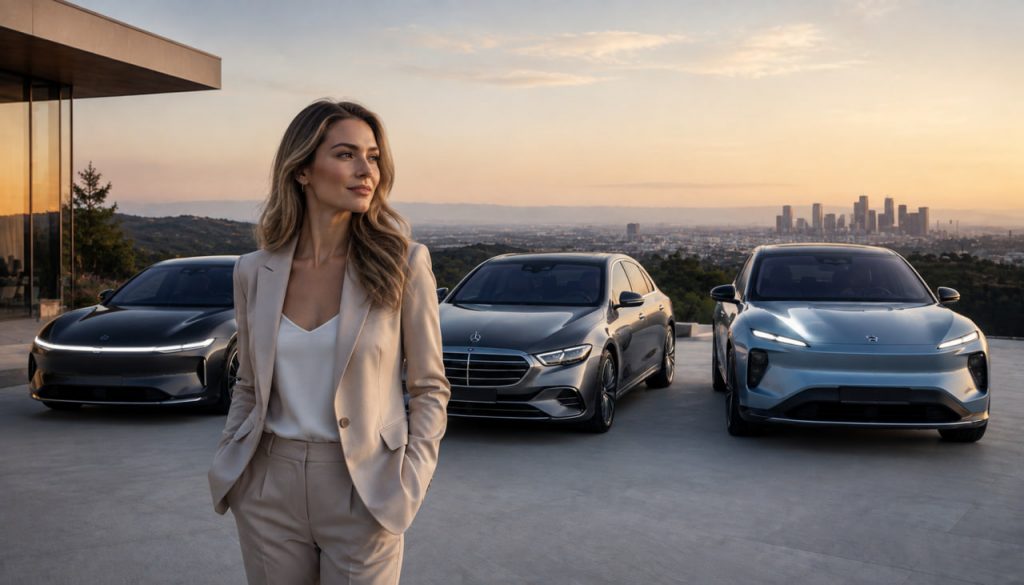
Lucid, Mercedes-Benz, and NIO represent three distinctly different interpretations of the premium electric car. Lucid emphasizes efficiency, performance, and long-distance capability. Mercedes-Benz combines electric propulsion with traditional luxury, refinement, and an established global ownership network. NIO focuses on intelligent technology, executive comfort, battery swapping, and an integrated digital ecosystem.
The best premium EV therefore depends on whether the buyer values maximum range, established luxury, or advanced technology and alternative charging solutions.
Lucid: Performance and Efficiency Without Traditional Luxury Conventions
Lucid entered the premium EV market as a technology-focused manufacturer rather than an established luxury brand. Its main products are the Lucid Air sedan and Lucid Gravity SUV.
The Lucid Air remains one of the most range-focused electric cars available. Depending on the configuration, the 2026 Air lineup offers estimated driving ranges extending beyond 500 miles under the United States Environmental Protection Agency testing system. The performance-oriented Air Sapphire produces more than 1,200 horsepower and can accelerate from zero to 60 mph in less than two seconds under suitable conditions.
These figures demonstrate Lucid’s central engineering philosophy: extracting exceptional range and performance from a relatively compact and efficient electric powertrain.
What Makes the Lucid Air Special
The Lucid Air combines a streamlined body, compact electric motors, high-voltage electrical architecture, and careful thermal management. Its aerodynamic shape reduces energy consumption at highway speeds, where less efficient electric vehicles often experience a significant reduction in range.
The cabin is spacious relative to the vehicle’s exterior dimensions because Lucid’s compact drivetrain allows more room for passengers. The Air also offers substantial front and rear cargo capacity.
Its strongest qualities include:
- Exceptional driving range
- High power and acceleration
- Efficient electric powertrain technology
- Spacious interior
- Fast direct-current charging
- Distinctive minimalist design
Lucid’s greatest advantage is not simply its battery capacity. It is the efficiency with which the vehicle converts stored energy into usable driving range.
However, Lucid does not yet have the global dealership and service coverage of Mercedes-Benz. Buyers should consider regional service availability, repair infrastructure, and long-term ownership support before choosing the brand.
Lucid Gravity: A Premium Electric SUV with Long-Range Capability
The Lucid Gravity expands the company’s technology into a larger and more practical format. It is available with seating for up to seven occupants and offers as much as approximately 450 miles of EPA-estimated range, depending on the version and configuration.
Despite its size, the Gravity is designed to preserve many of the Air’s core strengths:
- Aerodynamic efficiency
- Strong acceleration
- High-speed charging
- Flexible passenger space
- Adjustable air suspension
- Large cargo capacity
The Gravity is particularly important because premium electric SUVs generally consume more energy than sedans. Lucid attempts to compensate through efficient motors, advanced aerodynamics, and high-voltage charging technology.
For families seeking a luxury EV with three-row capability and long-distance usability, the Gravity is one of the most technically ambitious options in the segment.
Mercedes-Benz: Traditional Luxury Reinterpreted for the Electric Era
Mercedes-Benz approaches electric vehicles from the perspective of an established luxury manufacturer. Instead of relying primarily on extreme acceleration or headline range figures, the company concentrates on comfort, refinement, safety technology, cabin quality, and brand familiarity.
Its premium electric portfolio includes models such as the EQS Sedan, EQS SUV, EQE, electric G-Class, and newer electric vehicles based on the company’s latest platforms. Availability and specifications vary significantly between markets.
The EQS Sedan remains Mercedes-Benz’s clearest expression of electric flagship luxury. It was designed around a dedicated electric architecture rather than adapted directly from a combustion-powered model.
The Mercedes-Benz EQS Experience
The EQS prioritizes isolation from noise, vibration, and road imperfections. Its strengths are most noticeable during long journeys, where ride comfort, supportive seating, acoustic insulation, and driver assistance systems matter more than dramatic acceleration figures.
Depending on specification, key features can include:
- Air suspension
- Rear-wheel steering
- Multicontour massaging seats
- Advanced ambient lighting
- Premium Burmester audio
- Extensive driver assistance technology
- The MBUX Hyperscreen display arrangement
- Rear-seat entertainment and comfort packages
Mercedes-Benz offers the most recognizable form of conventional executive luxury among these three manufacturers.
The interior experience is highly digital, although some drivers may find the extensive use of touch-sensitive controls less intuitive than physical switches. Mercedes has also continued refining its software and interface design as customer expectations evolve.
Mercedes-Benz EQS SUV: Comfort and Space
The EQS SUV combines many of the sedan’s luxury features with a taller body and optional third-row seating. Mercedes describes it as offering the comfort of a luxury saloon with the space and flexibility of an SUV.
Its principal advantages include:
- Quiet and comfortable ride quality
- Spacious cabin
- Available seven-seat configuration
- High-quality interior materials
- Strong dealer and service coverage
- Extensive comfort options
Compared with the Lucid Gravity, the EQS SUV generally emphasizes passenger isolation and traditional luxury more strongly than maximum efficiency or driving range.
Its rounded exterior design improves aerodynamics, but its size and weight can still affect real-world energy consumption, especially at high speeds or in cold weather.
Mercedes-Benz Ownership Advantages
Mercedes-Benz benefits from decades of experience in global vehicle sales, servicing, financing, and fleet support. For premium buyers, this infrastructure can be as important as the technical specifications of the car.
A customer choosing Mercedes-Benz may have easier access to:
- Authorized service centers
- Replacement parts
- Established leasing programs
- Trained technicians
- Roadside assistance
- Certified repair networks
This gives Mercedes an ownership advantage in regions where Lucid and NIO have limited physical coverage.
NIO: A Technology Ecosystem Built Around the Vehicle
NIO approaches the luxury EV market as both a vehicle manufacturer and a technology services company. Its premium lineup includes executive sedans and SUVs such as the ET7, ET9, EL8 or ES8, and EC7, depending on the market.
The company’s flagship ET9 demonstrates NIO’s most advanced technologies. It uses a full-domain 900-volt electrical architecture with a maximum system voltage of up to 925 volts and a claimed peak charging capability of 600 kilowatts under suitable conditions.
The ET9 is positioned as an executive flagship rather than a conventional sports sedan. Its design emphasizes rear-seat comfort, intelligent chassis control, advanced electronics, and high-speed computing.
NIO ET9: Executive Luxury and Advanced Chassis Technology
At more than 5.3 meters long, the ET9 is designed for buyers who may spend as much time in the rear seats as behind the steering wheel. Its long wheelbase creates substantial passenger space, while the cabin focuses on privacy, comfort, and digital services.
Major features include:
- High-voltage electrical architecture
- Dual-motor all-wheel drive
- Advanced active suspension
- Rear-wheel steering
- Steer-by-wire technology
- Intelligent driver assistance hardware
- Executive rear seating
- Rapid charging capability
- Compatibility with NIO’s battery-swapping ecosystem where available
NIO’s distinctive advantage is the way it combines the vehicle, charging infrastructure, software, and customer services into one integrated ecosystem.
Battery Swapping as a Luxury Convenience
NIO is best known internationally for its automated battery-swapping stations. At compatible facilities, a depleted battery can be replaced with a charged unit without requiring the driver to remain connected to a charger for an extended period.
Battery swapping may offer several advantages:
- Shorter energy replenishment time
- Reduced dependence on fast-charger availability
- Potential access to newer battery technology
- Flexible battery subscription arrangements
- Less concern about long-term battery ownership in supported programs
However, the practical value of battery swapping depends entirely on infrastructure. In areas without a sufficiently developed NIO network, the advantage becomes much less significant.
This makes NIO especially compelling in China, where its services and swapping infrastructure are most extensive, but potentially less convenient in markets with limited brand coverage.
Interior Luxury: Three Different Philosophies
Lucid, Mercedes-Benz, and NIO all offer premium cabins, but their definitions of luxury differ.
Lucid uses a modern Californian design philosophy. Its interiors emphasize openness, visibility, sustainable materials, and an uncluttered dashboard. The atmosphere feels closer to a sophisticated technology product than a traditional limousine.
Mercedes-Benz creates a more theatrical environment. Extensive lighting, large displays, premium upholstery, metal trim, wood, and elaborate seat functions produce a sense of established luxury.
NIO places greater emphasis on digital interaction, lounge-like comfort, artificial intelligence, and executive rear-seat accommodation. In flagship models, the experience is designed to feel highly personalized and connected.
Lucid offers minimalist technical luxury, Mercedes-Benz delivers established prestige, and NIO presents technology-led executive comfort.
Range and Efficiency Comparison
Lucid is the strongest of the three manufacturers when maximum official driving range is the main priority. The longest-range Air configurations exceed the range offered by most luxury electric sedans.
Mercedes-Benz vehicles can still provide practical long-distance capability, especially when equipped with larger batteries and efficient rear-wheel-drive powertrains. However, the brand generally balances range against comfort, equipment, and vehicle weight.
NIO offers competitive range figures under China’s CLTC testing procedure, but these numbers should not be compared directly with EPA or WLTP results. Testing cycles differ significantly, and actual range depends on speed, weather, wheel size, cabin heating, driving style, and vehicle configuration.
Buyers should compare vehicles using the same regional testing standard whenever possible.
Charging Technology
Lucid uses a high-voltage electrical system designed to support rapid direct-current charging. Under favorable conditions, the Air and Gravity can recover substantial driving range during a relatively short charging stop.
NIO’s ET9 advances this concept with its 900-volt architecture and very high claimed peak charging power. The brand also supplements conventional charging with battery swapping.
Mercedes-Benz charging performance varies by model. Some established EQ vehicles use lower peak charging rates than the newest 800-volt competitors, while the company’s newer electric platforms are moving toward faster charging and improved efficiency.
Maximum advertised charging speed is only part of the equation. Practical charging performance also depends on:
- Battery temperature
- Charger output
- Charging curve
- State of charge
- Weather conditions
- Battery preconditioning
- Local charging infrastructure
A vehicle that maintains a strong charging rate across a broad portion of the battery can be more convenient than one that reaches a higher peak only briefly.
Performance and Driving Character
Lucid delivers the most overtly performance-oriented experience. Even non-Sapphire versions offer strong acceleration, while the chassis is designed to combine stability with responsive handling.
Mercedes-Benz generally favors smoothness and predictable behavior. Performance versions can be extremely fast, but the standard models focus more on comfort and effortless progress than aggressive cornering.
NIO combines high output with advanced chassis systems intended to control body movement and improve passenger comfort. The ET9’s active suspension is particularly relevant for executive passengers because it is designed to reduce the effect of uneven road surfaces.
For enthusiastic drivers, Lucid is likely to feel the most engaging. For relaxed long-distance travel, Mercedes-Benz may provide the most familiar luxury experience. For technology-focused passengers and chauffeured use, NIO’s flagship approach is especially compelling.
Software and Digital Features
All three manufacturers use software as a central part of the ownership experience.
Lucid provides over-the-air updates and a modern digital cockpit, although its software ecosystem is less mature than those of some longer-established manufacturers.
Mercedes-Benz uses the MBUX platform to integrate navigation, entertainment, climate settings, voice control, vehicle functions, and connected services. Its extensive feature set can be impressive, but the user experience may require time to learn.
NIO integrates navigation, driver assistance, entertainment, charging services, battery swapping, and its in-car digital assistant. The system is designed to create a continuing relationship between the owner and the brand rather than treating the vehicle as an isolated product.
Software quality can change through updates, so buyers should evaluate not only the number of features but also system stability, response speed, privacy policies, and long-term support.
Driver Assistance Systems
Lucid offers its DreamDrive driver assistance suite, using cameras, radar, and other sensors to support functions such as adaptive cruise control, lane assistance, parking support, and collision mitigation.
Mercedes-Benz offers one of the most extensively validated assistance packages in the premium market. Depending on the model and jurisdiction, features may include adaptive cruise control, active steering assistance, lane-change support, automated parking, and conditionally automated driving on approved roads.
NIO equips its newest vehicles with extensive sensor arrays and high-performance computing hardware. Its intelligent driving features can support highway and urban navigation functions in approved regions.
Despite their capabilities, drivers must not assume that these systems provide unrestricted autonomous driving. Feature availability, supervision requirements, and legal responsibility vary by market.
Safety, Reliability, and Service
Mercedes-Benz has the strongest traditional service network and a long history of safety engineering. This may provide greater reassurance to buyers who prioritize established after-sales support.
Lucid has developed highly advanced vehicles, but its smaller production volume and service footprint can make repair access more dependent on location.
NIO offers a strong ownership ecosystem in its core markets, including mobile service and battery support. Outside those regions, availability may be more limited.
Potential owners should investigate:
- Distance to the nearest authorized service facility
- Warranty coverage
- Battery warranty terms
- Insurance costs
- Repair waiting times
- Availability of body and electronic components
- Software support policies
A premium EV should be evaluated as an ownership package, not only as a collection of impressive specifications.
Expert Opinion
An international jury of more than 100 automotive journalists selected the Lucid Gravity as the 2026 World Luxury Car, highlighting its significance within the premium vehicle market. The award followed the Lucid Air’s earlier victory in the same category in 2023.
In an independent review, Wired praised the Gravity’s combination of range, interior flexibility, fast charging, and advanced engineering, while describing its character as closer to a refined people carrier than a rugged off-road SUV.
These assessments support a broader industry view: the modern luxury EV is judged not only by acceleration and interior materials, but also by efficiency, packaging, charging performance, software, and everyday practicality.
Lucid, Mercedes-Benz, or NIO: Which Is Best?
Lucid is the strongest choice for buyers seeking maximum range, outstanding powertrain efficiency, and sports-car performance in a premium electric vehicle.
Mercedes-Benz is better suited to customers who value traditional luxury, ride comfort, a prestigious global brand, and access to an established service network.
NIO is most attractive to technology-focused buyers who want advanced digital features, innovative chassis systems, executive passenger comfort, and access to battery swapping where the infrastructure is available.
The final decision should also reflect regional availability. A technologically superior vehicle may not be the most practical choice when local servicing, charging, software functions, or replacement parts are limited.
Conclusion
Lucid, Mercedes-Benz, and NIO demonstrate how diverse the premium electric vehicle market has become.
Lucid treats efficiency and electric performance as the foundations of modern luxury. Mercedes-Benz combines battery power with the comfort, craftsmanship, and ownership support expected from a long-established premium manufacturer. NIO builds a broader technology ecosystem around the vehicle, combining intelligent software, executive comfort, high-voltage charging, and battery swapping.
Lucid currently offers the most compelling range and performance proposition, Mercedes-Benz provides the most established luxury ownership experience, and NIO delivers the most distinctive combination of vehicle technology and energy services.
There is no universal winner. The best premium electric car is the one that most effectively matches the buyer’s driving habits, location, charging access, comfort expectations, and attitude toward emerging technology.