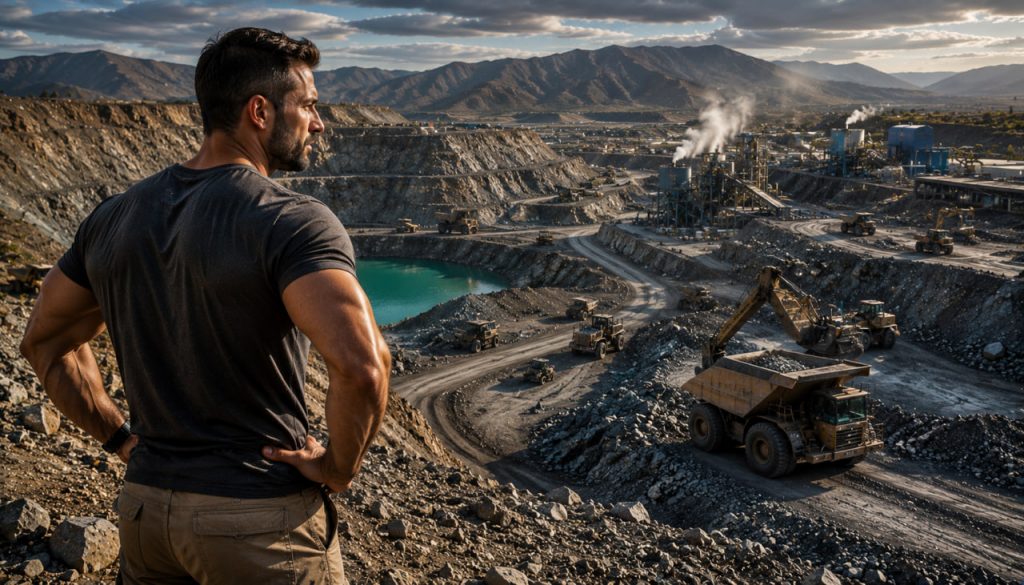
The rapid growth of electric vehicles is transforming global transportation. Governments, automakers, and consumers increasingly view EVs as a key solution for reducing greenhouse gas emissions and combating climate change. However, behind every electric vehicle lies a complex supply chain that depends on large quantities of raw materials.
Lithium, nickel, cobalt, copper, graphite, and manganese are essential components of modern battery technology. As EV production expands, demand for these materials is rising dramatically.
While electric vehicles help reduce emissions during operation, the extraction and processing of battery materials can create significant environmental challenges. Understanding these impacts is critical for building a truly sustainable transportation future.
The debate is no longer simply about electric vehicles versus gasoline cars. Increasingly, the focus is on how battery materials are sourced, processed, recycled, and managed throughout their entire lifecycle.
Why Battery Materials Are So Important
Modern lithium-ion batteries rely on a combination of specialized materials that enable high energy density and long operating life.
The most important battery materials include:
- lithium
- nickel
- cobalt
- graphite
- manganese
- copper
- aluminum
Each material plays a different role in battery performance.
As global EV adoption accelerates, demand for these resources is increasing rapidly.
According to the International Energy Agency, the transition toward electrification could multiply demand for certain battery minerals several times over the coming decades.
Battery materials have become some of the most strategically important resources in the modern economy.
Lithium Mining and Water Consumption
Lithium is often called the foundation of the modern battery industry.
Large lithium reserves are found in regions such as:
- Australia
- Chile
- Argentina
- China
One of the biggest environmental concerns involves water usage.
In South America’s “Lithium Triangle,” lithium extraction often relies on brine evaporation processes.
This method can require substantial amounts of water in regions that are already dry and environmentally sensitive.
Potential concerns include:
- groundwater depletion
- ecosystem disruption
- reduced water availability
- impacts on local agriculture
Environmental scientists continue studying the long-term effects of intensive lithium extraction in these regions.
However, new extraction technologies may help reduce water consumption in the future.
Cobalt Mining Challenges
Cobalt has attracted significant attention due to both environmental and social concerns.
A large portion of global cobalt production comes from the Democratic Republic of the Congo.
Environmental issues associated with cobalt mining may include:
- land degradation
- habitat destruction
- water contamination
- soil pollution
The industry has also faced scrutiny regarding labor practices and supply chain transparency.
As a result, many battery manufacturers are actively working to reduce cobalt dependence through alternative battery chemistries.
This trend may help lower both environmental and ethical risks.
Nickel Mining and Ecosystem Impacts
Nickel plays a crucial role in many high-performance EV batteries.
Major nickel-producing countries include:
- Indonesia
- Philippines
- Canada
- Australia
Nickel mining can generate environmental concerns such as:
- deforestation
- habitat loss
- water pollution
- soil erosion
Some mining projects require large-scale land clearing, which may affect biodiversity and local ecosystems.
However, modern mining operations increasingly face stricter environmental regulations and sustainability requirements.
Many companies are investing in cleaner extraction and processing technologies to reduce environmental damage.
Copper Demand Is Growing Rapidly
Electric vehicles use significantly more copper than traditional vehicles.
Copper is essential for:
- electric motors
- charging systems
- wiring
- battery components
- renewable energy infrastructure
The challenge is scale.
As electrification expands globally, copper demand is expected to rise substantially.
Mining copper can result in:
- landscape alteration
- waste rock generation
- energy consumption
- water usage
However, copper also has one major sustainability advantage.
It is highly recyclable and can be reused repeatedly without significant quality loss.
This makes recycling increasingly important for future supply chains.
Graphite Production and Processing
Graphite is another critical battery material.
Most lithium-ion batteries use graphite in the anode.
Environmental concerns include:
- mining impacts
- dust emissions
- chemical processing
- energy consumption
Natural graphite mining and synthetic graphite production both have environmental footprints.
Researchers are exploring alternative materials and cleaner production methods to improve sustainability.
Carbon Emissions from Material Processing
Mining is only part of the story.
Battery materials must also be processed and refined before entering vehicle production.
These activities often require:
- electricity
- industrial heat
- transportation
- chemical processing
Depending on the energy source used, material processing can generate substantial carbon emissions.
For example:
- coal-powered processing produces higher emissions
- renewable-powered processing produces lower emissions
This is why many manufacturers are seeking cleaner supply chains powered by renewable energy.
The environmental footprint of a battery depends heavily on how and where its materials are processed.
Biodiversity and Land Use Concerns
Mining operations can affect natural ecosystems in various ways.
Potential impacts include:
- habitat fragmentation
- species displacement
- vegetation loss
- ecosystem disruption
Large-scale extraction projects often require roads, infrastructure, and industrial facilities that alter landscapes.
Responsible land management practices are increasingly important as mineral demand grows.
Many mining companies now implement restoration and rehabilitation programs designed to reduce long-term environmental damage.
The Role of Battery Recycling
One of the most promising solutions is battery recycling.
Recycling can recover valuable materials including:
- lithium
- nickel
- cobalt
- copper
- aluminum
Benefits include:
- reduced mining demand
- lower emissions
- improved resource efficiency
- reduced waste generation
Several companies are building large-scale battery recycling facilities capable of creating closed-loop material systems.
In the future, recycled materials may supply a significant portion of battery production needs.
This could dramatically reduce pressure on mining operations.
New Technologies Are Improving Sustainability
The battery industry is evolving rapidly.
Emerging innovations include:
- direct lithium extraction
- cobalt-free batteries
- sodium-ion batteries
- solid-state batteries
- advanced recycling systems
These technologies aim to improve:
- efficiency
- sustainability
- resource utilization
- environmental performance
Many researchers believe next-generation batteries may significantly reduce reliance on some of today’s most environmentally challenging materials.
Expert Perspective
According to the International Energy Agency, expanding mineral production is essential for global electrification, but it must be accompanied by stronger environmental standards, recycling systems, and responsible supply chain management.
Many sustainability experts emphasize that the goal is not eliminating mining entirely, but making extraction cleaner, safer, and more efficient.
The long-term success of electric mobility depends on responsible resource management throughout the entire supply chain.
Comparing EV Mining with Fossil Fuel Extraction
Critics often compare battery mining with fossil fuel extraction.
While both industries have environmental impacts, there is an important difference.
Oil, gasoline, and diesel are burned once and permanently consumed.
Battery materials can potentially be:
- reused
- recycled
- recovered
- incorporated into circular supply chains
This creates opportunities for long-term sustainability improvements that are difficult to achieve with fossil fuels.
The comparison is complex, but lifecycle analysis remains an important tool for understanding environmental trade-offs.
The Future of Sustainable Battery Supply Chains
The future battery industry will likely focus on:
- cleaner mining methods
- renewable-powered processing
- higher recycling rates
- reduced material intensity
- transparent supply chains
- circular economy systems
Governments, automakers, and mining companies are increasingly recognizing that sustainability must extend beyond vehicle operation.
Future EV success depends not only on cleaner transportation but also on cleaner production.
Conclusion
The extraction of battery materials plays a critical role in the environmental impact of electric vehicles. Lithium, cobalt, nickel, copper, and graphite are essential for modern battery technology, but their production can create challenges involving water use, land disturbance, emissions, and biodiversity.
At the same time, technological innovation, recycling, cleaner processing methods, and stronger sustainability standards are helping reduce these impacts.
The future of electric mobility is not simply about replacing gasoline with electricity. It is about creating a responsible and sustainable supply chain that supports the transition to cleaner transportation while minimizing environmental harm.
As battery technology continues advancing, the industry is moving toward a future where electrification and sustainability increasingly work hand in hand.