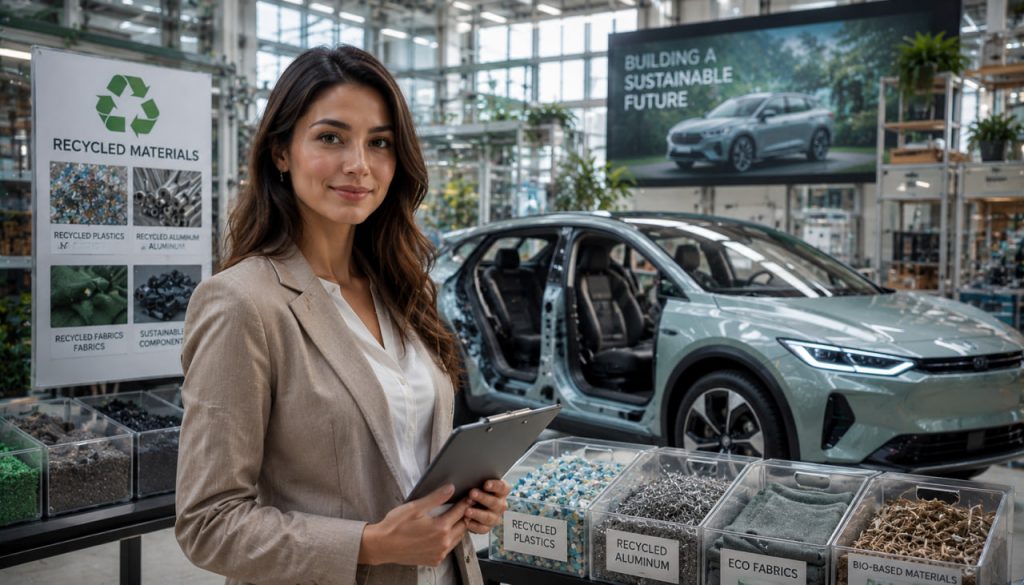
The automotive industry is undergoing a profound transformation. While electric vehicles are often celebrated for reducing tailpipe emissions, manufacturers are increasingly focusing on another critical sustainability challenge: the materials used to build the vehicles themselves.
Producing cars requires enormous amounts of steel, aluminum, plastics, rare earth elements, textiles, and battery materials. Traditionally, many of these resources have come from newly extracted raw materials, creating significant environmental impacts throughout the supply chain.
Today, a growing number of automakers are exploring the use of recycled materials in vehicle production. The goal is not only to build cleaner vehicles but also to create a circular economy where resources remain in use for as long as possible.
From recycled plastics and reclaimed aluminum to second-life battery materials, the next generation of electric vehicles may be built using a substantial percentage of recovered resources.
The future of sustainable mobility is increasingly about both electrification and circular manufacturing.
Why Recycled Materials Matter in EV Production
Electric vehicles reduce direct emissions during operation, but manufacturing still has a significant environmental footprint.
Vehicle production requires:
- steel
- aluminum
- plastics
- copper
- lithium
- nickel
- cobalt
- textiles
- electronic components
Extracting and processing these materials often requires large amounts of:
- energy
- water
- mining activity
- transportation
Using recycled materials can help reduce:
- carbon emissions
- waste generation
- resource depletion
- manufacturing energy consumption
In some cases, recycled materials require significantly less energy to process than newly mined raw materials.
For example, recycled aluminum can require up to 95% less energy than primary aluminum production.
Recycled Plastics Are Becoming Common
One of the easiest materials to recycle for automotive applications is plastic.
Modern EV manufacturers increasingly use recycled plastics in:
- interior panels
- seat components
- floor coverings
- storage compartments
- dashboard elements
- trim pieces
Many recycled plastics originate from:
- discarded bottles
- packaging materials
- fishing nets
- industrial waste
- ocean-recovered plastics
These materials can often achieve durability standards comparable to conventional automotive plastics.
Consumers may not even realize that parts of their vehicle were previously used in completely different products.
Sustainable Textiles and Interior Materials
Vehicle interiors are becoming a major focus of sustainability innovation.
Automakers are replacing traditional materials with alternatives made from:
- recycled polyester
- recycled nylon
- reclaimed fabrics
- plant-based fibers
- recycled PET bottles
Some manufacturers have eliminated animal leather entirely from certain EV models.
Instead, they use advanced synthetic materials that offer:
- lower environmental impact
- improved durability
- easier recycling
- reduced resource consumption
These materials are helping create more sustainable cabins without compromising comfort or quality.
Recycled Aluminum and Steel
Metal production remains one of the largest sources of industrial emissions globally.
Because EVs often use large amounts of aluminum for weight reduction, recycled aluminum has become particularly important.
Benefits include:
- lower energy consumption
- reduced mining activity
- lower carbon footprint
- improved resource efficiency
Many manufacturers now prioritize recycled metals in:
- body structures
- wheels
- chassis components
- battery enclosures
Steel recycling is also becoming increasingly important.
Unlike many materials, steel can be recycled repeatedly without significant degradation in quality.
Recycled metals may become one of the most important contributors to lower-carbon vehicle manufacturing.
Battery Recycling and Closed-Loop Production
Perhaps the most significant opportunity involves battery materials.
Modern EV batteries contain valuable resources including:
- lithium
- nickel
- cobalt
- manganese
- copper
As millions of electric vehicles enter the market, battery recycling is becoming increasingly critical.
Several companies are developing closed-loop systems where materials recovered from old batteries are used to manufacture new ones.
This approach helps:
- reduce mining demand
- improve supply chain security
- lower environmental impact
- support long-term EV growth
Battery recycling may eventually become a major source of raw materials for future vehicle production.
Concept Cars Leading the Way
Many automakers first test sustainability innovations through concept vehicles.
These concepts often showcase:
- recycled composites
- reclaimed metals
- biodegradable materials
- recycled textiles
- renewable interior materials
Concept vehicles serve as laboratories for future production technologies.
While not every innovation reaches commercial production immediately, they demonstrate the industry’s long-term direction.
Increasingly, sustainability is becoming a core design principle rather than a secondary consideration.
Real Electric Vehicles Using Recycled Materials
Several production EVs already incorporate significant amounts of recycled content.
Examples include vehicles from:
- BMW
- Volvo
- Polestar
- Mercedes-Benz
- Hyundai
- Kia
- Nissan
Many of these manufacturers now use recycled materials throughout their vehicles, particularly in:
- seat fabrics
- carpets
- door panels
- insulation
- plastic components
Some manufacturers have publicly committed to increasing recycled content dramatically over the coming decade.
This reflects growing consumer demand for environmentally responsible products.
The BMW Approach
BMW has become one of the leaders in sustainable vehicle materials.
The company has invested heavily in:
- recycled aluminum
- recycled steel
- sustainable plastics
- circular manufacturing systems
BMW has stated that future vehicle generations will contain substantially higher percentages of secondary materials.
The company views circularity as a key component of long-term sustainability.
Volvo and the Circular Economy
Volvo Cars has also prioritized recycled and renewable materials.
Several Volvo EV models include components made from:
- recycled plastics
- recycled fishing nets
- reclaimed textiles
- sustainable interior materials
The company has established ambitious sustainability targets aimed at reducing lifecycle emissions throughout manufacturing and vehicle ownership.
Expert Perspective
According to the International Energy Agency, improving material efficiency and expanding recycling will play an essential role in reducing the environmental footprint of electric vehicle production.
Many sustainability experts argue that electrification alone is not enough.
True long-term sustainability requires addressing the entire lifecycle of the vehicle, including:
- raw material sourcing
- manufacturing
- operation
- recycling
- end-of-life recovery
The next phase of EV development focuses on making vehicles sustainable from production to disposal.
Challenges Facing Recycled Vehicle Materials
Despite rapid progress, several challenges remain.
Manufacturers must ensure recycled materials meet strict standards for:
- safety
- durability
- performance
- appearance
- consistency
Supply chains also need significant development.
In many regions, large-scale collection and processing systems remain limited.
Additional challenges include:
- sorting complexity
- contamination risks
- material quality variation
- recycling infrastructure costs
However, technological improvements continue reducing these barriers.
The Future of Circular Vehicle Manufacturing
Future electric vehicles may be designed specifically for recycling.
Manufacturers are increasingly exploring:
- modular components
- easier disassembly
- recyclable battery systems
- material traceability
- circular supply chains
Artificial intelligence may also help optimize recycling and material recovery processes.
Eventually, automakers may track materials throughout a vehicle’s entire lifecycle, enabling far more efficient resource reuse.
The ultimate goal is a closed-loop system where old vehicles become the raw materials for new ones.
Conclusion
Electric vehicles made from recycled materials are no longer just experimental concepts. Today, many leading manufacturers already incorporate recycled plastics, metals, textiles, and battery materials into production vehicles.
As battery recycling expands and circular manufacturing systems mature, the percentage of recycled content in EVs is expected to grow significantly.
The transition to sustainable transportation is evolving beyond emissions reduction alone. The focus is increasingly shifting toward responsible resource management, circular economies, and lifecycle sustainability.
In the coming years, the most environmentally friendly electric vehicles may not simply be powered by electricity—they may also be built largely from materials that have already completed a previous life.