Owning an electric vehicle is different from driving a gasoline-powered car, but once you understand a few practical techniques, daily driving becomes easier, more efficient, and often less expensive. Modern EVs are designed to simplify transportation, yet many owners never take full advantage of the technology available to them.
From smarter charging habits to efficient driving techniques, small adjustments can significantly improve range, battery health, and overall ownership experience.
The best EV drivers don’t necessarily have the largest batteries—they know how to use their vehicles efficiently.
Plan Charging Instead of Waiting for a Low Battery
One of the most common mistakes new EV owners make is treating an electric car like a gasoline vehicle by waiting until the battery is nearly empty before recharging.
Instead:
- Charge regularly at home when possible.
- Keep the battery within the manufacturer’s recommended daily charging range.
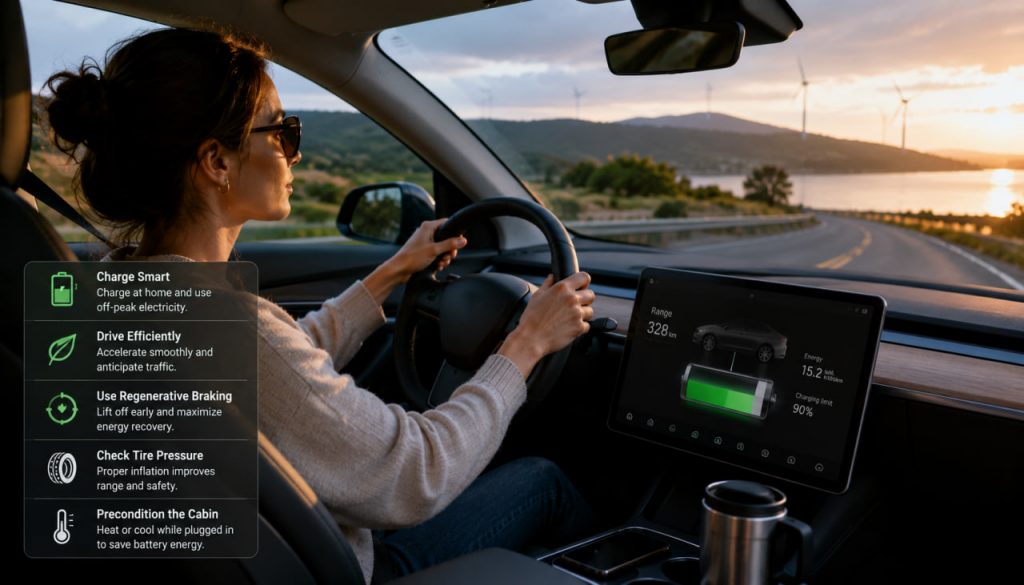
- Use scheduled charging during off-peak electricity hours if available.
- Charge before long trips rather than during them whenever practical.
Routine charging reduces stress and makes daily driving more predictable.
Precondition the Battery Before Driving
Many modern electric vehicles allow owners to precondition both the cabin and the battery while the vehicle remains plugged in.
Benefits include:
- Improved driving range in cold weather
- Faster DC fast charging
- Increased passenger comfort
- Reduced battery energy consumption immediately after departure
Using grid electricity to warm or cool the vehicle before leaving helps preserve battery energy for driving.
Use Regenerative Braking Effectively
Regenerative braking converts part of the vehicle’s kinetic energy back into electricity when slowing down.
To maximize its effectiveness:
- Lift off the accelerator earlier.
- Anticipate traffic conditions.
- Drive smoothly.
- Use one-pedal driving if your vehicle supports it.
Efficient regenerative braking not only extends driving range but also reduces brake wear.
Maintain Proper Tire Pressure
Low tire pressure increases rolling resistance and reduces efficiency.
Check tire pressure regularly because:
- Proper inflation improves range.
- Tires wear more evenly.
- Vehicle handling improves.
- Energy consumption decreases.
Even a small pressure reduction can noticeably affect efficiency over thousands of miles.
Avoid Carrying Unnecessary Weight
Extra weight requires additional energy.
Remove items you rarely use, such as:
- Heavy tools
- Sports equipment
- Unused roof boxes
- Excess cargo
Reducing unnecessary weight improves efficiency without costing anything.
Drive Smoothly Instead of Aggressively
Rapid acceleration and hard braking consume significantly more energy.
Efficient driving habits include:
- Gentle acceleration
- Maintaining steady speeds
- Looking ahead in traffic
- Avoiding unnecessary lane changes
- Using cruise control when appropriate
Smooth driving often has a greater impact on range than many drivers expect.
Reduce Aerodynamic Drag
Highway efficiency depends heavily on aerodynamics.
To reduce drag:
- Remove roof racks when not in use.
- Avoid carrying bicycles or cargo boxes unnecessarily.
- Keep windows closed at highway speeds.
- Choose efficient wheel designs when possible.
At higher speeds, aerodynamic resistance becomes one of the largest consumers of energy.
Take Advantage of Scheduled Charging
Many utilities offer lower electricity rates during off-peak hours.
Scheduling charging overnight can:
- Reduce electricity costs.
- Lower demand on the power grid.
- Ensure the vehicle is fully charged each morning.
- Optimize charging for battery longevity in some vehicles.
Smart charging features are available in many EV mobile applications.
Monitor Battery Health
Modern EVs automatically manage battery protection, but good habits still matter.
Recommended practices include:
- Avoid leaving the battery at 100% for extended periods unless preparing for a trip.
- Avoid repeatedly discharging to extremely low levels.
- Follow manufacturer recommendations for daily charging limits.
- Install software updates when available.
These habits may contribute to maintaining battery performance over the long term.
Use Navigation for Better Efficiency
Built-in navigation systems in many EVs do more than provide directions.
They can:
- Estimate remaining battery charge at arrival.
- Suggest charging stops.
- Prepare the battery for fast charging.
- Optimize routes based on elevation and traffic.
Allowing the vehicle to manage charging stops often produces better results than manual planning.
Learn Your Vehicle’s Energy Reports
Most modern EVs provide detailed energy usage statistics.
Reviewing these reports helps identify:
- Driving habits that reduce efficiency.
- Climate control energy usage.
- Speed-related consumption.
- Route efficiency.
- Seasonal changes in range.
Understanding this data helps drivers improve efficiency over time.
Prepare for Winter and Summer
Extreme temperatures affect all vehicles, including EVs.
In winter:
- Preheat the cabin while plugged in.
- Use heated seats and steering wheels when available.
- Keep tires properly inflated.
- Expect some temporary reduction in range.
In summer:
- Park in the shade when possible.
- Pre-cool the cabin before departure.
- Limit unnecessary battery overheating during fast charging.
Planning ahead minimizes weather-related efficiency losses.
Keep Charging Accessories Organized
Carry essential charging equipment in the vehicle, including:
- Portable charging cable
- Public charging adapters
- Charging cards if required
- Emergency contact information
- Flashlight
- Tire repair kit
Being prepared makes unexpected situations easier to manage.
Avoid Unnecessary Fast Charging
DC fast charging is extremely convenient during road trips but is not always necessary for everyday driving.
Whenever practical:
- Use home AC charging for daily needs.
- Reserve fast charging for longer journeys.
- Follow manufacturer recommendations regarding charging frequency.
This approach can reduce charging costs while supporting normal battery management.
Stay Updated with Software
Unlike traditional vehicles, many EVs continue improving after purchase.
Software updates may introduce:
- Better efficiency
- Faster charging optimization
- New driver assistance features
- Improved navigation
- Enhanced battery management
Keeping software current allows owners to benefit from ongoing improvements.
Expert Perspective: Efficient Driving Matters More Than Battery Size
According to the International Energy Agency, improvements in driving efficiency, smart charging practices, and expanding charging infrastructure are key factors supporting the continued adoption of electric vehicles worldwide.
Researchers at National Renewable Energy Laboratory have also found that driving style, climate conditions, speed, and charging behavior significantly influence real-world EV efficiency. Their research demonstrates that thoughtful energy management can substantially improve range without requiring larger battery packs.
These findings support an important conclusion: the most efficient EV owners rely on smart habits rather than simply purchasing vehicles with the longest advertised range.
The Future of Smarter EV Ownership
Electric vehicles continue becoming more intelligent through advances in software and connectivity.
Future innovations are expected to include:
- AI-powered route optimization
- Smarter battery conditioning
- Vehicle-to-home energy sharing
- Predictive charging schedules
- Improved battery diagnostics
- Greater integration with renewable energy systems
These technologies will make EV ownership even more convenient and efficient.
Conclusion
Driving an electric vehicle efficiently is less about changing your lifestyle and more about adopting a few simple habits. Regular home charging, smooth driving, effective use of regenerative braking, proper tire maintenance, and intelligent trip planning can all improve range while reducing operating costs.
The most valuable EV life hacks are often the simplest ones: charge smart, drive smoothly, maintain your vehicle properly, and let its technology work in your favor.