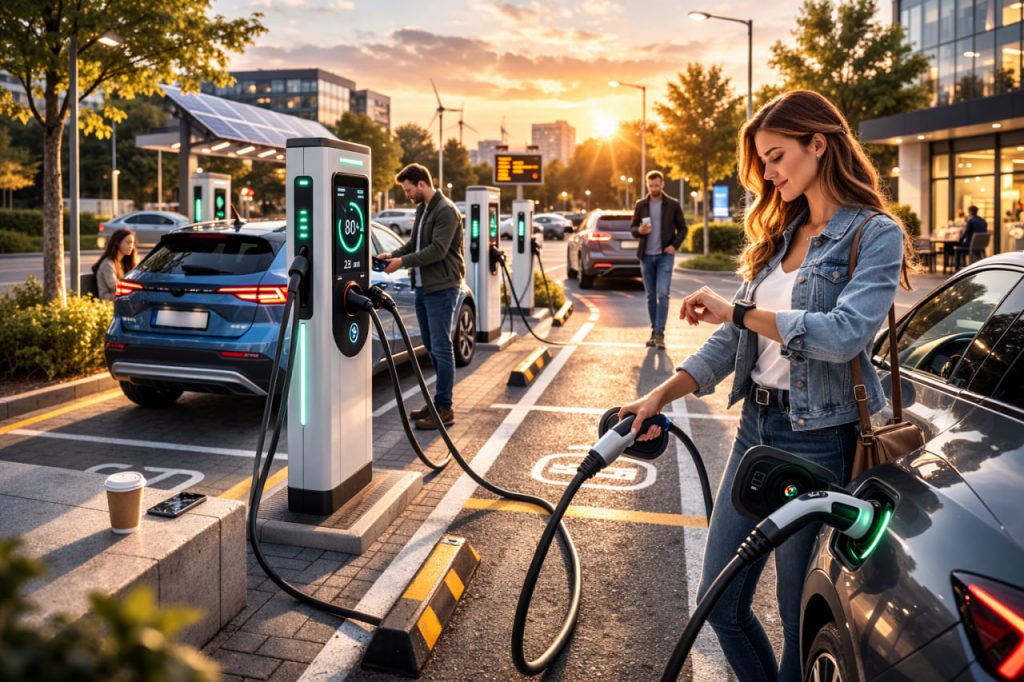
As electric vehicles become more widespread, public charging infrastructure is experiencing increased demand. While the number of charging stations continues to grow, availability during peak hours can still be limited. This has led to a growing issue often referred to as “charging freeloaders” — drivers who occupy charging spots longer than necessary or use them irresponsibly. Although most EV owners understand the importance of cooperation, improper charging etiquette can create tension and reduce system efficiency. Establishing clear norms of behavior is essential for maintaining fairness and accessibility within the EV community.
What Is a Charging Freeloader?
A charging freeloader is typically a driver who continues occupying a charging station even after their vehicle has reached sufficient charge. This behavior may include leaving the car plugged in for hours without actively charging or using a fast charger when slower home charging would suffice. In high-demand urban areas, this can prevent other drivers from accessing essential charging infrastructure. While not always intentional, such practices disrupt the balance of shared public resources.
According to sustainable mobility analyst Dr. Marcus Hill:
“Public charging is a shared ecosystem, and its efficiency depends on mutual responsibility among drivers.”
Understanding the collective nature of EV infrastructure is the foundation of responsible behavior.
Why Charging Etiquette Matters
Public charging stations differ from traditional fuel pumps because charging sessions often last longer than refueling. Fast charging may take 20–40 minutes, while slower AC charging can require several hours. When a fully charged vehicle remains connected, it blocks access for others, particularly in areas with limited station density.
Proper etiquette ensures fair access and reduces conflict among drivers. In many cities, idle fees — additional charges applied after charging is complete — are introduced to discourage prolonged occupancy. These pricing mechanisms promote turnover and encourage drivers to monitor their charging sessions actively.
Common Etiquette Rules at Charging Stations
Several widely accepted best practices define responsible EV charging behavior:
- Move the vehicle promptly once charging is complete.
- Use fast chargers only when necessary, especially during peak hours.
- Avoid unplugging another vehicle unless explicit permission is given.
- Park in charging spots only if actively charging.
- Respect queue systems when stations are occupied.
These guidelines are not formal laws in most regions but function as community standards that promote fairness.
According to electric mobility researcher Dr. Laura Mendes:
“Charging etiquette is not about strict enforcement; it is about building a culture of cooperation.”
The Role of Technology in Reducing Conflicts
Modern charging networks integrate mobile applications that notify drivers when charging is complete. Some platforms display estimated completion times and real-time availability, allowing better planning. Additionally, idle fees and dynamic pricing models encourage efficient station use.
Emerging technologies such as plug-and-charge systems — which automatically authenticate and start sessions — reduce setup time and streamline turnover. These innovations help minimize friction between drivers.
Urban Challenges and Infrastructure Limitations
High-density cities face particular challenges due to limited physical space for charger installation. In such environments, charging stations must serve a large number of users. Without proper etiquette, even a small number of inconsiderate behaviors can significantly reduce overall accessibility.
Infrastructure expansion remains critical, but behavioral adaptation is equally important. Drivers transitioning from home charging to public networks must understand that shared infrastructure requires shared responsibility.
Legal and Policy Considerations
Some municipalities are introducing regulations that impose fines for blocking charging stations without actively charging. Others rely primarily on network-based financial penalties rather than legal enforcement. Clear signage and transparent pricing policies also help prevent misunderstandings.
However, overregulation can discourage EV adoption if perceived as punitive. A balanced approach combining incentives, education, and moderate penalties tends to produce better results.
Building a Respectful EV Community
As EV adoption grows, maintaining a respectful charging culture becomes increasingly important. Community awareness campaigns and in-app reminders reinforce best practices. Many EV drivers already demonstrate high levels of cooperation, recognizing that responsible behavior benefits everyone.
Long-term success depends not only on infrastructure investment but also on shared norms of conduct. Mutual respect reduces tension and fosters a positive user experience across charging networks.
Conclusion
The issue of charging freeloaders highlights the importance of etiquette in shared EV infrastructure. While technological solutions and pricing policies help improve efficiency, driver behavior remains a key factor. Responsible charging practices ensure fair access, reduce frustration, and support the continued growth of electric mobility. As public charging networks expand, cooperation and awareness will remain central to a sustainable and efficient EV ecosystem.