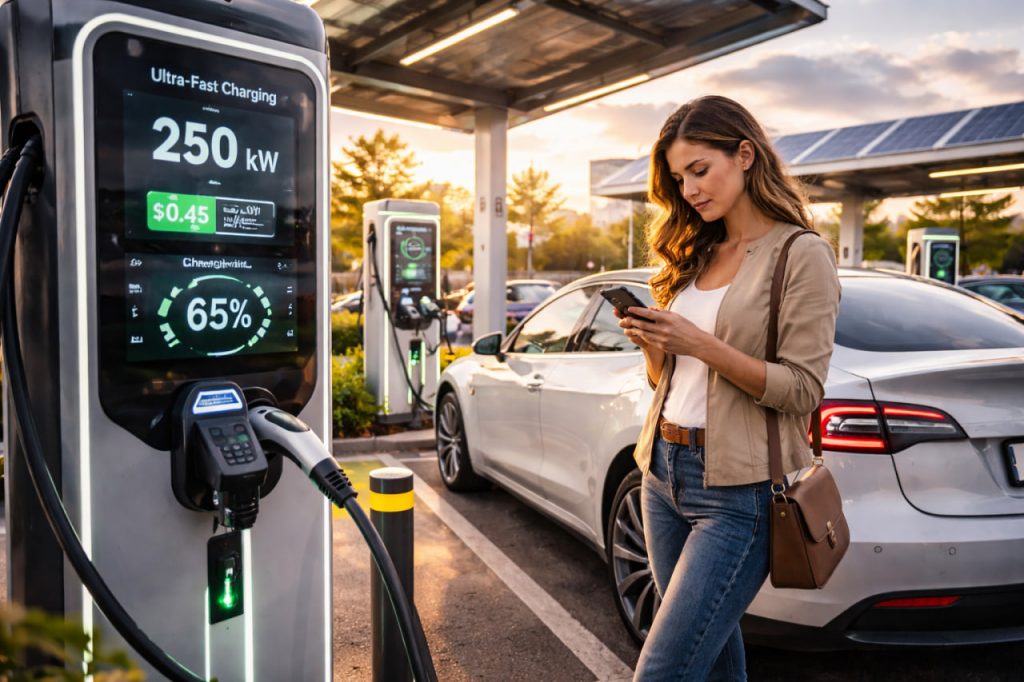
As electric vehicles become mainstream, ultra-fast charging (UFC) networks are expanding rapidly along highways and in urban hubs. These stations, often delivering power between 150 kW and 350 kW, are designed to recharge an EV battery in minutes rather than hours. However, the convenience and infrastructure complexity of ultra-fast charging come with distinct pricing structures. Understanding how tarification models and subscription systems work is essential for EV drivers who want to control costs and optimize long-distance travel.
What Is Ultra-Fast Charging?
Ultra-fast charging refers to direct current (DC) charging at high power levels, typically above 150 kW. Unlike home AC charging, where electricity is converted inside the vehicle, DC fast chargers convert power externally and deliver it directly to the battery. This allows significantly faster energy transfer. In ideal conditions, a compatible EV can charge from 10% to 80% in 20–30 minutes.
According to EV infrastructure analyst Dr. Marcus Hill:
“Ultra-fast charging is engineered for mobility efficiency, not for lowest cost per kilowatt-hour.”
Because of the high infrastructure investment — including grid upgrades, cooling systems, and energy management — pricing reflects both electricity consumption and operational overhead.
Pricing per Kilowatt-Hour (kWh)
The most transparent model is per-kWh pricing, where drivers pay based on the amount of energy delivered. A kilowatt-hour (kWh) measures energy consumption over time — for example, using 1 kilowatt of power for one hour equals 1 kWh. This model is similar to how households pay for electricity.
Per-kWh billing provides fairness, as drivers pay only for the energy received. However, rates at ultra-fast stations are typically higher than residential electricity due to infrastructure costs and demand charges imposed by utilities.
Time-Based Tarification
Some networks apply time-based pricing, charging per minute of connection. This model is often used in regions where energy-based billing regulations are limited. Time-based tariffs encourage drivers to unplug once charging speed decreases, especially after reaching higher battery levels.
However, because charging speed naturally slows after 80% state of charge, time-based billing may increase costs if drivers continue charging beyond optimal efficiency.
According to sustainable mobility consultant Laura Mendes:
“Understanding charging curves is essential when using time-based tariffs, as costs can rise significantly after peak charging speed drops.”
Idle Fees and Congestion Charges
To prevent station blocking, many networks implement idle fees, which apply when a vehicle remains connected after charging is complete. These fees incentivize turnover and improve availability. In high-demand urban areas, congestion pricing may also be introduced during peak hours.
Idle fees are not designed to increase revenue but to maintain network efficiency and fairness among users.
Subscription Models and Membership Plans
Many ultra-fast charging providers offer subscription plans or membership programs. These typically require a monthly fee in exchange for reduced per-kWh rates. Frequent long-distance drivers often benefit from such models, as discounted energy pricing offsets subscription costs.
Subscription systems may include:
- Lower energy rates
- Priority access at busy stations
- Integrated roaming across partner networks
- Additional services such as route planning integration
Drivers who use ultra-fast chargers regularly may achieve significant savings through these programs.
Roaming Agreements and Cross-Network Access
Modern charging ecosystems increasingly rely on roaming agreements, allowing a single account to activate chargers from multiple networks. This simplifies billing and reduces the need for multiple applications or RFID cards. While roaming enhances convenience, pricing may vary depending on partnership agreements.
Dynamic Pricing and Energy Market Integration
In some regions, charging networks implement dynamic pricing, where rates fluctuate based on electricity market conditions, demand levels, or time of day. For example, prices may decrease during off-peak hours or increase when grid demand is high. This model encourages energy-efficient behavior and grid stability.
Advanced stations also integrate battery storage systems to reduce peak grid strain and stabilize pricing structures.
Cost Comparison: Home Charging vs Ultra-Fast Charging
Ultra-fast charging is typically more expensive than home AC charging. Home electricity rates are lower due to stable infrastructure and lower demand charges. Ultra-fast stations prioritize speed and accessibility, particularly for long-distance travel, making them a premium service rather than a daily charging solution.
Strategic use of both home charging and occasional ultra-fast charging allows drivers to balance cost efficiency and convenience.
Conclusion
Paid ultra-fast charging combines advanced power delivery with flexible pricing models, including per-kWh billing, time-based tariffs, idle fees, and subscription plans. While costs are generally higher than home charging, the speed and convenience make it essential for long-distance travel and rapid mobility. By understanding tariff structures and optimizing charging behavior, EV drivers can minimize expenses while maximizing efficiency. Ultra-fast charging is not just about power — it is about intelligent energy management within a growing electric mobility ecosystem.