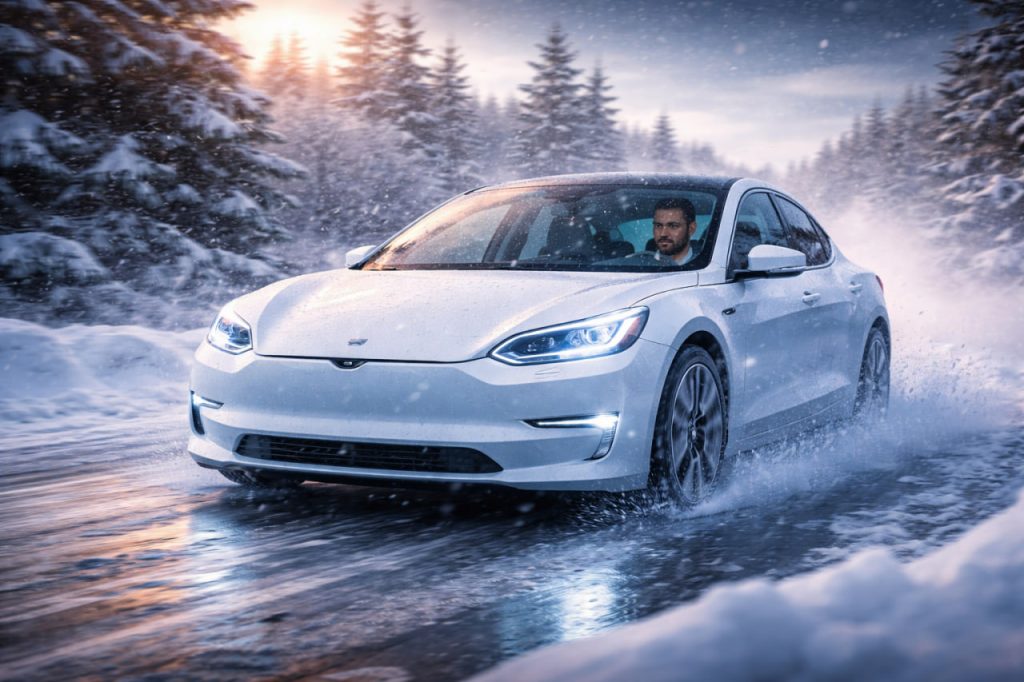
Driving on ice is one of the most challenging scenarios for any vehicle, regardless of whether it is powered by gasoline or electricity. However, electric vehicles (EVs) have several unique characteristics that change how they behave on slippery roads. Some of these features make them more stable and predictable, while others require drivers to adapt their habits. Understanding how EVs respond to ice helps drivers stay safe, confident, and in control during winter conditions.
Electric cars are not immune to physics. Ice dramatically reduces tire grip, braking efficiency, and steering response. Yet the way EVs deliver power, distribute weight, and manage traction often gives them advantages that traditional cars cannot easily match. The key is learning how these systems work together under extreme low-traction conditions.
The Role of Weight Distribution and Low Center of Gravity
One of the most important advantages of electric cars on ice is their low center of gravity. Because the battery pack is usually mounted flat under the floor, EVs have a more balanced and stable weight distribution compared to combustion vehicles. This reduces body roll and improves overall stability, especially during sudden maneuvers on slippery surfaces.
The battery also adds weight, which increases the force pressing the tires against the road. While weight alone does not guarantee grip, it helps maintain more consistent tire contact on uneven or icy terrain. The result is often smoother handling and less unpredictable sliding.
“A low center of gravity is one of the most powerful stability advantages electric vehicles have in winter driving,” — Dr. Elena Rossi, vehicle dynamics researcher.
Instant Torque: Advantage or Risk?
Electric motors deliver instant torque, meaning full pulling power is available immediately when the accelerator is pressed. On dry pavement, this provides excellent acceleration. On ice, however, it can become a risk if applied too aggressively.
Modern EVs solve this through precise motor control software. Power delivery is regulated millisecond by millisecond, allowing smoother torque application than combustion engines. When combined with traction control, this creates extremely fine control over wheel slip.
Drivers who accelerate gently usually find EVs feel more predictable on ice than traditional cars. Those who press the pedal abruptly may experience wheel spin faster than expected.
“Electric motors allow the most precise torque control ever seen in passenger vehicles,” — Dr. Martin Keller, electric powertrain engineer.
Traction Control and Stability Systems in EVs
EVs rely heavily on advanced traction control systems (TCS) and electronic stability control (ESC). Because electric motors can react almost instantly, these systems can reduce power more quickly and more accurately than in combustion vehicles.
When a wheel begins to slip on ice:
- The motor reduces torque immediately
- Braking is applied selectively
- Power is redistributed smoothly
This creates a calmer and more stable response during skids or sudden loss of traction.
Regenerative Braking on Ice
Regenerative braking behaves differently on ice than traditional friction braking. Because regen slows the vehicle by resisting wheel rotation, it can cause slight instability if grip is extremely low. For this reason, most EVs automatically reduce or disable strong regenerative braking when the system detects slippery conditions.
Many vehicles offer adjustable regeneration levels, allowing drivers to reduce regen in winter for smoother control. On ice, gentle mechanical braking often provides more predictable stopping behavior.
“Regen must be softened on ice, or it risks becoming too abrupt for low-traction surfaces,” — Dr. Hannah Cole, transportation safety analyst.
Braking Performance on Ice
No vehicle stops quickly on ice. EVs do not defy physics. However, modern EVs use sophisticated ABS (Anti-lock Braking Systems) that integrate seamlessly with electric drivetrain control. This coordination allows stable deceleration even when tires are close to losing grip.
The heavy battery pack also helps keep braking balanced, reducing front-end dive and improving overall stability during hard stops.
Tires Matter More Than the Car
The most critical factor in icy conditions is not the drivetrain, but the tires. Even the most advanced EV with poor tires will perform badly on ice. Winter tires with soft rubber compounds and specialized tread patterns dramatically improve traction, braking, and cornering.
On ice:
- Good winter tires matter more than AWD
- AWD helps with acceleration, not stopping
- Tire quality determines survival margins
“Tires define your safety envelope on ice, not horsepower or battery size,” — Dr. Thomas Nguyen, automotive safety specialist.
AWD vs RWD in Electric Vehicles
Many EVs use dual-motor all-wheel drive (AWD), which allows precise torque control at each axle. This is a major advantage on ice, especially when starting from a stop or climbing slippery hills.
However, AWD does not reduce stopping distance. It only improves traction during acceleration and stability during power application. Rear-wheel-drive EVs can still perform very well on ice with proper tires and cautious driving.
Driver Psychology and Overconfidence
One hidden risk of EVs in winter is false confidence. Quiet operation, smooth power delivery, and advanced electronics can make roads feel safer than they actually are. Drivers may underestimate how little grip exists on ice.
EVs make slipping less dramatic, but they do not eliminate it. Ice remains ice.
“Technology can soften consequences, but it cannot erase winter physics,” — Dr. Laura Jensen, road safety researcher.
Conclusion
Electric cars often handle ice better and more predictably than combustion vehicles due to their low center of gravity, precise torque control, and advanced traction systems. However, their advantages only work when combined with proper tires and responsible driving behavior. On ice, safety depends less on powertrain type and more on traction, anticipation, and restraint.
EVs do not make winter driving effortless, but they make it more controllable, stable, and technically sophisticated than ever before.


Lmaooo all them tricks n schemes!! Diesel still runnin the show tho!!🔥🔥
Yaer, but accumulates degradation on cold