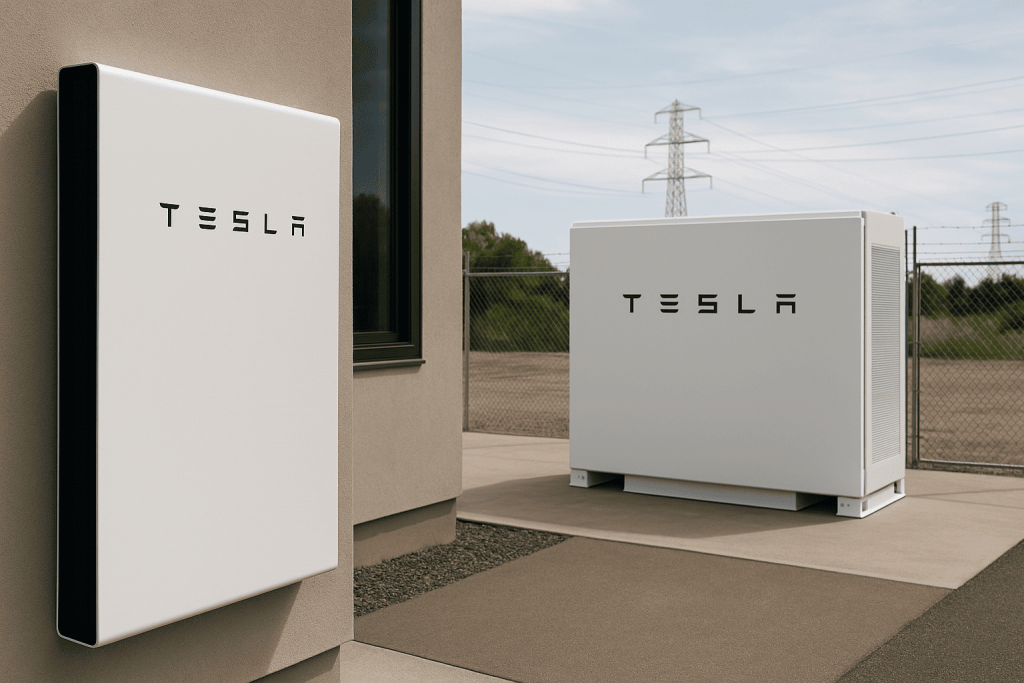
Tesla isn’t just a car company; it’s building a grid-aware ecosystem where home batteries, utility-scale storage, solar, and EVs work as one. Powerwall and Megapack are the quiet muscles behind that vision—shifting energy across time, protecting against outages, and making fast charging cheaper and greener. Here’s how they knit together with electric cars in the real world. ⚡️🚗
From EVs to energy networks: An electric car is a flexible load that can move in time—charge now, drive later. Add a stationary battery, and you gain a buffer that can buy low, use high, stabilize the home or grid, and serve the car at the best moments. Powerwall (home-scale) and Megapack (grid-scale) are the two ends of that spectrum, with software doing the orchestration.
Powerwall at home: smarter, cheaper charging—With time-of-use tariffs, Powerwall charges when electricity is cheap or solar is abundant, then powers the house (and sometimes the EV) during expensive peaks. Set the car to finish close to departure while Powerwall handles evening cooking, heating, and entertainment loads—your breaker stays calm, your bill shrinks, and your EV wakes up warm and full.
Solar synergy: Rooftop PV often peaks at midday when you’re away. Powerwall soaks up that surplus, defers it to evening, and lets the EV top up on your own sunshine overnight. Instead of chasing a daytime parking spot with AC charging, you “time-shift” solar to match your lifestyle. 🌞
Backup that actually covers driving: During an outage, Powerwall keeps the lights, Wi-Fi, heat pump, and fridge running. Critically, it can preserve enough headroom to add a few kWh to your EV for urgent trips (pharmacy, school, work). Priorities in the app ensure mobility isn’t sacrificed to streaming and kettles.
Load shaping and breaker sanity: Many homes hesitate to install a high-power wallbox because of main-panel limits. Powerwall can supply part of the instantaneous load so the charger, oven, and heat pump don’t trip the service. That means 11–22 kW charging can coexist with modern electric homes without expensive grid upgrades.
Vehicle-to-home (V2H) vs. Powerwall: V2H can cover outages and peak shaving using the car’s battery, but it ties your home’s resilience to whether the car is parked and plugged. Powerwall is always-on resilience; V2H is a great complement for deeper peaks or extended outages. Together they reduce grid imports and keep SoC where you want it.
Megapack at the utility scale: faster, cleaner charging corridors—Megapack sites near highways or substations store off-peak or renewable energy and discharge during fast-charging surges. That trims demand charges for site operators, keeps power quality high for multi-stall hubs, and makes it easier to add megawatt plugs without stressing local feeders.
Renewables smoothing: Windy night and sunny noon power can be volatile. Megapack buffers these swings, turning intermittent generation into dependable charging energy. Your EV session becomes greener not because the sun is shining right now, but because the site banked that sunshine earlier and releases it on demand. 🌬️
Frequency and voltage support: Big batteries respond in milliseconds to grid wobbles. That stabilizes frequency, supports voltage, and reduces the chance of nuisance trips at fast-charging sites. Fewer drops = happier road trips.
Virtual power plants (VPPs): Thousands of Powerwalls can act like a virtual Megapack during heat waves or evening peaks—exporting a slice of stored energy to the grid while owners are compensated. EVs benefit indirectly: lower wholesale prices and a more stable grid make nighttime charging cheaper and cleaner.
Smart Charging, orchestrated: The Tesla app (and compatible smart chargers) can line up three timers: ① EV finish time, ② Powerwall charge/discharge window, ③ tariff calendar. Done right, you charge the car during cheap/green hours, let Powerwall cover dinner peaks, and avoid pulling expensive grid power altogether. Automation prevents “schedule fights” that cause accidental peak charging.
Home economics: a quick sketch—With TOU spread of, say, €0.14/kWh (night) vs €0.36/kWh (peak), shifting 20 kWh/day from peak to off-peak saves ~€4.40/day. If your EV takes 10 kWh of that, Powerwall pays for part of its keep just by optimizing car energy. Add outage value and solar self-consumption gains, and total annual savings become meaningful.
Depot and fleet play: For businesses running EV fleets, Powerwall’s bigger siblings (Powerpack/Megapack) enable “AC at scale, DC on demand.” Overnight, dozens of vans charge gently; mid-day, a few DC posts top up from a battery buffer that shaves demand charges. Result: lower blended €/kWh and smaller grid connection than raw nameplate suggests.
Why storage improves battery health (indirectly): When the system times charging to finish near departure, packs sit fewer hours at high SoC—good for longevity. Preconditioning on cheap power warms the battery before driving or DC fast charging, reducing plating risk and boosting efficiency in winter. ❄️
Interoperability and open standards: Powerwall integrates cleanly with Tesla EVs, but smart charging principles apply universally. Open protocols (OCPP, utility price APIs) and dynamic tariffs let non-Tesla chargers and other home batteries coordinate similarly. The key is aligning when electrons move, not just how fast.
Environmental dividend: Every kWh shifted from dirty peaks to renewable-rich troughs cuts real-world grams CO₂e per km. At scale, Megapack deployments reduce curtailment (wasted wind/solar), making each new renewable project more valuable. Your EV becomes cleaner with the same driving pattern—because the system got smarter.
What’s next: Deeper VPP programs, wider V2H/V2G support, and tariff engines that optimize automatically. Expect “set it and forget it” schedules where the app simply asks: “When do you leave? What minimum range do you need?”—then juggles Powerwall, solar, and grid prices in the background. 🤖
Practical setup checklist (home): Enable TOU in the app; set an EV departure time and target SoC; let Powerwall charge during cheapest hours (or solar surplus) and discharge during peak; avoid overlapping schedules by choosing one master (car or battery) for start/stop signals; test a week and review your energy flow chart.
Practical setup checklist (site/fleet): Model your demand charges; size Megapack to cover 15–30 minutes of peak usage; stage AC ports for overnight dwell and reserve DC for exceptions; integrate live prices; and monitor charger utilization > power capacity—storage should raise both.
Conclusion: Powerwall and Megapack turn EV charging from a simple plug-in event into a strategic, low-carbon, low-cost energy workflow. At home, they slash bills, add resilience, and time-shift your solar to your schedule. On the grid, they stabilize fast charging and unlock more renewables. Together with smart software, they make electric driving cheaper, cleaner, and easier—exactly how the EV future wins. ✅

This actually made me understand the whole Powerwall + EV thing way better. Didn’t realize how much money it can save just by timing the charging right