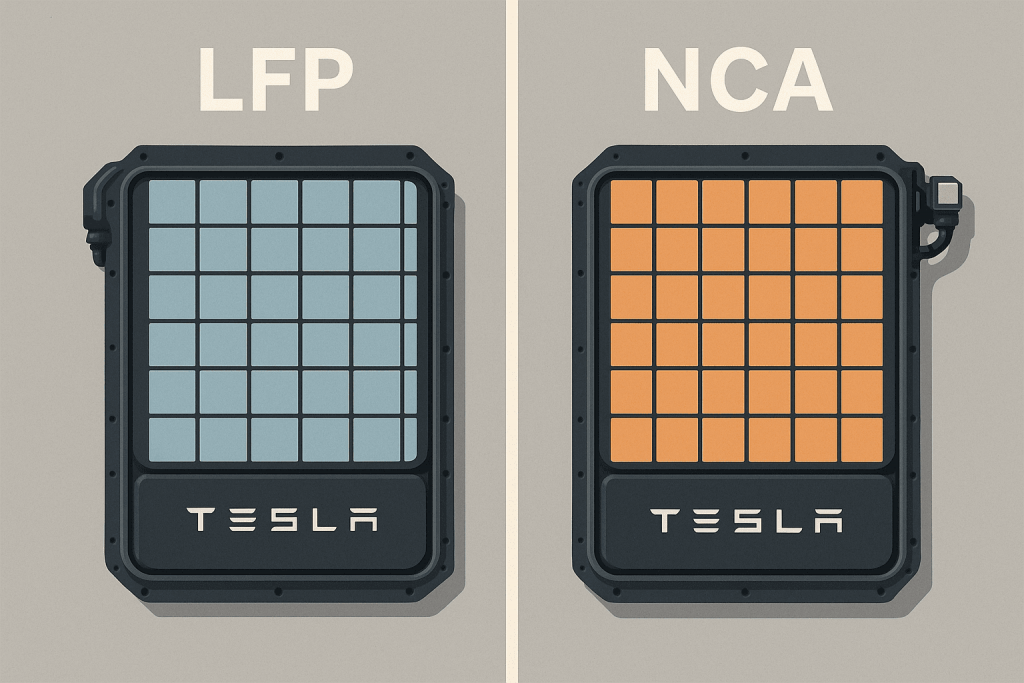
The quick take. Lithium-iron-phosphate (LFP) and nickel-cobalt-aluminum (NCA) cells both power Teslas—but they behave differently in cold, heat, fast charging, and long-term aging. If you live mild-to-warm and drive predictable daily miles, LFP shines for durability and price. If you face harsh winters, high performance, or frequent long motorway runs, NCA’s cold punch and energy density often win. Let’s map chemistry to real life. ⚡️
What’s inside, in plain English. LFP uses iron and phosphate—stable, cobalt-free, and typically cheaper per kWh. NCA mixes nickel, cobalt, and aluminum to boost voltage and energy density. Translation: NCA packs squeeze more range into the same box and deliver stronger low-temperature power; LFP packs trade some energy density for long cycle life and very robust thermal stability.
Climate fit: cold vs. heat. In sub-zero climates, NCA usually feels “awake” sooner: stronger regen returns earlier, and DC fast charging ramps faster when the pack is properly preheated. LFP can be excellent in winter too—but only with diligent preconditioning before charging or hard acceleration. In hot regions, both chemistries appreciate good cooling; LFP’s chemistry is inherently calm at elevated temps, which helps longevity during heat waves. ❄️🌞
Daily charging habits. LFP is happy living between 20–100% SoC and even benefits from regular 100% charges for BMS calibration. That makes it ideal for simple “charge to full overnight and go” routines. NCA prefers a mid-band for daily life (think ~50–80%), reserving 100% for trips. If you dislike micromanaging SoC, LFP’s “set-and-forget” nature is a perk.
Range per kilogram (and why it matters). NCA’s higher energy density means more range for the same mass/volume—useful if you do long motorway stints, carry passengers + cargo often, or value brisk acceleration at high SoC. If your calendar is mostly city/suburban hops under, say, 200–250 km/day, LFP’s lower density rarely hurts you in practice.
Winter behavior you’ll notice. On frosty mornings, LFP cars typically show more regen limitation (dotted line) and need longer or stronger preheat to accept fast charge. Using in-car navigation to a charger (to trigger battery preconditioning) is essential. NCA still likes preheat, but you’ll see full performance/regen return a bit earlier in the drive.
Fast charging curves. Both chemistries hit best results when the pack is warm and SoC is low on arrival. NCA tends to reach higher power sooner in cold ambient conditions; in mild/warm weather, well-engineered LFP can sustain very respectable plateaus. If most of your energy comes from cheap, scheduled home AC at night, the DC delta matters less. If you road-trip weekly, NCA’s cold-weather curve can shave minutes per stop.
Longevity & degradation. LFP is the cycle-life champ at moderate temperatures and daily full charges; it ages slowly when you avoid extreme heat and long high-SoC storage. NCA’s aging is more sensitive to time spent hot and near 100% SoC—but treated kindly (mid-band daily, good thermal management), it delivers many years and kilometers with strong performance. In fleets with frequent shallow cycles, LFP often holds capacity remarkably well. 🛡️
Performance feel. NCA packs usually deliver stronger peak power per kWh, aiding repeatable acceleration and high-speed passing—useful on mountain passes or Autobahn-adjacent driving. LFP cars are perfectly quick for everyday use, but ultimate punch at very low temps may be more muted until fully warm.
TCO and price stability. LFP typically lowers upfront cost and can reduce total cost of ownership for commuters and ride-hail/last-mile use thanks to tolerant daily 100% charging and very long cycle life. NCA can win TCO for drivers who monetize time—frequent long trips where faster winter charging and higher range reduce stops, or where higher residual value (trim/market dependent) offsets purchase price.
Home charging + tariffs. If you have off-peak night rates, LFP’s routine 100% overnight fits perfectly—finish right before departure to start warm and calibrated. With NCA, schedule to end near 70–80% most days; top to 90–100% only before a trip. Either way, finish close to departure so the pack is warm and you avoid long high-SoC parking.
Storage and seasonality. Parking for weeks? LFP is comfortable sitting ~50–60% SoC in cool shade; NCA prefers similar mid-bands and cool temps even more. For winter storage outside, leave a buffer (not near 0%), disable always-on features that wake the car, and do a short precondition before the first cold-start drive.
Which routes suit which chemistry. City + suburbs, predictable mileage, frequent AC at home/work, and desire for low-maintenance charging routine → LFP. Mixed climates with harsh winters, frequent DC road-trips, high sustained speeds or heavy loads → NCA. If you’re on the fence, map your weekly kilometers, temperature profile, and how often you truly need DC speed.
Battery health playbook (works for both). Finish charging near departure, keep the pack within moderate temperatures, avoid long parking at 100% in heat, and use the in-car route to DC sites for automatic preheat. Clean tire pressures, modest highway speeds in winter, and seat-heater comfort over max HVAC all cut Wh/km and aging. ✅
Myth busting. “LFP can’t winter.” It can—if you precondition before DC and accept that the first 10–20 minutes may be regen-limited. “NCA always degrades fast.” Not when used in mid-SoC bands and kept cool; most reported quick early drops are small calibration effects or hot-storage behavior, not inevitable chemistry doom.
Future trends to watch. Manganese-doped LFP (LMFP) narrows the energy-density gap, while heat-pump improvements and smarter BMS preheat strategies keep shrinking winter differences. On the NCA side, better silicon-blend anodes and thermal pathways raise both charging robustness and durability—great news for cold-climate road-trippers. 🔬
Decision cheat sheet. Choose LFP if you value: lower price, daily 100% convenience, long cycle life, mild/warm climate, predictable routes, fleet/ride-hail use. Choose NCA if you need: maximum range and power per kg, frequent fast winter charging, heavy motorway use, mountain driving, or you simply want the strongest cold-weather punch with fewer preheat compromises.
Conclusion. There’s no universal “best” battery—there’s a best battery for your climate and routes. Match LFP to stable, budget-smart daily driving and NCA to demanding winters and long-distance pace. Get charging timing right, precondition before DC, and keep SoC habits sane, and either chemistry will deliver years of efficient, confident miles. 🚘💙