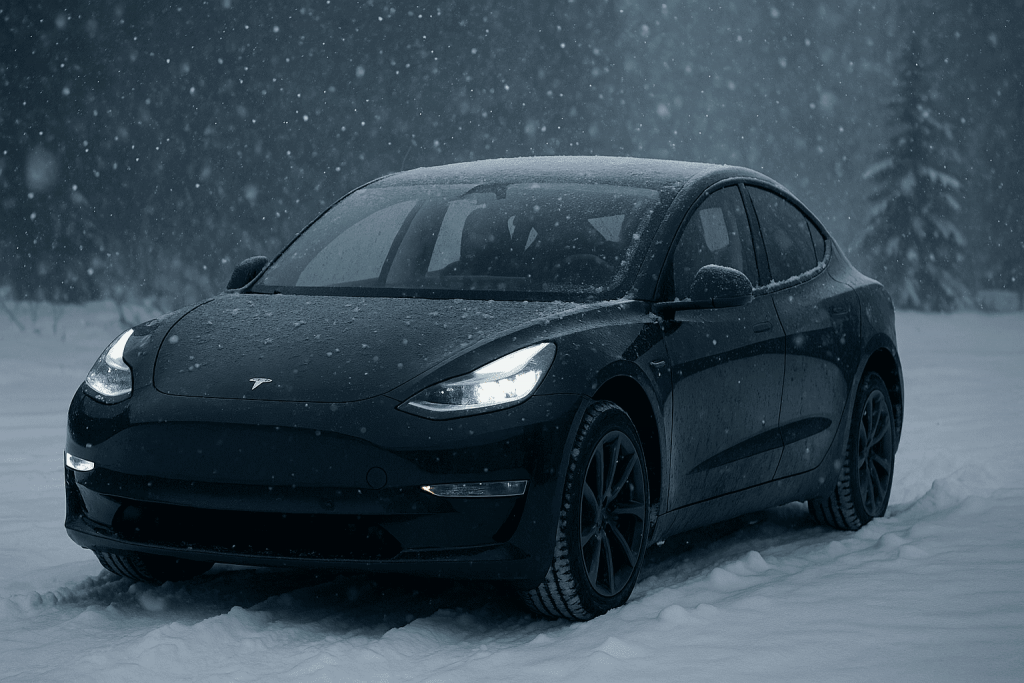
Cold snaps don’t “hate” Teslas; they punish unprepared batteries and inefficient cabin habits. When temperatures fall, a smart preheat, a well-used heat pump, and a realistic plan for energy use keep your range steady and your trips drama-free. ❄️⚡️
Why cold hurts range. Lithium-ion cells have higher internal resistance at low temperatures, so the car limits power and charging until the pack warms. Denser winter air, cold tires, and slush increase drag. Cabin heating adds a steady overhead, especially on short trips where the warm-up cost is a big slice of the distance.
What “battery preconditioning” actually does. When you set a departure time or navigate to a DC fast charger, the car routes inverter and coolant heat into the pack. The goal is a warm anode and uniform cell temperature so you recover full regen and hit a strong charging plateau the moment you plug in. Without preheat, early-trip efficiency sags and fast charging starts slow because the car must heat first, then charge.
How to trigger preheat the right way. Use the Tesla app’s “Schedule” or “Precondition” about 30–60 minutes before departure, and aim to finish AC charging right before you leave. If you’re heading to DC, set the charger as a destination so the car heats the battery en route. Even on a humble 10–16 A socket, a timed finish warms cells enough to restore regen quickly.
Heat pump basics in Tesla context. Modern Teslas use an integrated heat pump with a multi-port valve block that shares heat between the drive units, battery, and cabin. In mild cold the pump moves heat efficiently from components to the cabin; in deep cold it blends electric resistive elements. The big win comes from letting the system stabilize at a moderate setpoint instead of blasting to max and cycling.
Cabin strategy that saves energy without feeling cold. Clear the glass with defrost, then drop to a steady temperature and rely on seat and wheel heaters for comfort—they sip power compared to full-cabin air. Keep “Auto” airflow but avoid very high fan speeds once windows are clear. A clean, dry interior fogs less; shake mats and wipe glass weekly to reduce dehumidification load. 🧣
Realistic consumption targets. Expect roughly 15–35% higher Wh/km in typical European winters, and up to 40–50% on short, stop-and-go errands below freezing. Highway cruising at 110 km/h with winter tires and heat set moderately often lands in the 170–210 Wh/km range for efficient trims and 200–240 Wh/km for performance/aero-heavy setups, weather depending. Short, cold starts push higher because warm-up is fixed overhead.
Trip length matters more than temperature. On a 6 km errand, the heater and battery warm-up dominate; on a 60 km commute, they amortize away. If you must chain short trips, leave the car plugged in between runs with cabin “Precondition” a few minutes before each departure to keep systems warm on cheap grid power rather than on-road energy.
Regen behavior you’ll notice. After an overnight cold soak, the dotted line on the power meter shows limited regen. As the pack warms, the dots disappear and full one-pedal feel returns. Early in the drive, blend pedal braking smoothly to keep traction predictable on slick surfaces, then let regen take over once the battery is warm.
DC fast charging in the cold. Show up warm and low on state of charge—around 10–30%—to reach peak power quickly. Always navigate to the charger to trigger preheat. If a session ramps slowly, it’s usually a cold battery, not a “bad stall.” After charging, avoid parking for hours at 100% in sub-zero weather; drive a few minutes to normalize temperatures and use a little energy.
LFP vs. nickel chemistries in Tesla lineup. LFP packs (common in some RWD Model 3/Y) are particularly sensitive to cold charging and need thorough preconditioning for fast DC. They’re happy with daily 100% charges for calibration but should not be fast-charged cold. Nickel-based packs tolerate cold a bit better yet still benefit heavily from warm-departure routines.
Tires, pressure, and rolling resistance. Winter drops pressure; underinflation hurts safety and range. Check monthly and set to the placard when tires are cold. Choose EV-rated winter tires with low rolling resistance; narrower sizes reduce slush plowing. Remove roof racks/boxes when idle—the aero penalty grows in dense, cold air.
Short-trip hacks that work. Preheat on the cord, set a moderate cabin temp, lean on seat heat, and avoid repeated full warm-ups by batching errands. If you park outside at work, run a 10–15 minute precondition before heading home so the battery and cabin aren’t starting from deep-cold.
Background drain and parked behavior. In freezing weather, expect slightly higher standby usage as the car keeps the pack within limits for safety and charging readiness. Disable Sentry where secure, reduce frequent third-party polling, and use “Energy Savings” style settings to minimize vampire drain during long, cold soaks.
When range really matters. Slow 10–15 km/h on motorways in severe cold, arrive earlier at your first charger to warm the pack while driving, and use the in-car planner to stack stops at stalls with amenities. The goal is a warm battery hitting a high plateau, not squeezing a single mega-charge late in the trip.
What “good” looks like in winter. A Tesla that finishes charging right before departure, shows minimal regen dots after a few minutes, maintains a stable cabin with seat heat, and hits target charging power immediately upon arrival is operating near optimal winter efficiency.
Conclusion. Winter doesn’t rob Teslas—it exposes sloppy routines. Warm the battery before you move, let the heat pump work steadily, aim to finish charging near departure, and drive with smooth intent until full regen returns. Do that, and your real-world consumption stays predictable while comfort and confidence stay high, garage or not. ✅
Super clear breakdown. I always thought winter range loss was just ‘Tesla bad in cold,’ but this actually shows it’s mostly routine and prep