Cold weather doesn’t hate electric cars—it just hates batteries that aren’t warm yet. Without a garage, your pack starts closer to ambient, cabin heat must fight frosty glass, and rolling resistance climbs on cold tires and slushy roads. The good news: with smart timing, gentle tweaks to your setup, and a few winter-specific habits, you can keep most of your range and all of your peace of mind. ❄️⚡️
Why cold steals range. At low temperatures, lithium-ion chemistry slows and cell internal resistance rises. The BMS limits power and charging until cells warm up, while the cabin heater pulls several kilowatts to defrost and heat the air. Add denser air, cold tires, and winter compounds, and energy use can jump 15–35% in typical European winters—more in deep freezes or storm days.
Warm the battery first, not the road. Preconditioning is your best winter tool without a garage. Set a departure time so the pack and cabin warm while you’re still plugged in. Even on a 2.3–3.7 kW socket, 30–60 minutes of preheat blunts the initial spike and restores regen sooner. Aim to finish charging just before you leave; charging itself warms cells, improving power and efficiency right away.
Charge windows that work in the real world. With time-of-use tariffs, schedule charging for the cheapest off-peak hours but end near departure. This “finish full and warm” approach shortens the high-draw heater period on the road and reduces time spent at 100% SoC. Only need a modest top-up? Split the session: a short warm-up charge an hour before departure, then a small finish just prior to leaving.
Cabin heat: comfort with fewer kilowatts. Resist blasting to max from a cold start. Use defrost to clear glass, then settle to a moderate set-point. Seat and wheel heaters sip power compared with full-cabin air; let them carry comfort while HVAC maintains a lower air temperature. If you have a heat pump, keep eco/priority modes enabled for efficiency.
Glass, moisture, and fast defogging. Keep the cabin dry: knock snow off shoes, shake mats, and stash a microfiber cloth for the first minute. Use fresh-air intake until the windshield is clear (it dehumidifies better), then switch to recirc if needed. Clean interior glass fogs less and clears faster—quick weekly wipes pay back in visibility and energy.
Tires, pressure, and rolling resistance. Cold drops tire pressure; underinflation adds drag and hurts handling. Check monthly and set to door-jamb spec when tires are cold. Choose low-rolling-resistance winter tires approved for EV torque. A narrower section can cut slush plowing losses and improve bite; in frequent sub-zero conditions, consider Nordic compounds.
Aerodynamics and roof drag. Anything on the roof is a winter tax. Remove boxes/racks when not needed; dense cold air amplifies their penalty. If you must carry gear, a rear hitch platform is typically more efficient than a roof box. Clear packed snow from liners and undertrays to avoid aero/rubbing losses.
Driving style that saves km without slowing you down. Smooth is fast in winter. Accelerate progressively to keep power below the pack’s cold-limit line until regen returns. Anticipate lights and descents to avoid hard braking that throws away heat you just made. Even a small highway drop—120 → 110 km/h—can recover 10–15% range in dense, cold air. Use snow/chill modes for gentler torque mapping and traction. 🧊
Regen reality in the cold. Limited regen at the start isn’t a defect; it’s the BMS protecting cold anodes. Expect friction brakes to do more work for the first kilometers. Once cells warm, regen returns and efficiency climbs. Need strong decel early? Prefer gentle pedal braking over abrupt lifts to keep stability on slick surfaces.
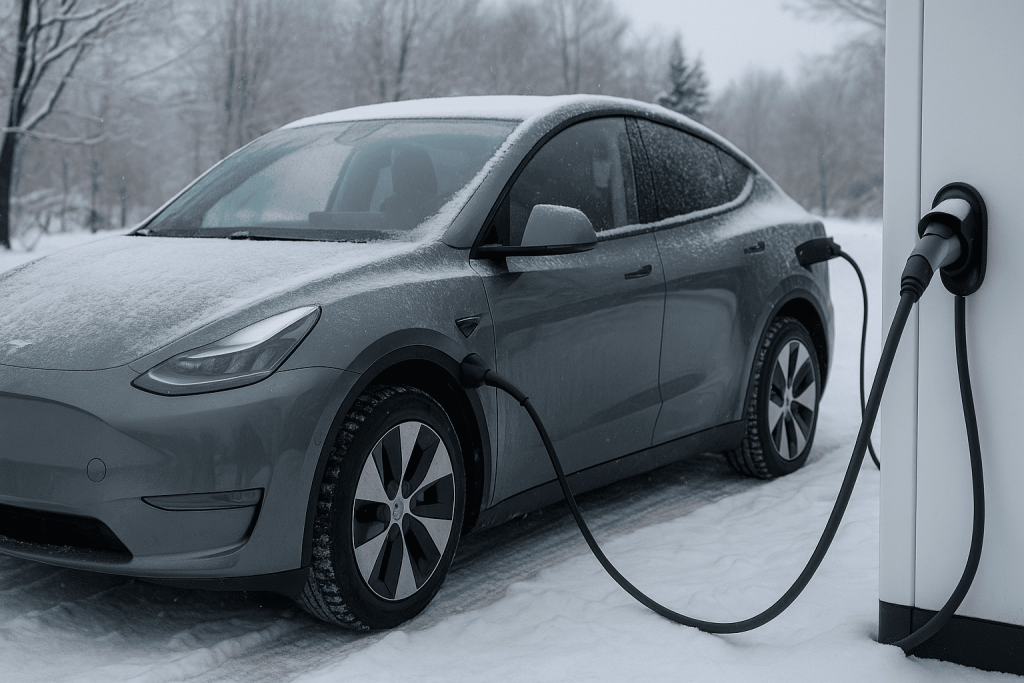
DC fast charging in winter. Arrive warm and low SoC (≈10–30%) to hit the power plateau quickly. Always route to the charger in the car’s nav to trigger battery preheat en route. Plug in cold and the car will spend time/energy heating before ramping—what looks like a “slow charger” is often a cold pack. After a session, avoid parking for hours at high SoC in freezing temps; drive a few minutes to stabilize temperature and use some energy.
Parking outside: small habits, big wins. Before snow/ice, park nose-out for easier egress and port access. If safe, leave wipers up to prevent freezing to glass. After a wet drive, crack a window briefly before shutdown to vent moisture. Anti-freeze/keep-climate modes help only in severe cold—use sparingly; they cost energy.
LFP vs. NMC—what to expect. LFP is especially sensitive to cold charging; preconditioning is vital before DC—and even for brisk AC—below freezing. NMC/NCA fare a bit better at low temps but still benefit from warm-departure strategies. Either chemistry performs well once warm and kept in a mid-SoC band.
Winter kit for EV owners. Carry a compact snow brush, de-icer spray, nitrile gloves for salty cables, and a microfiber for interior glass. If you rely on public AC, keep a spare Type-2 or portable EVSE in a dry bag. Use only outdoor-rated extension cords at the correct current; unspool fully—coiled cords can overheat in the cold.
Trip planning without a garage. For longer winter drives, plan the first stop earlier than in summer so you warm the pack on the way and reach a strong DC plateau. Favor stations with amenities to make a 20–30 minute warm-soak useful. On multi-stop days, short, timed top-ups keep the pack warm—better than one deep charge into a cold battery.
Battery health in the cold. Cold storage slows calendar aging, but don’t leave the car at 100% overnight in freezing weather. Daily targets of ~70–80% remain the sweet spot. Avoid deep discharges to near 0% in extreme cold; keep a winter buffer and finish near departure to minimize stress.
Quick checklist before you roll. Schedule a departure so the car preheats on the cord. Clear snow from intakes, sensors, and the charge port. Verify tire pressures. Start with defrost, then drop to a moderate cabin set-point and lean on seat heat. Drive smoothly until regen returns; keep highway speeds realistic for dense air and traction. ✅
Conclusion. Winter range loss isn’t a verdict—it’s a variable you control. Preheat while plugged in, finish charging near departure, mind tire pressure and aero clutter, and drive with smooth intent until the pack warms. Those simple moves protect comfort, confidence, and battery health, delivering far more winter range than a garage ever did—every cold morning of the season. 🧤