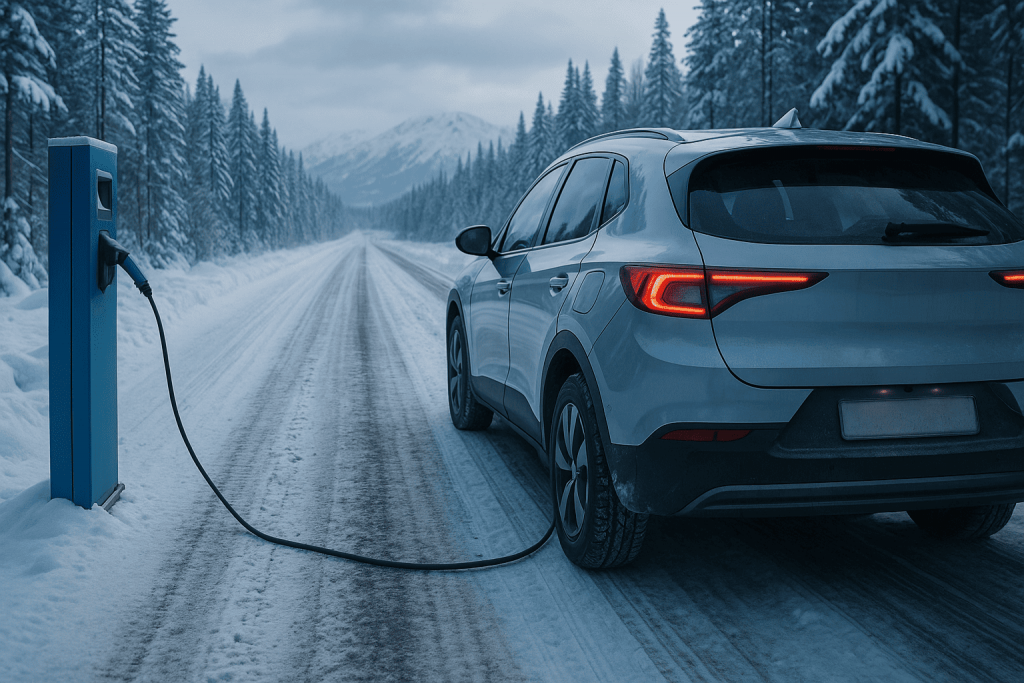
Stretching from the rolling ridges of the Ural Mountains to the icy shores of the Pacific, Siberia is a land of staggering distances and raw, untamed beauty. For adventurous drivers, crossing this vast expanse in a conventional car is already a feat; doing it in an electric vehicle (EV) is an audacious test of planning, technology and sheer determination. This article dives into what it really takes to pilot an EV thousands of kilometres across Russia’s snowy heartland—highlighting the thrills, pitfalls and hard-won lessons of a true over-the-horizon road trip.
The Route: From Moscow’s Ring Roads to Vladivostok’s Golden Horn
The classic “electric Trans-Siberian” journey starts in Moscow, follows the M5 and then the legendary federal M53/M58 corridors through Yekaterinburg, Novosibirsk, Krasnoyarsk and Irkutsk, skirting Lake Baikal before pushing east to Chita, Khabarovsk and finally Vladivostok. That’s roughly 9 300 km—longer than the distance from Lisbon to Beijing. While Russia’s western regions now boast dense charging pockets, the true challenge begins beyond the Urals, where charge points thin out and distances between towns can exceed 300 km.
Charging Infrastructure: Sparse but Growing
Public fast-charging has exploded around major Siberian cities since 2023, thanks to state subsidies and utility-backed networks like Rosseti, NOVATEK and the expanding “E-Taiga” corridor. Yet in rural oblasts, a reliable 50 kW DC post may still be 200 km apart—or nonexistent. Successful expeditions embrace a hybrid strategy: opportunistic fast-charging in cities, supplemented by slower 7–22 kW AC hookups at motels, truck stops and even friendly cafés running three-phase CEE sockets. Portable Type 2 cables, a high-quality adapter kit and a rugged extension lead are mission-critical cargo.
Planning Algorithms Meet Siberian Reality
Apps such as PlugShare and Chargemap offer crowd-sourced POIs, yet cellular dead zones can stretch for hours. Smart travellers download offline maps, manually cross-check charger uptime in local Telegram groups and carry laminated printouts of last-resort sockets. Conservative range buffers—no less than 25 % state of charge before departure—are essential when mountain grades or sub-zero headwinds can spike consumption from 18 kWh/100 km to 28 kWh/100 km in minutes.
Winter Warfare: Batteries vs. Minus Forty
Siberian winters punish lithium cells with temperatures plunging below −40 °C. Vehicles with active liquid thermal management fare best, but drivers still precondition packs while plugged in to avoid power-limited acceleration and glacial charging speeds. Overnight parking demands an insulated thermal blanket or a heated garage where possible; otherwise, plan to spend an extra hour nursing the pack from –30 °C to a safe charge window. Cabin heat strategy matters too: steering-wheel and seat warmers sip electrons, whereas blasting the HVAC can slash range by 20 %.
Road Quality and Off-Grid Detours
The federal highways are generally sealed, yet frost heave, gravel patches and surprise potholes remain common. All-wheel-drive EV crossovers with 180 mm of clearance handle mixed terrain comfortably, but lowering tyre pressure for snow tracks or muddy detours can trim range a further 5–7 %. Carry a portable compressor and tyre repair kit; roadside services may be hours away.
People Power: The Human Charging Network
Siberian hospitality often bridges the infrastructure gap. Rural hotel owners may let you tap a barn’s 380 V line for a small fee. Truck-stop attendants proudly show off newly installed sockets and keep the samovar boiling for weary EV nomads. A handful of adventurous Tesla and Korean EV owners formed an online community, “ЭлектроКараван”, to share live charger status and coordinate convoy legs—because two cars can share a 32 A outlet overnight, doubling redundancy and boosting morale.
Energy Economics on the Steppe
Electricity east of the Urals is surprisingly cheap—often ₽4–₽6 per kWh (roughly €0.05–€0.07). Even factoring in a premium at commercial DC stations, the cost per 100 km rarely exceeds €2. By comparison, petrol in mid-Siberia can hover around €0.90 per litre. Over 9 000 km, an efficient EV can save €450–€600 versus a petrol SUV—money better spent on hot borscht, cosy hostels and a celebratory seafood feast in Vladivostok.
Unexpected Perks: Silence, Wildlife and Night Skies
Rolling silently through taiga forests at dusk, you’re more likely to spot elk, foxes or the elusive Siberian crane. No engine roar means hearing the wind whistle over Lake Baikal’s ice and the crack of distant spruce under frost. Charging stops turn into micro-adventures—chatting with locals, stargazing under auroras, photographing wooden churches bathed in sub-arctic moonlight.
Top Five Survival Tips for the Siberian EV Explorer
• Pack dual charging cables (Type 2 and CCS) plus adapters for Soviet-era three-phase sockets.
• Use a roof box sparingly; aerodynamic drag above 90 km/h drains battery faster than cold.
• Pre-book lodgings that guarantee at least a 7 kW plug—confirm amperage via phone.
• Keep a 2 kW diesel-free heater or 12 V electric blanket for emergencies when stranded.
• Schedule contingency days: ice storms can close stretches of the M58 without notice.
Conclusion
A cross-Siberian EV trek remains a logistical chess match—yet each charging puzzle solved, each glacier-blue sunrise over the taiga, affirms that the electric era is not confined to well-wired metropolises. With patient planning, robust gear and a taste for the unknown, the silence of electrons can carry you farther than ever imagined—right across the world’s deepest cold, into the warm embrace of the Pacific dawn.
yo evs in siberia? amh where s it?🤣