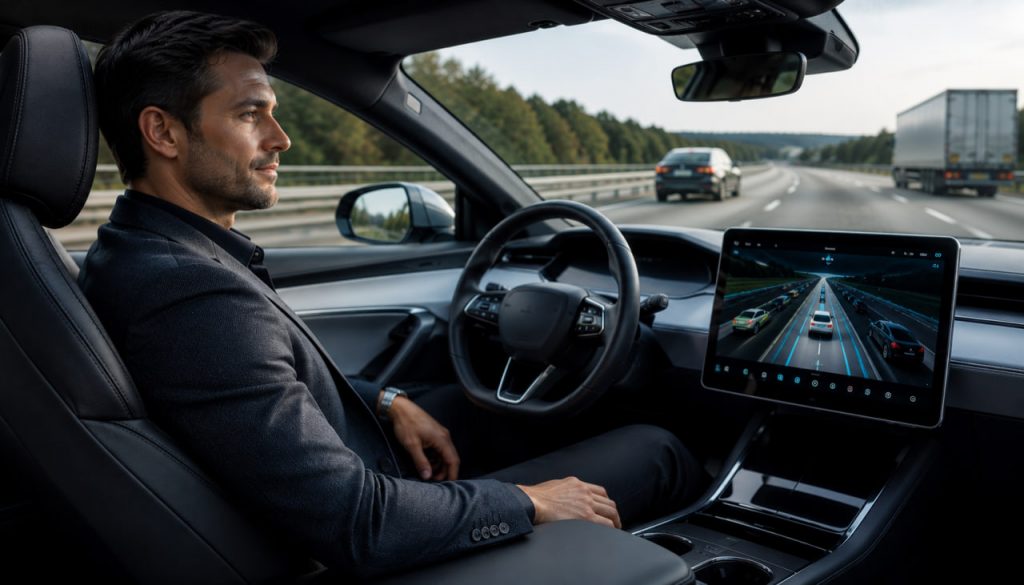
Autopilot technology has become one of the most fascinating innovations in the automotive industry. Once considered science fiction, advanced driver assistance systems are now available in many modern electric vehicles, helping drivers navigate highways, maintain lanes, avoid collisions, and even park automatically.
The rise of electric vehicles has accelerated the development of autonomous driving technologies. Many EV manufacturers view software and automation as key competitive advantages, investing billions of dollars into creating safer, smarter, and increasingly autonomous transportation systems.
However, despite impressive progress, there is still considerable confusion about what “autopilot” actually means, how these systems work, and how close society is to fully autonomous vehicles.
Understanding the technology behind EV autopilot systems is essential for drivers, consumers, and anyone interested in the future of mobility.
Modern autopilot systems are not fully autonomous drivers—they are highly advanced assistants designed to support human drivers.
What Is an Autopilot System?
In automotive terminology, autopilot generally refers to a collection of technologies that assist with driving tasks.
These systems may perform functions such as:
- steering assistance
- adaptive cruise control
- lane centering
- traffic-aware speed management
- automatic braking
- obstacle detection
- parking assistance
Rather than replacing the driver completely, most current systems help reduce workload during routine driving situations.
The driver remains responsible for monitoring the vehicle and surrounding environment.
Why Electric Vehicles Lead Autopilot Development
Electric vehicles are particularly well suited for advanced automation.
Several factors contribute to this advantage:
- centralized software architectures
- powerful onboard computers
- extensive sensor integration
- over-the-air updates
- advanced battery-powered electronics
Unlike many traditional vehicles, modern EVs are often designed from the beginning as software-driven platforms.
This makes it easier to integrate sophisticated autonomous driving features.
The Key Components of an Autopilot System
Autonomous driving technology depends on multiple systems working together simultaneously.
The primary components include:
- cameras
- radar sensors
- ultrasonic sensors
- lidar (in some vehicles)
- GPS systems
- onboard AI computers
Each component serves a specific purpose.
Together they create a digital understanding of the vehicle’s surroundings.
Cameras: The Eyes of the Vehicle
Most modern autopilot systems rely heavily on cameras.
These cameras monitor:
- lane markings
- traffic signs
- vehicles
- pedestrians
- cyclists
- road conditions
Advanced AI software processes camera data in real time.
The system continuously analyzes the environment and identifies relevant objects.
Some modern vehicles use multiple cameras positioned around the vehicle to create nearly 360-degree visibility.
Radar Technology
Radar sensors use radio waves to detect objects.
They are particularly useful because they perform well in:
- rain
- fog
- darkness
- adverse weather
Radar helps measure:
- vehicle distance
- closing speed
- object movement
Many autopilot systems combine radar and camera data to improve reliability.
Artificial Intelligence Is the Brain
While sensors collect information, artificial intelligence interprets it.
AI systems help vehicles:
- recognize objects
- predict movement
- plan driving actions
- respond to changing conditions
For example, AI can determine whether an object ahead is:
- another vehicle
- a cyclist
- a pedestrian
- road debris
The system then decides how the vehicle should react.
Without artificial intelligence, modern autopilot systems would be impossible.
Levels of Driving Automation
The automotive industry generally classifies autonomy using six levels.
Level 0
No automation.
The driver performs all tasks.
Level 1
Basic assistance.
Examples include:
- cruise control
- lane assistance
Level 2
Partial automation.
The vehicle can simultaneously:
- steer
- accelerate
- brake
However, the driver must remain attentive.
Most current autopilot systems operate at this level.
Level 3
Conditional automation.
The vehicle can perform most driving tasks under certain conditions.
Human intervention may still be required.
Level 4
High automation.
Vehicles can operate independently within specific environments.
Level 5
Full autonomy.
No steering wheel or driver would be required.
This level has not yet been achieved in commercial passenger vehicles.
Safety Benefits of Autopilot Systems
One of the primary goals of automation is improving road safety.
Human error contributes to the majority of traffic accidents.
Common causes include:
- distraction
- fatigue
- speeding
- impaired driving
- poor decision-making
Autopilot technologies help reduce risks through:
- collision warnings
- automatic emergency braking
- lane departure prevention
- adaptive speed control
Many studies suggest these systems can significantly reduce certain types of accidents.
Limitations of Current Technology
Despite impressive capabilities, current autopilot systems have limitations.
Challenges include:
- complex urban environments
- severe weather
- unusual road layouts
- construction zones
- unexpected human behavior
AI systems still struggle with situations that require nuanced judgment.
This is why driver supervision remains essential.
Many accidents involving advanced driver assistance systems have occurred when users mistakenly assumed full autonomy.
Over-the-Air Updates Improve Performance
One unique advantage of many electric vehicles is software upgradability.
Manufacturers can deliver updates remotely.
Benefits include:
- new features
- improved object recognition
- enhanced safety systems
- bug fixes
- performance optimization
This allows autopilot systems to improve over time without requiring physical modifications.
The vehicle effectively becomes smarter throughout its lifespan.
Data Collection and Machine Learning
Modern autopilot development relies heavily on real-world driving data.
Manufacturers collect information from millions of miles of driving.
Machine learning systems analyze:
- traffic patterns
- driver behavior
- road conditions
- rare events
This data helps improve future versions of autonomous driving software.
The more data available, the better AI systems generally become.
Expert Perspective
Andrej Karpathy has frequently emphasized that autonomous driving is fundamentally an artificial intelligence challenge rather than simply a hardware problem.
His perspective reflects a growing industry consensus: achieving safe autonomy requires AI systems capable of understanding the complexity and unpredictability of real-world environments.
The future of self-driving technology depends as much on software intelligence as on vehicle engineering.
Regulatory and Legal Challenges
Technology is advancing faster than regulation in many regions.
Governments continue debating issues such as:
- liability
- safety standards
- certification procedures
- data privacy
- autonomous operation rules
These legal frameworks will significantly influence how quickly higher levels of autonomy become available.
The Future of EV Autopilot Systems
The coming decade is expected to bring substantial improvements.
Likely developments include:
- more powerful AI processors
- improved sensor technology
- better object recognition
- enhanced decision-making systems
- expanded autonomous capabilities
While fully autonomous vehicles remain a long-term goal, advanced driver assistance systems are expected to become increasingly capable and widespread.
Conclusion
Autopilot systems have transformed electric vehicles from simple transportation tools into intelligent software-driven machines. Through the combination of cameras, sensors, artificial intelligence, and powerful onboard computers, modern EVs can assist drivers in ways that were unimaginable only a decade ago.
Although current systems remain largely at Level 2 automation and still require active human supervision, their capabilities continue improving rapidly. Safety enhancements, software updates, machine learning, and growing computational power are steadily pushing the industry toward higher levels of autonomy.
The road to fully autonomous driving remains challenging, but the progress achieved so far demonstrates that intelligent transportation is no longer a distant vision. It is already becoming part of everyday driving, particularly in the rapidly evolving world of electric vehicles.